

Understand the trade-offs before choosing a slot
High volatility can bring longer dry spells and rarer larger wins, but neither volatility nor RTP predicts the result of a spin.

Table of Contents
Table of Contents
- What Slot Volatility Tells You—and What It Doesn’t
- High Volatility Means Longer Dry Spells and Rarer Big Wins
- Online Pokies in Australia: The Legal Position and Its Limits
- Is High Volatility Good? It Depends on the Payout Pattern
- RTP Is a Long-Run Average, Not a Session Promise
- Progressive Jackpots: Bigger Potential, Less Frequent Payouts
- Bonus Stages Can Stretch the Wait Between Payouts
- Pragmatic Slots Still Run on Random Spins
- No System Can Beat a Pokie’s Independent Spins
- Keep Stakes Small Enough to Survive a Dry Spell
What Slot Volatility Tells You—and What It Doesn’t
Volatility describes the shape of a pokie’s payout pattern: how often wins tend to occur and how large they may be. A high-volatility game is associated with less frequent payouts that can be larger when they arrive. The label is useful for understanding the kind of experience a game is designed to offer. It is not a forecast of what any particular spin will do.
I have seen volatility confused with a promise of bigger returns. That is not what the term means. It describes a pattern across play, not a minimum win, a target or a schedule. A game labelled high volatility does not owe a payout after a particular number of spins, and a large potential prize does not mean one is likely to appear in a given session. The distinction matters: the description concerns the distribution of results, not a prediction about the next result.
In practical terms, high volatility means wins are typically less frequent, while some payouts may be substantially larger than the routine returns associated with a steadier pattern. That trade-off makes these games more suited to people prepared to risk a larger bankroll. “Bigger potential” is the sort of phrase that can sound like a selling point; behind it sits a less comfortable reality: the larger payout is not a regular event.
UK casinos listed by payout speed
High-volatility slots can bring larger swings in results, so it helps to review the available operator details before choosing where to play. Use this list as a starting point and check each site's terms and game information before depositing.
Vegaz Casino
- License
- Curacao OGL/2024/1335/0780
- Min. deposit
- EUR 20
Vegaz Casino lists a Curacao OGL licence, number OGL/2024/1335/0780. Its minimum deposit is EUR 20.
LevelUp Casino
- License
- Curacao eGaming OGL/2023/174/0082 (Dama N.V.)
- Min. deposit
- A$15
LevelUp Casino lists a Curacao eGaming licence, OGL/2023/174/0082, held by Dama N.V. The minimum deposit is A$15.
WinSpirit Casino
- License
- Curacao eGaming OGL/2024/923/0383 (Antillephone N.V.)
- Min. deposit
- A$30
WinSpirit Casino lists a Curacao eGaming licence, OGL/2024/923/0383, held by Antillephone N.V. Its minimum deposit is A$30.
MrPacho
- Payout speed
- crypto 30-120 minutes, fiat 24-72 hours
- Min. deposit
- A$30
MrPacho lists crypto payouts at 30–120 minutes and fiat payouts at 24–72 hours. The minimum deposit is A$30.
Roby Casino
- License
- Curacao eGaming (Roby Games Ltd)
Roby Casino lists a Curacao eGaming licence held by Roby Games Ltd. No further operator details are available here.
House of Pokies
- License
- international iGaming licence – jurisdiction not named in the source
- Payout speed
- PayID 1-24 hours
- Min. deposit
- A$30 (PayID from A$10)
House of Pokies lists an international iGaming licence, though the jurisdiction is not named. PayID payouts are listed at 1–24 hours; the minimum deposit is A$30, or A$10 via PayID.
Rollero Casino
- License
- Curacao Gaming Control Board OGL/2023/176/0095 (Hollycorn N.V.)
Rollero Casino lists a Curacao Gaming Control Board licence, OGL/2023/176/0095, held by Hollycorn N.V. No further operator details are available here.
Wild Tokyo
- License
- Curacao
- Payout speed
- crypto 30-60 minutes, fiat 1-5 days
- Min. deposit
- A$10
Wild Tokyo lists a Curacao licence, with crypto payouts at 30–60 minutes and fiat payouts at 1–5 days. The minimum deposit is A$10.
SkyCrown
- License
- Tobique Gaming Commission
- Payout speed
- crypto ~10-15 minutes, fiat 1-5 days
- Min. deposit
- A$30
SkyCrown lists a Tobique Gaming Commission licence. Crypto payouts are listed at approximately 10–15 minutes and fiat payouts at 1–5 days; the minimum deposit is A$30.
Bizzo Casino
- License
- Curacao Gaming Control Board (TechSolutions Group N.V.)
Bizzo Casino lists a Curacao Gaming Control Board licence held by TechSolutions Group N.V. No further operator details are available here.
That is the high-volatility meaning in plain terms. It is a way to characterise the payout profile, not to rank games by quality. The same label cannot tell whether a particular title will be enjoyable, whether its features will suit someone’s preferences, or whether a session will end in profit. It answers a narrower question: what broad pattern of wins is associated with this game?
A pattern, not a timetable
The term can be misunderstood as a timetable: if wins are rare, perhaps one is “due” after a long stretch without one. That reading turns a descriptive label into a prediction, and the label cannot support it. A stretch of play is not a countdown to a larger payout. Nor does a previous win establish that another one is approaching. Volatility gives no reliable signal about when a result will occur.
In my experience, the trouble often starts with advertising language. “High potential” can be read as “likely to pay well”, although those phrases do not mean the same thing. A game may have the capacity for a large payout and still offer no useful indication of whether it will happen during a particular session. Potential describes what the payout pattern can include; it does not say what an individual player should expect to receive.
The label also cannot tell the full story of a game by itself. It does not explain every feature, show how a session will unfold, or convert a general pattern into a personal outcome. Treating it as a single summary of all the game’s qualities gives it more weight than it can carry. Useful shorthand. Not a guarantee.

What the label cannot establish
A high-volatility description cannot predict an individual result or tell when a larger payout will occur. It does not prove that a game is generous, that a feature will trigger, or that a player will recover earlier losses. Those claims go beyond the meaning of volatility. The term is about how payouts are distributed, not a mechanism for influencing them.
This is why high-volatility slot machines should not be understood as games that simply pay more. The defining idea is the combination of relatively infrequent payouts and the possibility of larger ones. Someone reading only the word “high” may assume it means a higher chance of winning. In this context, it describes the character of the payout pattern, not a higher probability of success.
Volatility is one piece of information to interpret, rather than a verdict on a pokie. It helps distinguish a pattern built around less frequent, potentially larger payouts from one with a different rhythm. It does not settle whether that pattern is suitable for a particular person; nor does it predict how a session will go. Those are separate matters, and the label cannot answer them on its own.
So, what does high volatility mean on a slot machine? It means the game is associated with less frequent but potentially larger payouts. It does not mean a large win is imminent, promised or predictable. Reading the term accurately keeps a description of the game from becoming an expectation about the next spin.
High Volatility Means Longer Dry Spells and Rarer Big Wins
The practical cost of a high-volatility pokie is not just that a large win is uncertain. It is that significant payouts may be separated by long stretches in which the balance falls without a comparable return. A rare, substantial win is part of the pattern; so is the possibility of playing through an extended dry spell before one appears.
That combination changes how a session feels. A sequence of spins with little back may seem to suggest that a feature or major payout is getting closer. It does not. The dry spell is not a countdown, and the size of a possible prize does not tell anyone when it might arrive. In practical terms, the balance has to carry the session through uncertainty rather than rely on a quick recovery.
I have seen the difference between the headline and the working reality. “Big potential” is an appealing phrase, but it describes the size of an occasional result, not the regular experience of play. The less visible part is the stretch of ordinary or losing outcomes that may come before a significant payout. That stretch is where the risk sits.
A deeper bankroll is relevant because it gives more capacity to withstand those periods. It does not make a win more likely, guarantee that a feature will trigger, or protect the money from being lost. It only changes how long play can continue before the available balance is exhausted. A larger balance can still run out during a dry spell.

The distinction matters because players often assess a game by its biggest displayed win or by stories of an exceptional result. Those examples show what can happen, not what a typical session will deliver. When the rare outcome gets most of the attention, the quiet intervals can be treated as a temporary inconvenience. They are not a side issue; they are part of the same payout profile.
A high-volatility session can therefore feel uneven. Small returns may arrive without materially restoring the balance, while a more significant payout may be much less frequent. Even when a substantial win occurs, it does not erase the uncertainty of what follows. The next stretch can be different, and a previous result offers no reliable guide to the next one.
This is why the label “high volatility” should be read as a warning about the shape of risk, not as a promise of excitement or a shortcut to a large prize. The appeal is easy to understand: a less frequent payout may be larger. But the player bears the intervening risk, and the balance can decline before any major result appears. The headline is only half the story.
A useful way to assess that trade-off is to consider whether the session can remain within a fixed spending limit even if the hoped-for payout never arrives. Setting a budget and never wagering more than can be afforded to lose are basic safeguards. They do not alter the game’s payout pattern, but they prevent an uncertain result from becoming an open-ended financial decision.
Do
- Set a fixed spending limit
- Use a budget as a strict limit
- Wager only what you can afford to lose
Don't
- Treat a budget as a target to spend
- Add money to recover previous losses
- Assume a dry spell is overdue to end
The budget also needs to be treated as a limit, not as a target that must be spent in full. If the balance is gone, the possibility that a large win could have appeared later is not a reason to add more money. There is no reliable point at which a dry spell becomes overdue to end. Continuing solely to recover losses turns the payout pattern into pressure to spend beyond the original plan.
For anyone comparing high-volatility pokies in Australia, the sensible question is not simply which one advertises the largest possible win. Without reliable information about a particular game’s payout pattern, a title cannot be ranked on that basis. The broader risk remains clear: significant wins are rare, dry spells can be extended, and enough money may be needed to absorb them—without any certainty that the session will reach a major payout.
That is the uncomfortable trade-off. The possibility of a larger result comes with less frequent significant returns and more room for a balance to fall in between. A deeper bankroll can withstand more of that exposure, but it cannot turn uncertainty into an outcome. Rare means rare.
Online Pokies in Australia: The Legal Position and Its Limits
The legal position is often blurred by the way offshore gambling sites describe their services. The key distinction is between the operator and the person playing: under the Interactive Gambling Act 2001, providing real-money online pokies to people in Australia is illegal for an operator, while the player does not face a penalty simply for playing. That does not make the service lawful or locally regulated.
No online pokie site is licensed in Australia. Sites accessible to Australians operate under offshore licences, because Australian law does not provide for locally licensed online casinos. A foreign licence does not override the Australian prohibition on supplying these services to people in the country. The legal status of the provider and the legal position of the player are separate matters.
This distinction matters when a site presents a foreign licence as proof that its pokies are approved for Australian customers. It may identify the rules under which the operator claims to work elsewhere, but it is not an Australian authorisation. Nor does an offshore licence change the Interactive Gambling Act’s treatment of online casino-style games, including slots, poker and table games, when offered to people in Australia.

ACMA’s enforcement role
The Australian Communications and Media Authority, or ACMA, is the federal regulator responsible for enforcing the Interactive Gambling Act and overseeing compliance with federal interactive gambling laws. Its work includes action against prohibited services and the websites that promote them.
ACMA can ask Australian internet service providers to restrict access to websites that supply prohibited interactive gambling services or advertise them to people in Australia. Blocking is an enforcement tool, not a guarantee that every unlawful site will become inaccessible at once. The measure depends on action against identified websites, and access can change as enforcement proceeds.
The scale of that work is substantial. Since enforcement actions began in November 2019, ACMA has blocked more than 1,455 illegal gambling and affiliate websites. Separately, since it began enforcing the rules in 2017, more than 210 illegal services have withdrawn from the Australian market. Published accounts do not agree on the withdrawal total: another version puts it at more than 190 services.
A blocked site and a withdrawn service are not the same measure. One refers to access restrictions on websites; the other describes services that have left the market. The distinction helps explain why enforcement figures may appear in more than one form without describing the same event.
Legal Warning
Providing real-money online pokies to people in Australia is illegal for operators under the Interactive Gambling Act 2001.
Advertising and payments
The prohibition also covers advertising real-money online casino services to Australian audiences. That includes promotions for online pokies, not just the act of taking bets. A site’s availability or an advertisement appearing online should not be mistaken for evidence that the service is permitted in Australia.
Credit cards are banned for online gambling in Australia. That restriction applies to payments for gambling services; it is not a signal that a different payment method makes an otherwise prohibited online pokie service lawful. Payment access and the legality of the operator are separate questions.
In practice, the combination of operator restrictions, advertising rules and ACMA blocking means that offshore websites may be disrupted or removed from access. Their appearance in search results, or a period when a page loads, does not establish approval by an Australian regulator. High-volatility pokies Australia searches may lead to descriptions of games or offshore offers, but those listings do not alter the legal framework.
From an industry perspective, the wording around a licence can do considerable work. “Licensed” sounds complete; the important question is where the licence applies and whether it authorises services to Australians. Here, it does not replace Australian law. No local licence.
The result is a narrow but important distinction: Australian law targets the supply and promotion of prohibited online casino services, while it does not impose a penalty on an individual merely for playing. ACMA’s blocking and withdrawal figures show active enforcement, but they should not be read as a list of approved alternatives. A high-volatility online pokie remains an online pokie for the purposes of the legal framework, regardless of its payout pattern or the country named on an offshore licence.

Is High Volatility Good? It Depends on the Payout Pattern
“Good” is doing too much work when it is applied to a pokie’s volatility. The label does not tell me whether a game is enjoyable, fair or suitable for every player. It describes a payout pattern: high-volatility games can produce larger wins, but those wins are rarer; low-volatility games tend to return smaller wins more often. Which pattern feels preferable depends on what someone wants from play—and what they are prepared to experience between payouts.
That distinction matters because the headline win is only one part of the experience. A game can advertise the possibility of a substantial return while offering no assurance that one will arrive in a particular session. Another can produce more frequent small wins without those returns adding up to a profit. Frequency and size are separate parts of the pattern. Neither label converts a game into a reliable source of income.
What high volatility means in practice
When people ask what high volatility means in slots, the plain answer is that meaningful payouts are less frequent, while a win, when it does come, may be much larger. The opposite tendency applies to low-volatility pokies: smaller wins occur more often. This is a comparison of payout shape, not a promise about any individual game or session.
In my experience, players often focus first on the biggest number visible in a game’s presentation. That is understandable; a rare large win is an easy story to sell. But the less prominent part of the proposition is the wait and uncertainty that sit around it. A large possible payout is not the same thing as a likely payout, and the possibility alone says little about how a session will feel.
Low Volatility
Returns tend to be smaller but occur more frequently, creating a more steady rhythm of play.
High Volatility
Meaningful payouts are less frequent, but the potential for larger wins is increased.
That is the practical high-volatility meaning in slots: a more uneven pattern, with the attraction concentrated in occasional larger returns rather than a steady stream of smaller ones. It can appeal to someone who values that possibility and accepts that the game may not provide frequent rewards. It can be frustrating for someone who expects regular signs of progress.
The label is not a quality rating. High does not mean “better”, and low does not mean “safer” in every sense. They describe different experiences. A low-volatility game can still leave a player down; a high-volatility game can still produce a win. The labels do not settle the question of which one deserves a place in someone’s entertainment choices.
Low volatility versus high volatility
The contrast is easiest to see by separating two preferences. One player may prefer smaller wins that appear more often, because frequent returns make a session feel less lopsided. Another may prefer the possibility of a much larger win, even though that means accepting fewer significant payouts along the way. Neither preference is inherently more rational. They value different things.
Low volatility can feel more active: returns may show up more regularly, but the individual amounts are generally smaller. That can create a sense of movement without guaranteeing that the balance is holding steady or improving. A sequence of small wins is not proof of a profitable session. The display can make activity look like progress; those are not the same thing.
High volatility has a different rhythm. The appeal is the chance of a rare, substantial result; the cost is that significant wins may be separated by extended dry spells. A player drawn to the high point may find the long stretches between it difficult. That is not a flaw that can be edited out of the category. It is part of the trade-off.
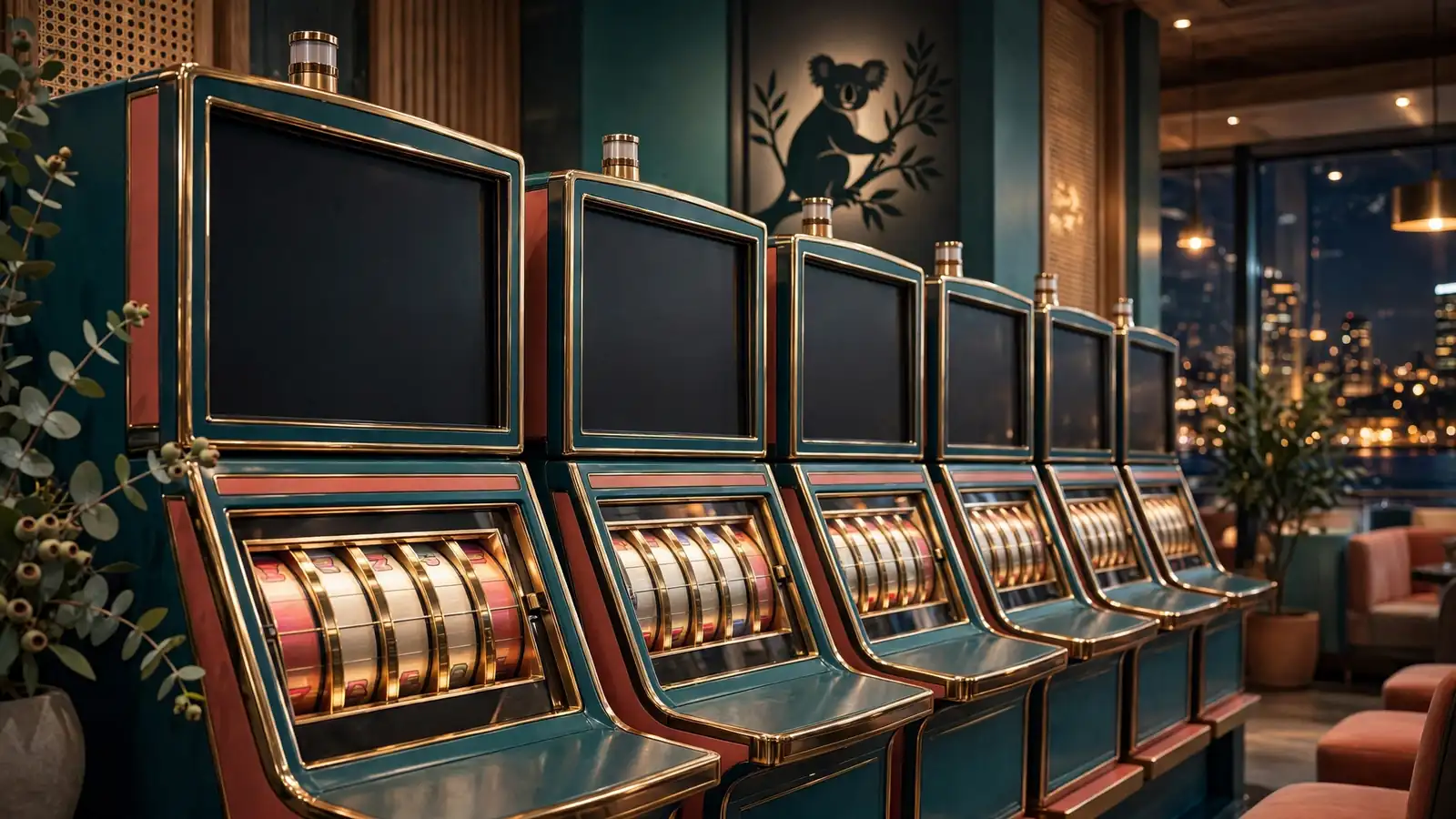
I have seen “exciting” used as if it were a neutral description. In practice, it often means the game puts more emphasis on an occasional dramatic outcome. That can suit someone who enjoys suspense, but the same structure can feel unrewarding to someone who wants more frequent feedback. Advertising describes the bright end of the range. The quieter stretches still count.
Is high or low volatility better?
There is no universal answer to whether high or low volatility is better for slots. The useful question is whether the payout pattern matches the kind of entertainment being sought. Someone who would rather see smaller returns more frequently may find low volatility a better fit. Someone who is comfortable with fewer significant payouts in exchange for the possibility of a larger one may prefer high volatility.
That is a preference, not a strategy. Choosing a high-volatility pokie does not improve the chance that a large win will arrive in a particular session. Choosing a low-volatility one does not ensure that small returns will cover what has been wagered. A payout pattern can shape the experience, but it cannot promise the outcome.
It also helps to notice what the choice does not answer. Volatility alone does not establish whether a game is enjoyable, whether its features suit a player, or whether its overall return is favourable. Those are separate considerations. Treating the volatility label as a complete verdict is like judging a whole product from one characteristic: neat, but incomplete.
In my view, the mistake is not preferring one pattern over the other. It is assuming that the preferred pattern removes uncertainty. High volatility does not mean a large win is due, and low volatility does not mean losses are unlikely. The two labels describe tendencies in the size and frequency of payouts, not a promise attached to the next spin.
There is also a difference between choosing a pattern for entertainment and treating it as a financial plan. Pokies are gambling, not a dependable way to make money. A budget should be set in advance, and no more than can be afforded to lose should be wagered. That boundary matters whichever volatility label a game carries; preference does not change the risk of losing the money spent.
A concise way to decide is to think about the pattern rather than the prize headline. Frequent, smaller wins may feel more engaging to some people. Rare, larger wins may be the attraction for others. Neither is automatically better, and neither guarantees a satisfying session. The better fit is the one whose trade-off is understood before play begins—not the one whose biggest possible outcome looks most persuasive.
A label is not a promise.
RTP Is a Long-Run Average, Not a Session Promise
RTP, or return to player, describes the share of wagered money a pokie is designed to return across a very large number of plays. It is a statistical measure, not a forecast for a particular person or session. A published RTP can help compare games on their stated long-run return, but it cannot say what will happen in the next stretch of spins.

I treat RTP and volatility as separate parts of the picture. RTP concerns the overall return represented by the game’s calculation; volatility describes how that return is distributed through play. A game can have a relatively high RTP and still produce an uneven pattern, with payouts arriving in a way that leaves long gaps between them. “High RTP” is not another way of saying frequent wins.
That distinction matters when looking at high-volatility pokies. A high RTP high-volatility pokie may have a stronger stated long-run return than another game, but the figure does not remove the possibility of a poor session. Nor does it mean that a large payout is due after a run of losses. The return figure and the timing of payouts answer different questions.
The same caution applies when a game’s design includes several bonus stages. Such games can have low RTP and high volatility, with payouts occurring less often. A prominent feature or a large amount displayed during play does not change what RTP means: it is not a promise that a particular bonus will return a profit, or that a player will reach a bonus at all.
The practical reading is modest. RTP is useful as a long-horizon comparison, provided the figure applies to the version being considered. It is not a session target, a minimum return, or a guarantee of getting back any particular portion of a stake. Short-term results can differ sharply from the stated average.
That is the limit. In my view, RTP is a reference point, not a reason to increase a stake or keep playing after a planned budget is gone. A budget should be set in advance, and wagers should never exceed what can be afforded to lose. The number describes a model across extensive play. It does not settle an individual outcome.
Progressive Jackpots: Bigger Potential, Less Frequent Payouts
A progressive jackpot grows as a share of wagers is added to the prize pool. That funding mechanism changes the shape of the game: part of the stake contributes to a prize that can become substantial, while jackpot payouts occur less frequently. Progressive pokies are therefore generally high volatility.
The word “progressive” describes the jackpot’s growth, not a steady rise in the chance of winning it. As I learned from looking at how these games are presented, a larger displayed prize can draw attention away from the basic trade-off: the jackpot is funded across wagers, but it is not returned on a regular schedule. The headline figure is potential, not a session forecast.
That distinction matters when comparing progressive games with other slots with high volatility. The jackpot may be the main attraction, but the funding structure also helps explain why payouts are less frequent. A large prize display says nothing about when it will be awarded or how a particular session will go.
There is no reliable way to infer from the current jackpot whether it is about to pay. Treating a growing prize as “due” turns a feature of the funding model into a prediction the display cannot support. The pool grows. Timing remains uncertain.

I have seen the advertising emphasis placed on the prize itself; the less prominent detail is how the prize is built from wagers and paid out infrequently. Both parts belong in the same assessment. A progressive jackpot offers the possibility of a larger payout, but that possibility comes with a payout pattern that is generally more volatile.
A big number on the screen. Not a schedule.
Bonus Stages Can Stretch the Wait Between Payouts
A pokie with several bonus stages can make a feature feel like a sequence of events: one trigger opens a stage, and progress through it may lead to another. That structure can be engaging, but it does not mean payouts arrive often. Games built around multiple bonus stages can pay less frequently, with low RTP and high volatility contributing to that pattern.
The advertising language often calls a feature “expansive” or “layered”. In practice, those words describe what may happen after a trigger, not how often a player will reach it or what the feature will return. A long chain of stages can create anticipation while leaving the underlying payout pattern unchanged. The wait is part of the design.
I have seen payout displays mistaken for a measure of profit. They are not the same thing. A bonus round can show a striking total and still return no profit once the wagers made to reach and play it are considered. A large figure on screen is a result display, not a statement that the session ended ahead.
That distinction matters most in high volatility slot games built around several feature steps. Their appeal may rest on the possibility of a substantial outcome, while the route to it is less frequent and uncertain. Reaching a bonus is not evidence that the next stage will pay well, and a feature that continues is not necessarily a profitable one.
The sensible way to read a bonus description is as a map of possible mechanics, not a forecast. More stages mean more structure, not more certainty. A vivid feature can still end with little or nothing returned.
Display is not profit.
Pragmatic Slots Still Run on Random Spins
Pragmatic Play is a game provider, but its name does not tell anyone what the next spin will produce. The same applies when a game is described as high volatility: that label concerns its payout pattern, not a sequence that can be read from recent results. A run of losses does not make a win due, and a recent win does not make another one less possible.
Each spin is generated independently through a random number generator. The outcome of one spin does not carry forward into the next. In practical terms, a player watching a session unfold cannot use the previous symbols, near-misses or feature triggers to identify what is coming. There is no reliable pattern to extract from the visible history.
That distinction matters when comparing high-volatility Pragmatic Play games. A provider’s catalogue may include different titles and mechanics, but the provider name by itself is not evidence that every title has the same volatility—or that a particular game has a specific volatility level. Those claims need title-specific support. Without it, confident rankings would be guesswork dressed as analysis.
The same restraint applies to game features. A sequence of spins that appears to be building toward a bonus is not proof that a bonus is closer. The random process does not keep a tally of what has already happened and compensate for a quiet stretch. What looks like momentum is a story imposed on independent results.
I have seen how easily a familiar provider name can be mistaken for a guide to outcomes. It is not one. A game’s branding may help identify who made it; it cannot predict the next combination or make a past result relevant to the next spin.
Random remains random.
No System Can Beat a Pokie’s Independent Spins
I have seen betting systems presented as if a sequence of stake changes can make a pokie behave predictably. The logic often sounds tidy: follow a pattern, wait for a particular result, then adjust the next bet. But the machine does not carry a memory of the previous spin that can be used to forecast the next one.
Each spin is generated independently by a random number generator. A run of losses does not make a win due, and a recent payout does not mean another is less likely on the next spin. The combinations cannot be predicted or manipulated through a staking method. Patterns visible in a session are records of what has already happened, not signals about what comes next.
That matters when considering high-volatility pokies. Their payout pattern can involve longer gaps between significant wins, but this does not create a point at which a system can identify that a larger payout is about to arrive. Increasing a stake after losses changes the amount exposed to the game; it does not change the random process producing the result.
A betting plan may organise decisions, but organisation is not an advantage over the game. No system beats a pokie or removes its built-in house edge. The distinction is simple: a system can shape how someone bets, not what the next spin returns.
I have also seen past results treated as evidence that a machine is “hot” or “due”. Those labels give a story to randomness. They do not supply a reliable forecast. A displayed history may describe earlier outcomes, but it cannot turn independent spins into a sequence that can be solved.
No signal. No certainty.
Keep Stakes Small Enough to Survive a Dry Spell
High-volatility pokies call for smaller, controlled stakes: large bets can drain a balance quickly during a stretch without a return. Set a firm budget before play and never wager money that cannot be afforded to lose. A small balance may be exhausted before a bonus feature appears. The feature is not owed.

Published by the Clubhouse Casino team.