
Separate the legal position from the practical risks
The guide distinguishes operator restrictions from player liability and examines offers, game fairness claims, verification and cash-out conditions.
Table of Contents
Table of Contents
- What Australian Rules Mean for Offshore Pokies
- House of Pokies: The Brand and Its Australian Context
- A House of Pokies Review: Free Play, RNGs and RTP
- No-Deposit Offers: Bonus Funds, Sister Sites and the Catch
- Signup Bonuses: The Wagering Math Behind the Offer
- Bonus Codes: Activation Comes Before the Deposit
- Logging In and Finding Similar Casinos
- Withdrawals: Verification, Methods and Waiting Times
- Free Spins and Real-Money Play Are Not the Same
- Is House of Pokies Safe? Separate Age, Law and Risk
What Australian Rules Mean for Offshore Pokies
Australia’s rules draw a clear line between the person playing and the business providing the game. The Interactive Gambling Act 2001 prohibits operators from offering real-money online casino games to people in Australia. That category includes pokies, roulette and blackjack. The restriction applies to companies based in Australia and to offshore services that provide prohibited casino-style gambling to customers physically located here.
The law is directed at providers, not individual players. Someone who plays on an offshore site is not breaking the law merely by doing so. That distinction is easy to lose in a search for an online casino or a login page: the fact that a service is reachable, or that a player is not the target of the prohibition, does not make the operator’s service lawful in Australia.
I have seen marketing blur those two points into a reassuring-sounding claim that offshore play is “legal”. That wording skips the important part. The player is not the party the IGA targets, but the service may still be prohibited from supplying casino games to Australians. Player liability and operator compliance are separate questions.
What the regulator can do
The Australian Communications and Media Authority, or ACMA, is the federal body responsible for enforcing the Interactive Gambling Act 2001 and monitoring compliance with federal interactive gambling laws. Its role is not limited to publishing rules. It takes enforcement action against prohibited services and can ask Australian internet service providers to block websites that provide those services or advertise them in Australia.
A block changes access, not the underlying legal test. A website may stop loading through an Australian connection after an ISP applies a block, while the operator and the service remain offshore. Conversely, a page that loads is not proof that the service is permitted to offer online casino games to Australians. Availability is a technical circumstance, not a regulatory approval.
That distinction matters when a House of Pokies page is being sought for online play, mobile access or account login. Search results, bookmarked pages and messages containing a site address are not substitutes for checking what the law allows. Nor does a familiar brand name alter the Act’s reach. The relevant issue is the service being offered to people in Australia, not the wording of a page or the route used to reach it.
The same enforcement framework reaches websites that advertise prohibited gambling services. ACMA can request blocking for sites providing the prohibited service and for sites advertising it. That helps explain why access to offshore gambling material can change: enforcement may affect both the gambling destination and related promotional pages.
Blocking and market exits
ACMA reports that it has blocked more than 1,455 illegal gambling and affiliate websites since November 2019, following enforcement actions. The figure is a record of websites blocked, not a count of players, operators currently active, or services that have permanently disappeared. A blocked address should not be confused with a final ruling about every page using a similar name.
There are also differing published totals for illegal services that have left the Australian market since ACMA began enforcing the rules in 2017. One account puts the number above 210; another reports more than 190. The totals should not be collapsed into a single figure. They point to the same broad enforcement outcome—services have withdrawn—but do not establish an agreed count.
Blocking and withdrawal are distinct actions. A website can be blocked for Australian users without the operator formally withdrawing from the market; a service can also cease targeting Australians without every associated web address disappearing. In practice, access controls are part of a continuing enforcement process, rather than a one-off certification of which sites are acceptable.
This is why “offshore” should not be treated as a legal category that grants permission. A foreign location does not exempt a provider from Australia’s rules when it offers prohibited casino games to people here. At the same time, the Act’s focus on providers means that an individual player’s position is not the same as the operator’s. Two different questions. Two different answers.
For anyone trying to understand why an online casino page appears, disappears or fails to open, the framework is therefore fairly direct: the IGA prohibits operators from supplying real-money online casino games to Australians; ACMA enforces that prohibition; and ISP blocking is one of the tools available to it. A working page does not settle legality, and a blocked page does not mean that the player committed an offence by attempting to visit it.
House of Pokies: The Brand and Its Australian Context
UK casinos listed by payout speed
Choosing a pokies casino for Australia involves checking the details that matter for your play, such as licensing, deposit options and payout timing. Use these short verdicts as a reference when considering the options for 2026.
Vegaz Casino
- License
- Curacao OGL/2024/1335/0780
- Min. deposit
- EUR 20
Vegaz Casino lists a Curacao OGL licence, number 2024/1335/0780. Its minimum deposit is EUR 20.
LevelUp Casino
- License
- Curacao eGaming OGL/2023/174/0082 (Dama N.V.)
- Min. deposit
- A$15
LevelUp Casino lists a Curacao eGaming licence, OGL/2023/174/0082, associated with Dama N.V. The minimum deposit is A$15.
WinSpirit Casino
- License
- Curacao eGaming OGL/2024/923/0383 (Antillephone N.V.)
- Min. deposit
- A$30
WinSpirit Casino lists a Curacao eGaming licence, OGL/2024/923/0383, associated with Antillephone N.V. Its minimum deposit is A$30.
MrPacho
- Payout speed
- crypto 30-120 minutes, fiat 24-72 hours
- Min. deposit
- A$30
MrPacho lists crypto payouts at 30–120 minutes and fiat payouts at 24–72 hours. The minimum deposit is A$30.
Roby Casino
- License
- Curacao eGaming (Roby Games Ltd)
Roby Casino lists a Curacao eGaming licence under Roby Games Ltd. This licensing detail is the available point of reference.
House of Pokies
- License
- international iGaming licence – jurisdiction not named in the source
- Payout speed
- PayID 1-24 hours
- Min. deposit
- A$30 (PayID from A$10)
House of Pokies lists an international iGaming licence, though the source does not name the jurisdiction. PayID payouts are listed at 1–24 hours; the minimum deposit is A$30, or A$10 when using PayID.
Rollero Casino
- License
- Curacao Gaming Control Board OGL/2023/176/0095 (Hollycorn N.V.)
Rollero Casino lists a Curacao Gaming Control Board licence, OGL/2023/176/0095, associated with Hollycorn N.V. This provides a specific licensing detail to consider.
Wild Tokyo
- License
- Curacao
- Payout speed
- crypto 30-60 minutes, fiat 1-5 days
- Min. deposit
- A$10
Wild Tokyo lists a Curacao licence, with crypto payouts at 30–60 minutes and fiat payouts at 1–5 days. Its minimum deposit is A$10.
SkyCrown
- License
- Tobique Gaming Commission
- Payout speed
- crypto ~10-15 minutes, fiat 1-5 days
- Min. deposit
- A$30
SkyCrown lists a Tobique Gaming Commission licence. Its listed payout times are approximately 10–15 minutes for crypto and 1–5 days for fiat; the minimum deposit is A$30.
Bizzo Casino
- License
- Curacao Gaming Control Board (TechSolutions Group N.V.)
Bizzo Casino lists a Curacao Gaming Control Board licence associated with TechSolutions Group N.V. This licensing detail is the available point of reference.
House of Pokies is a name that can bring several different expectations with it. Some people may be looking for a particular casino brand; others may be trying to establish whether a site, app, promotion or similarly named service is connected to it. The name alone cannot settle those questions. In online gambling, a familiar label is not proof of who operates a service, what it offers, or whether separate pages using similar wording belong to the same business.
That distinction matters in Australia. The Interactive Gambling Act 2001 restricts operators from providing casino-style games to residents; it does not make individual players the target of that rule. So the Australian context is not simply a matter of adding “Australia” to a brand name. It changes what the name can reasonably promise. A page using Australian language or currency references would not, by itself, establish that an operator is permitted to provide casino games to people in the country.
When I assess a gambling brand, I separate the label from the claims attached to it. “House of Pokies” is the label. Statements about an app, local availability, a particular company or a current offer are separate claims that need their own basis. That sounds obvious, but promotional wording often rolls them together: the brand name makes the service sound settled, while the details that matter are left elsewhere. The name does not do that work.

The year in a request for information about House of Pokies in 2026 also matters as a time marker, not as proof that anything has changed. Online pages can be revised, moved or reused; a date in a heading does not confirm that a description remains accurate. Nor does it establish that a site carrying the name is the same service encountered previously. A careful account therefore keeps the subject narrow: the brand name is being discussed in an Australian setting, while claims about current features require separate confirmation.
Searches for an app illustrate the gap between a term and a product. A person may be asking whether House of Pokies has a dedicated application, whether a website works on a phone, or whether an app listed under a similar name is genuine. Those are different questions. The word “app” in a page title or promotional banner cannot answer them, and a similar icon or spelling is not enough to establish a connection with the brand. I avoid treating a mobile-friendly page and a downloadable application as interchangeable; they describe different things.
The same care applies to variations such as “the House of Pokies” or “casino House of Pokies.” These phrases may point to the same subject, but they do not verify an operator’s identity. Nor should “House of Fun Pokies” be assumed to be an alternative name for House of Pokies simply because the wording overlaps. In this market, small differences in a name can matter. Treating every near-match as one business is an easy way to attribute claims to the wrong entity.
A further complication is that a brand can appear in material written by parties other than the operator. A review, directory entry or discussion may describe a service, but the presence of the name does not mean the material is an official statement. I read those labels as attribution questions: who is making the claim, and what exactly are they describing? Without that separation, opinions can be mistaken for operator terms and a third-party description can look like confirmation.
This is why a brand introduction should not be mistaken for an endorsement. It does not establish that a named service is suitable for Australians, that a particular page is official, or that a product bearing the name is available. Those are not details that can safely be inferred from the words “House of Pokies casino.” The Australian framework remains relevant even where a brand presents itself in language familiar to local players.
The useful starting point is modest: House of Pokies is the subject of the guide, and the Australian setting affects how statements about it should be read. The brand name can identify what someone wants to learn about; it cannot, on its own, confirm the identity, status or current characteristics of a service using it. Keep the label separate from the evidence. That is the essential distinction.
A House of Pokies Review: Free Play, RNGs and RTP
A useful review of House of Pokies has to separate what can be established about a particular website from what applies to pokies as a type of game. The name alone does not establish which games are currently available, how a free-play feature works, or what return-to-player settings apply. Those details need to be checked against the actual game information, rather than inferred from a promotional label.

That distinction matters because “free play” sounds like a direct preview of the full experience. In practice, it describes a way of playing without staking cash, not a promise that a result will later be repeated or that the same conditions apply to real-money play. A demo spin can show the game’s layout, symbols and features. It cannot tell anyone what the next paid spin will do.
What an RNG means for each spin
Modern online pokies are software governed by a Random Number Generator, or RNG. The RNG determines each result independently. A previous win, a long run without a win, or a near miss does not influence the next spin.
This is where familiar casino language can mislead. “Due” is not a technical state. A pokie does not keep a visible debt to the player and then repay it after enough losing spins. Nor does a win make the next result less likely because the game has supposedly paid its share. Each spin is a separate event.
I have seen players read patterns into short runs of results, especially when a game produces repeated symbols or a bonus feature appears close but does not trigger. That reaction is understandable; the interface is designed to make outcomes legible and memorable. But the animation is not a record of what the RNG will do next. It presents the result after the game has determined it.
RNG Independence
A previous win or a long run of losses does not influence the next spin; each result is determined independently by the Random Number Generator.
Free-play sessions can make this separation harder to notice. A long demo session may produce a sequence that feels unusually generous or unusually cold. Either way, it is a sample of outcomes, not evidence that the game has changed its underlying behaviour or that a paid session will follow the same pattern. The next spin remains independent.
Reading RTP without treating it as a forecast
RTP, or return to player, is a theoretical percentage describing how much of the total money wagered on a pokie is expected to be paid back across an infinite number of spins. The phrase “infinite number” does the important work. RTP is a long-run statistical measure, not a promise about an individual session.
It does not mean that a player will receive that proportion back after a particular number of spins. A short session can finish far above or below the theoretical return; an individual result can also be a loss. The figure does not predict when a feature will appear, how large a win will be, or what the next spin will pay.
When reviewing a game, the RTP is useful as a comparison point only if the figure belongs to the specific version being played. A title’s name does not, by itself, confirm its settings. The game information should identify the relevant return figure, and it should be read as a property of the game configuration rather than as a personal forecast.
“High RTP” is another phrase that can sound more decisive than it is. It describes a theoretical return, not a reliable outcome or a guarantee of value in a short session. It also says nothing by itself about the distribution of wins: two games with the same theoretical return can feel very different as they play. The number is context, not a verdict.

What free play can—and cannot—show
Free play is most useful for learning the rules and the interface. It can reveal how a payline or feature is presented, what symbols appear, and how the game explains its mechanics. That is a practical preview. It is not a test of whether the game will produce a win, nor proof that an outcome observed in demo mode can be reproduced.
A review that says “try it for free” should therefore be read narrowly. The invitation may refer to a demo version, but it does not establish which games offer that mode or whether the mode is available on a particular House of Pokies page. Nor does a free session establish the terms attached to any promotional spins. Those are separate questions from how the underlying game works.
For a House of Pokies casino review, the sound approach is to assess claims at the right level. Game mechanics can be explained through RNG independence and theoretical RTP. A specific claim about the site’s current catalogue or a particular title’s settings requires site-specific evidence. General knowledge about pokies cannot fill that gap.
The same caution applies to searches for a “free chip” or free spins. Those phrases may refer to promotional value, while free play may simply mean demo access. The wording alone does not establish what is being offered or what happens to any resulting winnings. Mechanics are one question. Promotion conditions are another.
Do
- Use free play to learn rules and interface
- Check specific game info for RTP
- Treat demo results as a sample
Don't
- Use demo wins to predict paid spins
- Treat high RTP as a guarantee
- Assume free play equals free chips
A grounded review standard
The word “real” can refer to different things: a functioning game, genuine RNG-based outcomes, or a claim that a particular website is operating as described. Game mechanics explain how online pokies are designed to work; they do not independently verify a site’s identity or current offer. That requires checking the relevant site information separately.
I would treat a review as useful when it keeps those boundaries clear. It should not turn a demo result into evidence of future performance, present RTP as a short-session guarantee, or imply that recent outcomes control the next spin. Those claims confuse software behaviour with sales language.
The mechanics are straightforward. Outcomes are independent; RTP is theoretical; free play is a preview, not a forecast. No spin owes another one.
No-Deposit Offers: Bonus Funds, Sister Sites and the Catch
A no-deposit offer sounds simple: access to a promotional balance or spins without first making a deposit. The phrase describes the entry condition, not the value of what can be withdrawn. That distinction matters. “Free” can mean a chance to play under conditions, not cash placed in an account for unrestricted use.
A specialist affiliate review reports that winnings from the spins it discusses are credited as bonus funds rather than cash, and carry a separate wagering requirement that may be higher. That is a report about a particular offer, not a rule that can safely be applied to every promotion or every site. The terms attached to the offer decide what the funds are, how winnings are handled and whether anything can eventually be withdrawn.

The label “no deposit” answers only one question: whether a deposit is required to claim that promotion. It does not establish that the offer is available to Australian players, that it is currently active, or that the resulting balance is withdrawable. A headline can make the initial step look frictionless while leaving the important distinction in the terms: bonus funds are not the same thing as withdrawable cash.
Why bonus funds change the calculation
A promotional balance can be useful for trying a game, but its face value can overstate its practical value. If winnings remain classified as bonus funds, the promotion’s own conditions still apply. A balance displayed on screen is not proof that the same amount is available to cash out.
I have seen promotional wording do its work in the first few words. “Free chip” suggests a small, ready-to-use gift; operationally, it may be a bonus credit with conditions attached. The label is the easy part. The classification and restrictions determine what happens next.
Before treating an offer as worthwhile, the terms need to make clear whether the promotion is open to the relevant player, how any spin winnings are credited, what wagering requirement applies, and what conditions govern withdrawal. If those points cannot be confirmed, the headline alone cannot tell the full story. No clear terms, no clear value.
This is different from a signup bonus tied to a deposit. A no-deposit promotion does not require that initial payment to claim it; a deposit-based offer does. But the distinction does not make one automatically better. The practical comparison is between the conditions, not the advertising label. A bonus code is different again: it is a method of activating an offer, not evidence that the offer has no deposit condition. The code and the offer terms need to be read together.
Sister sites and similar names
A search for House of Pokies sister sites can turn up pages that group brands together or suggest a shared network. That description should not be treated as proof that the brands have the same operator, account system, promotions or rules. Similar names and matching promotional language do not establish a relationship.
The same caution applies to House of Fun pokies and slots. A similar phrase or brand name is not confirmation that a game, entertainment product or casino account is connected to House of Pokies. The name alone cannot verify who operates a service or whether an offer applies across brands.
I would treat a claimed sister-site link as a point to verify, not as a benefit. Without clear confirmation from the relevant operator, an offer advertised on one brand should not be assumed to work on another. That matters particularly when a promotion depends on account eligibility or a specific set of terms.
The useful distinction is straightforward: a no-deposit offer concerns the payment required to claim a promotion; bonus funds describe how promotional value and related winnings are treated; sister-site language is a claim about a relationship between brands. None of those labels settles the others. Read each claim on its own.
Signup Bonuses: The Wagering Math Behind the Offer
A signup bonus can look larger or more flexible than it is when the headline is read without its wagering requirement. The key is to identify which balance the requirement applies to, then calculate the required turnover before treating bonus-derived winnings as withdrawable. A displayed bonus is not the same thing as cash available to take out.

A specialist review gives one specific illustration: a 35x wagering requirement on a $100 bonus. The calculation is 35 multiplied by $100, producing $3,500 in bets. That is the required turnover before winnings derived from those bonus funds can be withdrawn under the terms described in that review. It is not a statement of House of Pokies’ current offer, nor a market-wide standard. Conditions can change, so the arithmetic only applies where the stated requirement and its calculation base match.
That base matters. A requirement calculated against the bonus alone produces a different result from one calculated against a combined deposit-and-bonus amount. The headline multiple by itself is therefore incomplete: the terms must say what amount is multiplied, which play counts, and what happens to winnings while the condition remains unmet. I have seen promotional wording make the multiple prominent while leaving the calculation base in less visible terms. That is where the practical cost sits.
Turnover also does not mean a guaranteed loss of that amount, or a promise that the bonus will produce winnings. It describes the total value of qualifying bets needed to meet the condition. Individual outcomes can vary, and the bonus can be exhausted before the threshold is reached. A large turnover figure is a workload attached to the offer, not a measure of its cash value.
When comparing a House of Pokies signup bonus with another promotion, the useful comparison is not just the advertised amount. It is the bonus amount, the wagering multiple, the base used in the calculation, and any rules that determine which bets qualify. If any of those elements is unclear, the headline figure cannot establish how much play is required.
Wagering Calculation
- 1
Identify the Base
Determine the bonus amount, such as $100.
- 2
Apply the Multiple
Multiply the bonus by the requirement (e.g., 35x).
- 3
Calculate Total Turnover
$100 × 35 = $3,500 in required bets before withdrawal is possible.
The phrase “no deposit signup bonus” can also blur two different ideas: the absence of an initial deposit and the conditions attached to bonus-derived funds. The wording alone does not establish that an offer exists or reveal its terms. The calculation has to come from the specific promotion, not from a label.
I treat the wagering requirement as part of the price of a promotion. Until its calculation is clear, the advertised bonus is only a headline.
Bonus Codes: Activation Comes Before the Deposit
A House of Pokies bonus code is not a payment method or a promise of extra cash. It is an instruction associated with a promotion. In my experience, the point that causes most disputes is the order of events: the promotion must be activated, or its code entered, before a deposit is made if the bonus is to be credited. Entering it afterwards is not a safe assumption; the operator may not apply it retroactively.
That makes timing more important than the code itself. A code copied from an old page can look valid while no longer matching an active promotion. Before any deposit, the relevant terms need to confirm that the offer is current, that the code is accepted and that the account qualifies. If the promotion cannot be activated before payment, the bonus should not be treated as part of the deposit decision.

I also separate three things that promotional wording tends to blur: the code, the offer it refers to and the funds eventually credited. A code may identify an offer without explaining its conditions. “Bonus” can sound like immediately withdrawable money; the terms determine what is actually credited and what restrictions apply. The label does not settle the question.
For searches for House of Pokies codes, the useful check is therefore not simply whether a string of characters appears online. It is whether that code is tied to a clearly described promotion and can be applied before depositing. A page that displays a code but omits the activation step leaves out the detail most likely to matter. No code should be assumed to work merely because it is repeated across promotional pages.
There is also a market distinction that promotion copy can obscure. A bonus code does not alter the legal status of an online casino service offered to people in Australia. It is a condition attached to an offer, not a form of protection or a guarantee of credit.
In practical terms, the sequence is straightforward: read the terms, activate the promotion or enter the code, confirm it has been recognised, and only then consider whether to proceed. If recognition is unclear, the offer is unclear too. That is the point to stop.
Logging In and Finding Similar Casinos
A search for a House of Pokies login is not proof that a result leads to the operator’s genuine account page. Search listings can include outdated addresses, copied pages or sites using a similar name. I treat the address itself as part of the check: a familiar logo or matching wording does not establish who controls a page.
Account Security
Avoid entering passwords or identity information on pages reached via unsolicited messages, unfamiliar redirects, or unverified addresses.
That distinction matters when an account contains personal details. I would not enter a password or identity information on a page reached through an unsolicited message, an unfamiliar redirect or an unverified address. Nor would I assume that a numbered mirror network is safe simply because it claims to restore access. If the official route cannot be independently confirmed, stopping is safer than testing a page with account credentials. No shortcut.
Login trouble can also be mistaken for a password problem when the page is unavailable or the account needs attention. Repeated attempts on lookalike pages do not resolve either issue. Once an account is opened, identity checks are generally handled once, often before the first withdrawal; that later checkpoint is separate from establishing whether a login page is genuine.
“Casinos like House of Pokies” is a different kind of search. Similarity might mean a comparable name, game catalogue, payment options or promotional style, but none of those features establishes that an operator is trustworthy or suitable for Australians. I have seen comparison language flatten important differences: two brands can look alike in an advert while having different ownership, terms and access conditions.
A useful comparison starts with verifiable details rather than visual resemblance. Check who operates the site, whether its terms identify the same business as the branding, and whether access is being represented accurately for Australia. A ranking or resemblance claim is not an endorsement, and offshore casino-style services are not made locally lawful by appearing beside one another on a comparison page. Similarity is not assurance.
Login access and casino discovery should therefore remain separate decisions. A working-looking page does not validate a brand, while a list of similar names does not establish a safe destination for account details.

Withdrawals: Verification, Methods and Waiting Times
A withdrawal is not simply a payment sent back through the cashier. Before funds can be released, the account has to pass identity checks. That means submitting identity documents and proof of address; the operator may also ask for evidence that the payment method belongs to the account holder. KYC is generally handled once, often before the first withdrawal, but a request for further documents can still affect a later transaction.
The order matters. Verification is a condition of withdrawal, not an optional step after payment has been requested. If documents are incomplete or details do not match, processing may pause while the account is reviewed. In practice, the payment method is only one part of the timeline.
Published estimates vary. A specialist review gives e-wallet withdrawals a range of 1–24 hours, card withdrawals 3–5 business days, and bank transfers 5–7 business days or longer. Those are reported timings, not a guarantee for House of Pokies or a promise that every payment will follow the same schedule. Operators can have their own internal review stage before a payment reaches the provider, so “processing time” may describe only part of the wait.
The same specialist-review category reports POLi and Neteller withdrawals clearing within 24 hours. That figure should be read as a reported estimate, not a fixed service standard. A delay can arise before the payment is sent, or after it leaves the operator and enters the payment network.
I have seen payout language used to compress several separate stages into one neat claim: account checks, operator approval, and delivery through the chosen method. They are not the same clock. The cashier’s current terms are the relevant place to confirm available withdrawal methods and any stated processing conditions before relying on an estimate.
E-wallets
Reported clearing time is between 1–24 hours.
Card Payments
Typically take between 3–5 business days.
Bank Transfers
Usually take 5–7 business days or longer.
A fast method cannot bypass verification, and a completed verification does not make every payment instantaneous. The useful distinction is between the operator approving a withdrawal and the payment provider completing it. Different stages. Different delays.
Free Spins and Real-Money Play Are Not the Same
A promotional spin and a spin funded with cash can look identical on screen. The difference appears when a winning result is credited. Real-money play uses a cash balance; a free spin is part of an offer, so its result may be governed by separate promotion terms.
A specialist affiliate review reports that winnings from these spins are credited as bonus funds rather than cash, with a separate wagering requirement that may be higher. That is a report about the offer it describes, not a rule that can be assumed for every promotion or every version of a site. The distinction matters: a displayed win does not necessarily mean the same amount is immediately available to withdraw.

“Free” is the attractive label. Behind it sits a different balance category and a condition attached to converting bonus-derived winnings into withdrawable funds. The terms should state how the spin winnings are credited and what wagering requirement applies. If that wording is unclear, the headline value alone tells little about what can ultimately be cashed out.
Real-money play is different in accounting, not in the basic act of spinning. A cash-funded result is recorded against the cash balance; promotional winnings can remain subject to the offer’s conditions. Mixing those balances mentally is an easy way to misread a casino screen. Separate ledgers. Separate rules.
The phrase “House of Pokies free spins” can refer to an offer someone expects to find, but the label does not establish its current availability or terms. Likewise, a search for House of Fun real-money play does not, by itself, establish a connection between that name and House of Pokies. Similar wording is not proof of a shared operator or product.

I treat promotional spins as a separate product, not as a small cash deposit. The useful comparison is not the number of spins alone; it is how winnings are credited and what conditions attach to them. A real-money balance and a bonus balance may sit side by side, but they are not interchangeable. Read the condition attached to the specific offer.
Is House of Pokies Safe? Separate Age, Law and Risk
“Safe” can mean several different things, and I would not treat them as interchangeable. A site may be technically accessible without being lawful for an operator to offer in Australia; a player’s position is different again; and neither point guarantees that gambling is financially or personally low-risk.
Under the Interactive Gambling Act, the restriction is aimed at providers, not individual players. Playing on an offshore casino site does not, by itself, mean an Australian player is breaking that law. That distinction matters, but it is not an endorsement of a particular operator or a promise that a dispute will have an Australian remedy.

Age is a separate threshold: players must be at least 18. Meeting it does not remove the risks of gambling, including losing money or finding play difficult to control. I have seen “safe” used as if it settled all these questions at once. It does not.
For House of Pokies specifically, the name alone cannot establish how an account, payment, or complaint would be handled. The sensible reading of any safety claim is narrow: it should be assessed against the particular issue it addresses, rather than taken as proof of overall security or protection. Offshore gambling also sits outside the assurance implied by a locally regulated casino, because online casino-style services are prohibited for operators serving people in Australia.
So the answer is qualified. The player is not criminalised merely for playing offshore, but that does not make the activity risk-free or confer Australian consumer protections. Legal position, age eligibility and practical risk are separate questions. No blanket assurance.
What are the welcome bonus wagering requirements and free-spin restrictions?
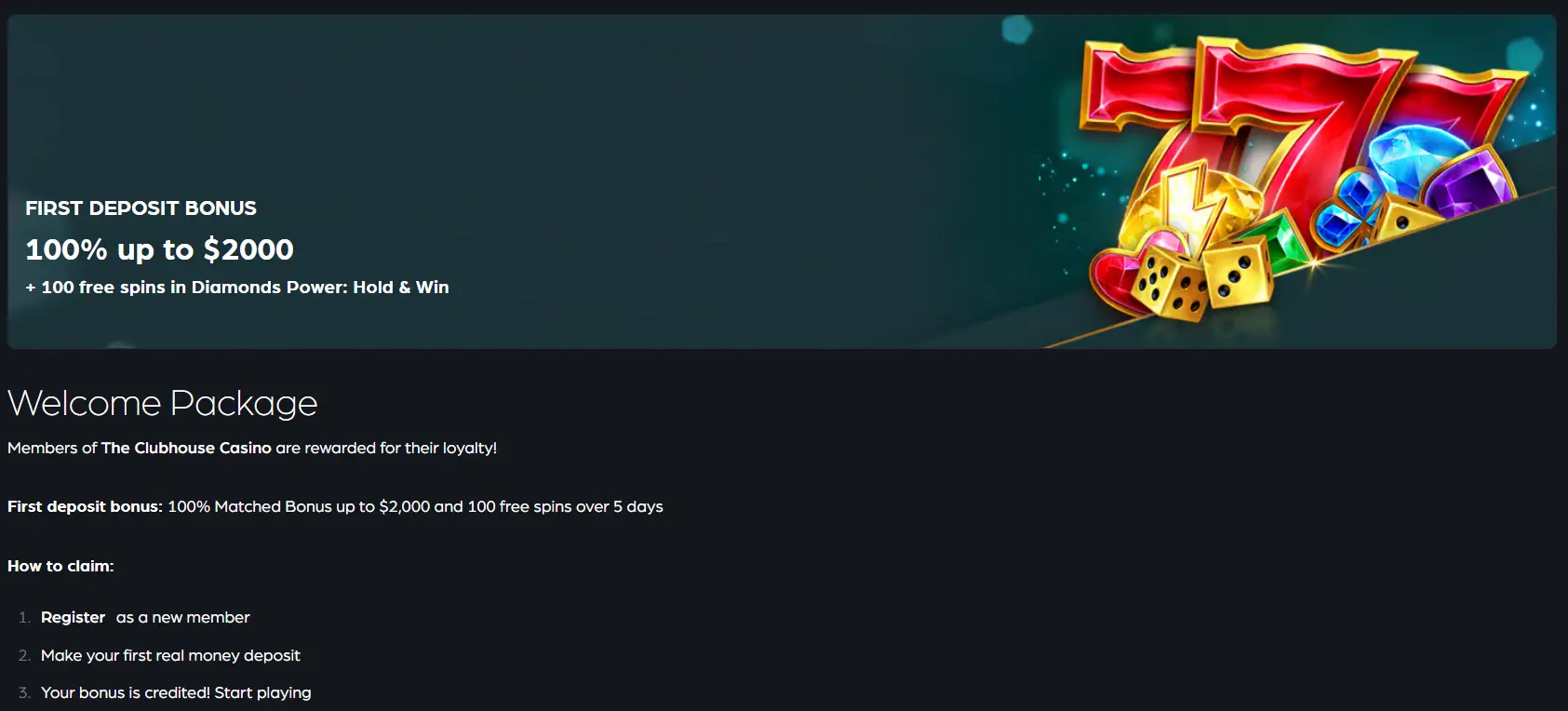
A 35× wagering requirement on a $100 bonus means you must wager $3,500 before withdrawing winnings derived from the bonus. Free-spin winnings are credited as bonus funds, not cash, and are subject to their own, often higher, wagering requirements.
Are “free spins” really free?
Free-spin winnings are credited as bonus funds rather than cash, and you must meet their wagering requirements before withdrawing them.
Is Golden Pokies legal in Australia?
The law prohibits operators from offering real-money online casino games to people in Australia, including when the operator is offshore. Players are not the target of that prohibition, but a site loading in Australia does not mean its service is permitted.
Published by the Clubhouse Casino team.