


Separate fast transfers from approved cashouts
Crypto network speed can be near-instant, while an operator’s review and approval remain separate steps.

Table of Contents
Table of Contents
- Crypto Payments: Fast Transfers, Separate Withdrawal Checks
- What “No KYC” Means for Australian Players
- The Payment Methods Available to Australian Players
- Deposits, Bonuses and the Conditions Attached
- PayID Withdrawals: The Payment Phase Is Not the Whole Journey
- Online Casino Cashouts: Limits, Methods and Delays
- Ethereum, Tether and Ripple: What the Payment Facts Establish
- No-Deposit Offers and Vouchers: A Withdrawal Catch
- Free Spins and Bonus Wagering: What Can Be Confirmed
- Live Casino Cashouts Still Depend on Processing
Crypto Payments: Fast Transfers, Separate Withdrawal Checks
A cryptocurrency transfer and a casino withdrawal are separate events. The first concerns movement of funds through a payment network; the second depends on the operator deciding that a withdrawal can be released. A near-instant transaction at the network level does not establish that an account has passed review, or that an operator has approved a payout.
That distinction matters because “instant” is often used as if it describes the whole journey. In practice, the word can refer only to the payment phase after release. It does not, by itself, tell anyone how long an operator will take to consider a request or whether the request will be approved. The transfer may be quick. The decision preceding it is a different matter.
A specialist review has described cryptocurrency transactions as capable of being near-instant. That is a report about a possible transaction speed, not a dependable timetable for every service or payment. Network conditions and the operator’s own handling of a transaction can affect what happens in a particular case. A speed claim without that distinction leaves out the part most likely to shape the actual wait.
I have seen the same confusion in payment language across the industry: a fast rail is presented as if it also controls the counter at the other end. It does not. The payment network moves value; the operator controls when a withdrawal is authorised and sent. Those are separate controls, even when the same cryptocurrency is involved at both ends.
The phrase “no KYC” can make this separation harder to see. It is a marketing description, not proof that every withdrawal will be released without checks. A crypto payment does not itself erase an operator’s ability or obligation to review an account. The specific identity process is a separate issue, but the basic point is simple: choosing a digital asset does not convert a pending request into an approved withdrawal.

This is especially important when descriptions of a bitcoin casino or another crypto service pair speed with an assurance of anonymity. Those are distinct claims. A payment method may offer a rapid transaction, while account review remains possible. A claim that a service is “no KYC” should not be read as a guarantee about the treatment of a future cashout.
There is also a legal context that changes how this subject should be read in Australia. Under the Interactive Gambling Act 2001, it is illegal for operators to provide real-money online casino games to people physically located in Australia. Casino-style games such as slots, poker and table games fall within that prohibition. Crypto does not create an exception to it, and describing a service as offshore or identity-light does not alter the position of the operator providing it.
So the useful distinction is not between a slow payment method and a fast one alone. It is between a transfer mechanism and the operator’s approval process. A blockchain transaction can be rapid without making a withdrawal request rapid from submission to receipt. Conversely, a delay in receiving funds does not necessarily mean the underlying network transaction itself was slow; the request may not yet have reached the payment stage.
I would treat any claim of a “fast” crypto cashout as incomplete unless it makes clear which part is being timed. Is the claim about a transaction once authorised, or about the full path from request through review to receipt? Without that boundary, a near-instant network description can sound like a promise about the operator’s decision. It is not.
The same caution applies to labels such as “best no-KYC casino” or “no-KYC bitcoin casino.” Such wording compresses two different ideas—payment speed and identity checks—into one sales phrase. It can conceal the difference between being able to send cryptocurrency and having a withdrawal approved. In Australia, it can also distract from the fact that real-money online casino services are prohibited for operators serving people in the country.
Crypto changes the payment rail, not the underlying approval logic. Fast transfer, separate decision.
What “No KYC” Means for Australian Players
UK casinos listed by payout speed
For Australian players exploring no-KYC casino options in 2026, this list offers a concise reference to operators with available licensing, deposit, or payout information. Check each operator’s requirements and terms directly before choosing.
Vegaz Casino
- License
- Curacao OGL/2024/1335/0780
- Min. deposit
- EUR 20
Vegaz Casino lists a Curaçao licence, OGL/2024/1335/0780. Its minimum deposit is EUR 20.
LevelUp Casino
- License
- Curacao eGaming OGL/2023/174/0082 (Dama N.V.)
- Min. deposit
- A$15
LevelUp Casino lists a Curaçao eGaming licence, OGL/2023/174/0082, under Dama N.V. The minimum deposit is A$15.
WinSpirit Casino
- License
- Curacao eGaming OGL/2024/923/0383 (Antillephone N.V.)
- Min. deposit
- A$30
WinSpirit Casino lists a Curaçao eGaming licence, OGL/2024/923/0383, under Antillephone N.V. Its minimum deposit is A$30.
MrPacho
- Payout speed
- crypto 30-120 minutes, fiat 24-72 hours
- Min. deposit
- A$30
MrPacho lists crypto payouts at 30–120 minutes and fiat payouts at 24–72 hours. Its minimum deposit is A$30.
Roby Casino
- License
- Curacao eGaming (Roby Games Ltd)
Roby Casino lists a Curaçao eGaming licence held by Roby Games Ltd. No deposit or payout details are provided here.
House of Pokies
- License
- international iGaming licence – jurisdiction not named in the source
- Payout speed
- PayID 1-24 hours
- Min. deposit
- A$30 (PayID from A$10)
House of Pokies lists an international iGaming licence, though the jurisdiction is not named. PayID payouts are listed at 1–24 hours; the minimum deposit is A$30, or A$10 with PayID.
Rollero Casino
- License
- Curacao Gaming Control Board OGL/2023/176/0095 (Hollycorn N.V.)
Rollero Casino lists a Curaçao Gaming Control Board licence, OGL/2023/176/0095, under Hollycorn N.V.
Wild Tokyo
- License
- Curacao
- Payout speed
- crypto 30-60 minutes, fiat 1-5 days
- Min. deposit
- A$10
Wild Tokyo lists a Curaçao licence and a minimum deposit of A$10. Its listed payout times are 30–60 minutes for crypto and 1–5 days for fiat.
SkyCrown
- License
- Tobique Gaming Commission
- Payout speed
- crypto ~10-15 minutes, fiat 1-5 days
- Min. deposit
- A$30
SkyCrown lists a Tobique Gaming Commission licence and a minimum deposit of A$30. Its listed payout times are approximately 10–15 minutes for crypto and 1–5 days for fiat.
Bizzo Casino
- License
- Curacao Gaming Control Board (TechSolutions Group N.V.)
Bizzo Casino lists a Curaçao Gaming Control Board licence under TechSolutions Group N.V.
“No KYC” is a marketing label, not a dependable promise that an account will never be checked. KYC means “know your customer”: the identity-verification process an operator may require before releasing a withdrawal. A site can describe registration as requiring little information and still ask for verification later, particularly when a withdrawal is requested.
I separate the phrase into two different claims. One is about what happens when an account is opened. The other is about whether the operator will verify the account before paying out. The first does not settle the second. A low-friction sign-up can feel like proof that no checks will follow, but the withdrawal stage is where that assumption can fail.
A specialist review reports that first withdrawals often prompt identity-verification requests. That is not a timetable or a guarantee that every account will be treated the same way; it is a reason not to read “no KYC” as “no checks at cashout.” If a check is raised, the withdrawal process may wait on the operator’s review. The label does not make that review disappear.
The distinction matters especially in Australian searches for a no-KYC casino, including searches that mention Bitcoin or another cryptocurrency. The payment asset and the identity process are separate issues. A crypto transaction can move through its payment network without establishing that an operator has approved an account for withdrawal. “No KYC” attached to a Bitcoin, Ethereum, Litecoin or Solana offer still describes a claim about account checks, not a guarantee of unrestricted cashouts.
I would not treat a new no-KYC brand as safer or more predictable simply because its sign-up appears brief. A marketing phrase tells little about what happens when a withdrawal is submitted. The useful distinction is between account creation and payment approval: a casino may collect minimal details at first, then require verification before processing a first withdrawal. The sequence can surprise anyone who assumed that the sign-up label applied to every later stage.
There is also a legal boundary that the marketing language cannot change. Under Australia’s Interactive Gambling Act 2001, operators are prohibited from providing real-money online casino games to people physically in Australia. That includes casino-style games such as slots, poker, blackjack and roulette. Describing an offshore service as “no KYC” does not alter the law governing the service or turn the label into an assurance about Australian access.

From an operations perspective, verification is a control applied to an account, not a feature of the payment method. Completing identity verification early can significantly speed up later withdrawals because the operator has less verification work to do when a request arrives. That does not mean approval is automatic or that an account will never be reviewed again. It means one avoidable stage may already be complete.
The wording on a site deserves a close read. “No KYC” may refer to sign-up, to a threshold or condition, or simply to a promotional claim; those are not interchangeable. Where the terms reserve the right to verify an account, the headline cannot sensibly be read as a promise that checks will not occur. The practical question is not whether the phrase appears on a page, but whether verification may be required before withdrawal.
In short, “no KYC” is not the same as “no verification at payout.” First withdrawals can bring checks, and completing verification ahead of time can reduce friction later. The distinction is plain. The label is not the process.
Legal Prohibition
Under the Interactive Gambling Act 2001, it is illegal for operators to provide real-money online casino games to people physically located in Australia.
The Payment Methods Available to Australian Players
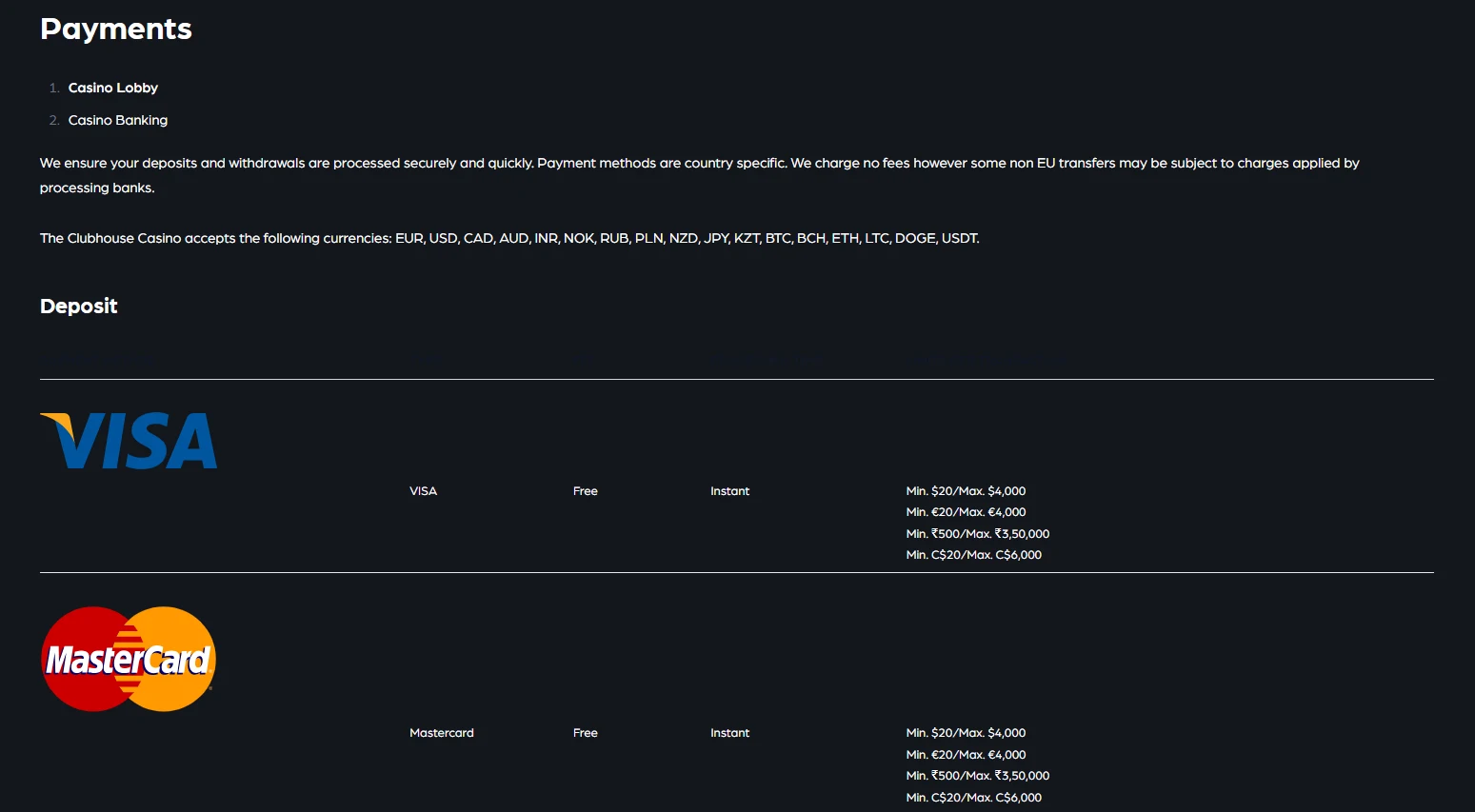
Payment lists can make a real-money casino look like an ordinary online shop: choose a method, fund an account, and move on. That impression leaves out the most important point for Australia. The Interactive Gambling Act 2001 prohibits operators from providing real-money online casino games to people physically in the country. A payment option shown on a website does not make the service lawful or mean that the operator may provide it to Australians.
A specialist review of casino payment options has described a mix of cards, e-wallets, bank transfers and, at some casinos, cryptocurrency. That is a report about the kinds of methods listed by operators, not confirmation that a particular service is available now, safe to use, or lawful for Australian residents. The distinction matters. Payment branding can change, and an account page is not a reliable substitute for understanding the legal position.
Cards
Credit and debit cards are familiar payment categories, but they should not be read as a green light for online casino use in Australia. The legal restriction applies to the provision of real-money casino games, not merely to a particular way of paying. A card logo on a payment page says what the operator claims its system can handle; it does not establish that the underlying casino service may be offered here.

There is also a practical difference between seeing a card listed and having a transaction accepted. A payment can be rejected by the operator or payment channel, and acceptance would not change the legal status of the service. In this market, the responsible description is not that cards are a dependable route into a casino, but that card symbols may appear in offshore payment menus despite the prohibition on operators providing real-money online casino games to people in Australia.
E-wallets
PayPal and Skrill are examples of e-wallets named in the reported payment mix. An e-wallet is a separate payment account used to make or receive transactions; it is not itself a casino licence, a guarantee of access, or evidence that a casino is permitted to serve Australian customers.
The useful distinction is between a payment brand and the service receiving the money. The presence of a familiar wallet logo can make a site appear more conventional, but it does not resolve whether the operator may provide its games in Australia. Nor should an e-wallet listing be taken as a promise that a transaction will be accepted. The operator, the payment provider and the circumstances of a transaction can all affect what happens.
I have seen payment menus treated as if they were proof of legitimacy. They are not. A method is only a method.
Bank transfers
Bank transfers are another category mentioned in specialist descriptions of casino payment options. The label can cover different arrangements, so it does not tell the whole story about how a particular transaction is initiated or handled. More importantly, using a bank account does not change the nature of the service being paid for. If the payment is for real-money online casino games provided to someone in Australia, the method does not make that service lawful.
For that reason, a broad list of payment categories should be read cautiously. It can tell what an operator says it supports, but not whether that claim is current, whether a bank will process a particular transaction, or whether the operator is entitled to offer the underlying service to Australians.
Cryptocurrency
Some casino payment menus also list cryptocurrency. That can attract people looking for a crypto casino that asks for little or no identity information, but the payment asset does not determine the operator’s legal obligations. Calling a site a “no-KYC crypto casino” is a marketing description, not proof that checks will never occur or that the service is lawful in Australia.
The payment method and the casino’s verification process are separate matters. Cryptocurrency does not turn a prohibited real-money casino service into an allowed one, and a crypto deposit does not establish that a later transaction will be accepted. The same caution applies to claims about a new crypto casino or a no-deposit offer: the label says nothing by itself about legality, current availability or the conditions attached.
Reading a payment menu
A payment menu is best understood as a description of the operator’s claimed transaction options—not an endorsement or a complete account of what can happen. Cards, e-wallets, bank transfers and cryptocurrency are different ways to move money, but none changes Australia’s restriction on operators providing real-money online casino games to people physically in the country.
This is why payment comparisons can be misleading when separated from the service itself. A method may be familiar, and a list may look comprehensive, yet neither establishes that Australians can lawfully use the casino. For Australian residents, that legal boundary comes first.

Deposits, Bonuses and the Conditions Attached
A bonus is not simply extra cash added to a balance. Its wagering condition defines which funds must be played through before a withdrawal can be requested. In my experience, that distinction is easy to miss when promotional wording focuses on the size of an offer and leaves the accounting rule in the terms.
A specialist review describes two possible approaches: wagering can apply to the bonus funds alone, or to the combined deposit and bonus. The first is preferable because the wagering condition covers a narrower pool of funds. Under the combined-balance approach, the deposited money is included in the amount subject to wagering as well. That changes the practical value of the offer, even if the headline bonus looks the same.
The key point is the base to which the condition applies. “Bonus funds only” and “deposit plus bonus” are not interchangeable descriptions. They define different obligations. The balance shown on screen may combine funds, while the wagering rule may still distinguish between them—or may treat them together. The written terms, rather than the promotional label, determine which interpretation applies.
I would read the condition as an accounting rule, not as a promise about access to funds. A bonus can be described as available without making its associated balance immediately withdrawable. Players must meet all bonus wagering requirements before attempting to withdraw. Until that requirement is satisfied, the bonus condition remains relevant to the withdrawal decision.
Do
- Check if wagering applies to bonus funds only
- Meet all requirements before requesting a cashout
Don't
- Assume a combined balance is immediately withdrawable
- Confuse payment speed with wagering eligibility
That is separate from the mechanics of a cashout. A payment method, a fast transfer, or a claim of “instant withdrawal” does not change the wagering attached to an offer. Payment speed concerns how funds move after release; wagering concerns whether the balance is eligible to be released at all. Treating those as one issue is how a convenient-sounding promotion can be mistaken for cash that is ready to leave an account.
The same distinction matters when a promotion is framed as a no-deposit bonus. The phrase describes the relationship between an offer and a deposit; it does not, by itself, explain the wagering rule or establish that a resulting balance can be withdrawn without conditions. Nor does a crypto payment option settle those terms. The funding route and the bonus accounting rule are separate questions.
For any offer, the meaningful details are whether wagering applies to the bonus alone or to the combined deposit and bonus, and whether the requirement has been completed before a withdrawal is attempted. If the wording does not make the applicable balance clear, the promotional headline cannot resolve that uncertainty. No shortcut.

In Australia, the legal setting also matters: the Interactive Gambling Act 2001 prohibits operators from providing real-money online casino games to people located in the country. Descriptions of bonuses and payment mechanics should not be read as an invitation or endorsement to use such services.
PayID Withdrawals: The Payment Phase Is Not the Whole Journey
PayID sits on Australia’s New Payments Platform (NPP), which supports real-time transfers between bank accounts. Osko is the network through which PayID payments are processed in real time. That describes the bank-transfer infrastructure, not the time taken for a withdrawal request to be reviewed or released by a service provider.
I have seen “instant” used as if it described the whole cashout. It does not. The useful distinction is between the operator’s approval stage and the transfer stage that follows. A specialist review has reported that funds can move instantly after a PayID withdrawal is released. That is a claim about the payment phase, not a promise that a request will be approved and received at once.

In practice, the sequence has separate steps: a withdrawal request is submitted, the operator reviews it, and, if approved, funds are released to the payment details provided. PayID can make the last part very quick. It cannot remove the earlier steps or control how long they take. A “fast” label on a payment option therefore needs to be read narrowly.
The request process described for PayID is straightforward: sign in, open the Wallet or Withdrawal area, enter a PayID identifier, specify an amount and confirm. The mechanics of submitting a request should not be confused with confirmation that the money has been sent. The status shown by the operator matters; until release, the transfer has not begun.
The word “instant” can also conceal internal handling. A specialist review reported cases where services promoted instant withdrawals but took as long as a day because of internal review. That does not establish a general timetable; it shows why transfer speed and approval speed are different measures. A bank network can process a released payment in real time while a pending request remains under review.
PayID Request
- 1
Access Wallet
Sign in and open the Wallet or Withdrawal area of the account.
- 2
Enter Details
Provide the PayID identifier and specify the amount to be withdrawn.
- 3
Confirm Request
Confirm the transaction to submit it for operator review.
PayID details also need to match the account arrangements required by the service. Using different payment details from those associated with a deposit can prompt a security review. That is not a network delay. It is a separate decision made before funds are released, and a transfer system cannot resolve it.
There is a further legal context in Australia. The Interactive Gambling Act 2001 prohibits operators from supplying real-money online casino games, including slots and table games, to people located in the country. A discussion of PayID’s technical operation is not an endorsement or recommendation of offshore casino services. The payment method’s availability does not make a prohibited service lawful.
For anyone comparing claims about an instant withdrawal, the key question is what event starts the clock. If the stated timing begins only when the operator releases the funds, it says nothing about how long the request may remain pending. If approval, identity review or payment details are still being checked, the transfer phase has not started.
That distinction is the practical one. PayID can support a real-time bank transfer after release. Approval comes first.
Online Casino Cashouts: Limits, Methods and Delays
A cashout has two separate constraints: where the funds can be sent and how much the account is permitted to release. These rules sit in the operator’s terms, and they can matter even after a withdrawal request has been approved. “Instant” describes the transfer stage at most; it does not remove routing rules or account limits.

Operators generally try to return funds through the method used for the deposit, where that is possible. The logic is administrative as well as financial: a withdrawal is less straightforward if the destination does not match the payment history. Where PayID is involved, using the same PayID details for withdrawals as for deposits helps avoid a security review. Funds should go only to an account linked to the casino profile.
A method may not support both directions. In that case, the operator’s terms determine the alternative route, and the available option may depend on the account and payment history. This is why a cashout destination should not be assumed from the deposit screen alone. Different rules can apply when the request is submitted.
One withdrawal limit is not always the whole limit
The maximum allowed for a single transaction is only one part of the picture. A specialist review reports that some operators also set weekly or monthly cashout caps, separate from per-transaction maximums. That distinction affects the total that can be released across a period, even if each individual request falls within its own permitted range.
Large withdrawals may also be released in instalments under an operator’s policy. This changes the schedule of payments rather than necessarily changing the amount approved overall. A cashout that appears to be one request can therefore arrive as separate releases, subject to the rules in force for the account.
The wording matters. “Maximum withdrawal” may refer to one transaction, while another clause governs the total paid across a week or month. Those are not interchangeable limits. A clear policy should state the applicable caps, fees and processing times, rather than leaving the meaning of a limit to inference.
What creates delays
Routing mismatches, account limits and manual handling can all affect when money is released. The payment network cannot resolve a request that the operator has not approved, and a transfer cannot be treated as complete merely because the withdrawal form has been submitted. Processing time also depends on the operator’s stated procedure and the destination method.
In practice, I separate the request, approval and transfer into distinct stages. That makes it easier to identify whether a delay concerns a limit, the chosen route or the operator’s handling. Small distinction. Important one.
There is also a legal boundary in Australia: the Interactive Gambling Act 2001 prohibits operators from providing real-money online casino games to people physically located in the country. A discussion of cashout mechanics is not an endorsement or invitation to use such services. For any account already in question, the operator’s written terms are the place to establish its routing rules, limits and fees.
Ethereum, Tether and Ripple: What the Payment Facts Establish
Ethereum, Tether and Ripple are often grouped together in discussions of crypto payments, but naming an asset does not establish how a particular payment will work. The relevant distinction is between a transaction moving through a crypto network and a service accepting, reviewing or releasing a payment. Those are separate steps.

A specialist review has described cryptocurrency transactions as capable of being near-instant. That describes a possible transaction speed, not a dependable cashout time. It does not mean every transfer settles at the same pace, or that an operator will approve a withdrawal as soon as a transaction reaches a network. The clock that matters to the person waiting for funds may include more than the network transfer.
The same caution applies to claims about an Ethereum, Tether or Ripple payment. An asset name alone does not say whether deposits and withdrawals are both supported, how a transfer must be submitted, or what happens before funds are released. Those details depend on the service’s own payment terms. A fast network cannot fill in terms that have not been specified.
“No KYC” is also a separate claim from crypto speed. It concerns identity checks, not the time a blockchain transaction takes. Putting the two phrases together can make a payment sound simpler than it is: one describes a verification policy, the other a potential transaction characteristic. Neither guarantees the other.
From behind the counter, I would treat “instant” as a description of one possible part of the route, never the whole journey. The practical question is not merely which asset appears in a payment menu, but what the service says about acceptance, approval and release. Read the wording closely. Names are not terms.
No-Deposit Offers and Vouchers: A Withdrawal Catch
A no-deposit offer and a deposit voucher solve different problems. The first describes a promotion that does not require an initial payment; the second is a way to add funds. Neither label explains how winnings can be withdrawn, or whether an offer is actually available.
A specialist review describes prepaid vouchers such as Neosurf as deposit methods rather than cashout methods. That distinction matters: a voucher code can help fund an account, but it does not provide a route for sending money back. If a balance is later eligible for withdrawal, the operator may require another payment method. The route out is separate.
That is the catch. A payment option can appear on a deposit screen without being supported for withdrawals. The word “instant” on a promotion does not change that mechanics, either. It says nothing by itself about whether a voucher can receive a payout.
“No deposit” also does not mean “no conditions”. It is not evidence that a bonus exists, that winnings can be cashed out, or that identity checks are waived. Those are separate questions, not features implied by the phrase. A USDT payment option would not alter the voucher’s role, and a game label such as crash does not change the distinction between funding and cashing out.

There is a further Australian context: the Interactive Gambling Act 2001 prohibits operators from providing real-money online casino games to people physically in Australia. A voucher’s availability elsewhere does not change that legal position.
From an operational perspective, the key distinction is simple: deposit instrument, not payout destination. Promotional wording can blur the two. The cashier does not.
Free Spins and Bonus Wagering: What Can Be Confirmed
A free-spins label describes how play is credited; it does not, by itself, establish whether an offer exists or what conditions apply. The wording that matters is in the bonus terms: any wagering requirement may attach to bonus funds alone, or to the combined deposit and bonus balance. Those are materially different calculations.
In the first arrangement, the deposited amount is kept outside the wagering calculation. In the second, the deposit is included, so more of the balance may have to be wagered before a withdrawal can be requested. From an operator’s side, that distinction is deliberate. It defines which funds are treated as promotional and which are pulled into the same turnover condition.

A specialist review has described both approaches and judged bonus-funds-only wagering preferable. That is a useful comparison, not proof that a particular free-spins promotion uses that structure. The offer’s own terms determine the calculation, and promotional wording should not be mistaken for the operative rule.
I have seen the headline benefit draw attention while the calculation sits further down the terms. That is where the practical difference appears. Before a withdrawal, all applicable bonus wagering requirements must be met; an unfinished condition can keep funds from being available to cash out. No assumption should be made that free spins are exempt, or that a “no KYC” label changes bonus conditions. The terms decide.
Live Casino Cashouts Still Depend on Processing
A live table changes how a game is presented; it does not, by itself, determine when a payment is released. Specialist reviews describe casino payment speed as dependent on several factors, so the “live” label is not evidence of a particular cashout time. The request still passes through the operator’s processing arrangements before funds can reach a payment account.

That distinction matters when a service uses terms such as “instant.” The word can describe a transfer phase after approval, not the full period from submitting a request to receiving money. A fast payment rail cannot remove the operator’s role in reviewing and releasing a withdrawal.
I have seen the game catalogue treated as if it explained the cashier. It does not. Table format and payment handling are separate parts of the service. No KYC wording attached to a live-casino offer should be taken as proof that a withdrawal will be released without identity checks.
There is also a legal boundary in Australia: under the Interactive Gambling Act 2001, providing real-money online casino games, including live table games, to people physically in the country is illegal for operators. That applies regardless of whether a service describes itself as live, instant or no-KYC.
Different label. Same constraint.
What payment methods are available?
Australian players can use credit or debit cards, PayPal and Skrill, bank transfers, and, at some casinos, cryptocurrency. Prepaid cards and vouchers such as Neosurf are generally for deposits, not withdrawals.
How fast are withdrawals?
PayID withdrawals can arrive almost instantly once the casino releases them, though internal reviews can cause delays. E-wallet withdrawals are typically processed within 24 hours, while bank transfers and card payments can take several days; traditional bank transfers may take up to five business days.
How do you choose the best easy withdrawal casino site?
Check that the casino clearly publishes withdrawal limits and supports a payment method suited to you. Completing identity verification early can help avoid delays, and withdrawals may need to go back to the deposit method.
Written by the editors at Clubhouse Casino.