

Understand the trade-offs before choosing an Android casino
The guide compares browser, PWA and app access with legal limits, bonus conditions, game performance and mobile payment friction.

Table of Contents
Table of Contents
- The Australian Rules Behind Offshore Casino Access
- Android Casino Access: Website, PWA or App
- Free Android Slots and Virtual-Credit Play
- Pokies Bonuses: The Conditions Behind the Offer
- Real-Money Slots on Android: Access and Limits
- When Android Slot Games Run Poorly
- Deposits and Withdrawals on an Android Casino
- Casino Apps for Android and the Payment Friction Behind Them
- Mobile Casino Payments: PayID, POLi and Other Methods
- Casino Games on Android and the Controls That Matter
The Australian Rules Behind Offshore Casino Access
The legal distinction is between the operator and the punter. Under the Interactive Gambling Act 2001, an operator cannot lawfully provide online casino-style games to people located in Australia. That category includes familiar casino formats such as pokies, poker and table games. The restriction is directed at the service being supplied; it does not make an individual Australian’s act of playing at an offshore mobile casino illegal under that Act.
Those two points are often collapsed into one. They are not the same rule. A punter is not committing an offence merely by playing, but that does not turn an offshore casino into a locally authorised service. From the operator’s side, the prohibition is the central issue. From the punter’s side, the practical question is what protections are available if something goes wrong. They are not equivalent positions.
I have seen licensing language do a lot of work in casino marketing. A licence can sound like a general stamp of approval, when it actually comes from a particular jurisdiction and operates within that jurisdiction’s framework. Curaçao, the Malta Gaming Authority and Gibraltar are among the licensing jurisdictions associated with casinos that take Australian customers. A licence from one of them does not override Australia’s rules or make the operator locally licensed to provide online casino games here.
UK casinos listed by payout speed
Choosing an Android casino app in Australia means checking the practical details that matter to you, such as licensing, deposit options and payout information. This list offers a concise reference to the details available for each operator.
Vegaz Casino
- License
- Curacao OGL/2024/1335/0780
- Min. deposit
- EUR 20
Vegaz Casino lists a Curaçao OGL licence, number OGL/2024/1335/0780. Its minimum deposit is EUR 20.
LevelUp Casino
- License
- Curacao eGaming OGL/2023/174/0082 (Dama N.V.)
- Min. deposit
- A$15
LevelUp Casino lists a Curaçao eGaming licence, OGL/2023/174/0082, held by Dama N.V. The minimum deposit is A$15.
WinSpirit Casino
- License
- Curacao eGaming OGL/2024/923/0383 (Antillephone N.V.)
- Min. deposit
- A$30
WinSpirit Casino lists a Curaçao eGaming licence, OGL/2024/923/0383, held by Antillephone N.V. Its minimum deposit is A$30.
MrPacho
- Payout speed
- crypto 30-120 minutes, fiat 24-72 hours
- Min. deposit
- A$30
MrPacho provides payout estimates of 30–120 minutes for crypto and 24–72 hours for fiat. The minimum deposit is A$30.
Roby Casino
- License
- Curacao eGaming (Roby Games Ltd)
Roby Casino lists Curaçao eGaming licensing under Roby Games Ltd. No deposit or payout details are provided here.
House of Pokies
- License
- international iGaming licence – jurisdiction not named in the source
- Payout speed
- PayID 1-24 hours
- Min. deposit
- A$30 (PayID from A$10)
House of Pokies lists an international iGaming licence, though the jurisdiction is not named in the available information. PayID payouts are listed at 1–24 hours; the minimum deposit is A$30, or A$10 with PayID.
Rollero Casino
- License
- Curacao Gaming Control Board OGL/2023/176/0095 (Hollycorn N.V.)
Rollero Casino lists a Curaçao Gaming Control Board OGL, number OGL/2023/176/0095, under Hollycorn N.V. No deposit or payout details are provided here.
Wild Tokyo
- License
- Curacao
- Payout speed
- crypto 30-60 minutes, fiat 1-5 days
- Min. deposit
- A$10
Wild Tokyo lists Curaçao licensing. Its stated payout estimates are 30–60 minutes for crypto and 1–5 days for fiat, with a minimum deposit of A$10.
SkyCrown
- License
- Tobique Gaming Commission
- Payout speed
- crypto ~10-15 minutes, fiat 1-5 days
- Min. deposit
- A$30
SkyCrown lists a Tobique Gaming Commission licence. Crypto payouts are estimated at around 10–15 minutes and fiat payouts at 1–5 days; the minimum deposit is A$30.
Bizzo Casino
- License
- Curacao Gaming Control Board (TechSolutions Group N.V.)
Bizzo Casino lists a Curaçao Gaming Control Board licence under TechSolutions Group N.V. No deposit or payout details are provided here.
That distinction matters even when a site looks established. A polished mobile interface, familiar payment branding or a long list of game providers does not change the legal status of the service. Nor does the word “licensed” settle where a punter can seek help. The licence is relevant to the operator’s claimed oversight, but it is not Australian authorisation. Different jurisdiction. Different recourse.
Australian enforcement focuses on the operators and services. The Australian Communications and Media Authority, or ACMA, works to restrict access to gambling sites that breach the rules. A blocked page is therefore not just a technical glitch to work around; it can reflect regulatory action. The availability of a site at one moment is not proof that it is permitted to serve people in Australia, and an offshore operator’s willingness to accept an account does not change the law applying to its service.
I have also seen access and legality treated as if they were interchangeable. They are not. A site may remain reachable for a time, be blocked later, or appear through a different route. None of those outcomes establishes that the operator is allowed to offer casino games to people in Australia. Using a VPN to reach a blocked casino adds another risk: the operator may treat location masking as a breach of its terms, void winnings or close the account. It is not a reliable way to resolve the underlying restriction.
The financial risk sits alongside the legal distinction. Offshore services are not Australian-licensed consumer services, and there is no Australian government body to complain to if one refuses to pay winnings. That does not mean every offshore operator will refuse a withdrawal; it means the familiar local avenue for a complaint about an Australian-licensed gambling service is not available in this situation. A licence issued overseas does not give an Australian punter the same local route for resolving a dispute.
The word “safe” is often used loosely in this market. What it can conceal is a chain of dependencies: the operator’s terms, its own handling of an account dispute, and whatever process exists in the licensing jurisdiction. A punter can be outside criminal liability under the Act and still face a difficult dispute with an offshore business. No local consumer backstop. That is the practical gap.
Age rules remain straightforward: a person must be at least 18 to register and gamble in Australia. Meeting that threshold does not make an offshore casino locally authorised, just as the operator’s overseas licence does not remove Australia’s restriction on providing the service here. Age eligibility and operator legality answer separate questions.
This is why searching for an online casino for Android can lead into a legal issue before it becomes a question of mobile convenience. “Available” describes whether a page or service can be reached; it does not describe whether an operator may lawfully offer casino games to Australians. The distinction is easy to blur in advertising and easy to miss on a small screen. It should not be blurred.
Legal Risk
Using a VPN to reach a blocked casino may be treated as a breach of terms, leading to voided winnings or account closure.
Android Casino Access: Website, PWA or App
On Android, “casino app” can mean several different things. In practice, Australian users most often reach a mobile casino through a browser, or install a Progressive Web App (PWA) from the casino’s website. A conventional app downloaded from Google Play is a less common route: casino apps are rarely listed there in Australia, and browser access is the default.
Browser play uses the casino’s mobile website directly. The same account used on desktop is generally used on a phone, so the browser is an access point rather than a separate service. That distinction matters: a page that looks app-like does not necessarily mean a native Android application has been installed.
A PWA sits between a website and a native app. It is a shortcut to the casino website, designed to behave more like an app on a mobile device. If the site provides an installation prompt, the process is straightforward: tap “install” or “add to home screen”, then confirm. The shortcut appears on the device and opens the website in an app-like view. It does not turn the casino into an Australian-licensed service, nor does it change the terms attached to the account.
What the routes actually mean
A browser tab is the simplest option and needs no installation. A PWA adds a home-screen shortcut and a more app-like opening experience, while still relying on the casino website. A native app is a separate application built for Android. Those categories can look similar at a glance, but the source of the software is different.
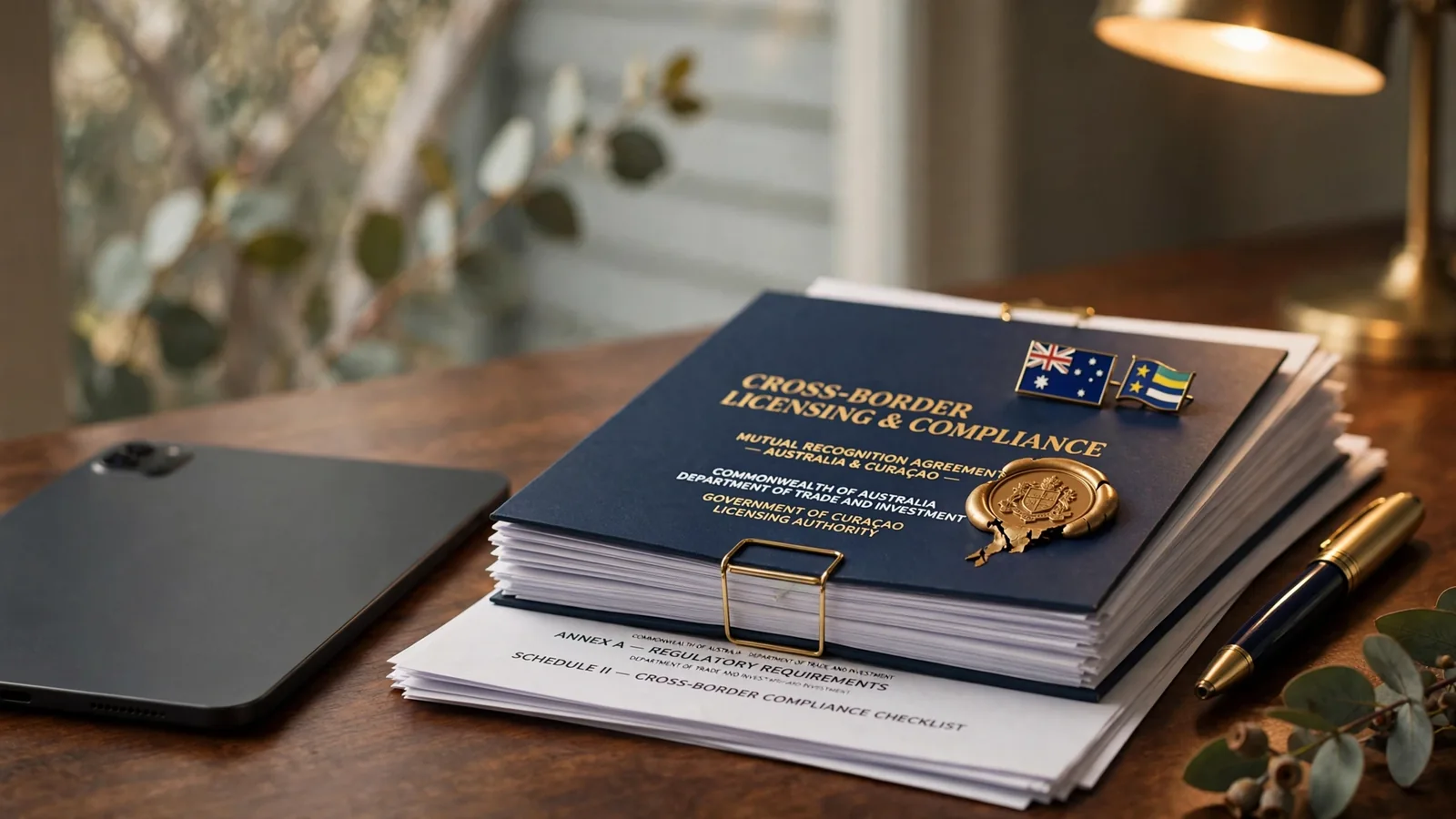
That difference matters most when an app is offered as a download outside Google Play. Sideloaded casino apps carry security risks, and their safety depends on the operator and how the app is provided. An install file is not made trustworthy just because it uses an Android icon or claims to be an official app. I treat an unexplained download prompt as a reason to stop and check the operator’s own information, rather than as proof that an app is the better way to play.
Some offshore crypto-friendly casinos may offer a browser site or PWA rather than a store-listed app. That description is not a recommendation. Before depositing, the site must explicitly accept the punter’s location; an accessible page alone does not establish that the account is eligible. Using a VPN to reach a blocked casino can breach its terms, with winnings at risk of being voided and the account closed.
The practical choice is therefore not simply “app versus no app.” It is whether the access route is clear, whether the site accepts the user’s location, and whether the software comes from a source that can be assessed. A PWA installed from the casino website is still connected to that website. A sideloaded application introduces an additional software-safety question.
There is also a limit to the protection available when dealing with an offshore operator. If it refuses to pay winnings, there is no Australian government body to complain to for recovery. An app icon does not change that position. Nor does a PWA make an offshore service local.
From inside the industry, the word “app” often does more work in advertising than it does technically. A browser shortcut can feel like an app, but it remains a route into the same online service. The label is secondary. The operator, access terms and software source are what matter.
Browser Access
Direct use of the mobile website; requires no installation and uses the same account as desktop.
Progressive Web App (PWA)
A website-based shortcut installed via the home screen that behaves like an app.
Native Android App
A separate application built for Android, often sideloaded from outside Google Play.
Free Android Slots and Virtual-Credit Play
Free-play casino apps sit in a different category from gambling for money. On Android, these are social games built around virtual credits rather than cash stakes. They can be downloaded through the Google Play Store; comparable apps are also available through the Apple App Store. Their presence in an app store does not make them a way into real-money gambling.
I treat the distinction as a practical one, not a label on a screen. A game may resemble a casino experience, use familiar layouts and award credits during play, but those credits are part of the app’s own play system. They are not a deposit balance. Free-play does not become a cash game because the graphics or terminology look similar.
Different kind of play.
Virtual credits are the units used to keep a session going inside the app. Depending on how a particular game is designed, they may be granted, replenished or exhausted within that environment. Their role is to support continued play, not to represent money held for a punter. The important boundary is whether the app involves a real-money stake and a cashable result; a free-play app using virtual credits is not that route.
That boundary matters because app-store availability can create a misleading impression. A listing in Google Play signals that an app is distributed through that store; it does not establish that every casino-style activity in every context is lawful, nor does it turn virtual credits into funds. In Australia, social and free-play casino apps that use virtual credits are legal to use. That is the relevant distinction for this category.

On Android, the store listing and the app’s own description are the first places to understand what is being installed. The product should be read as a free-play game when its mechanics are based on virtual credits, not as a promise of cash winnings. Labels such as “free” describe the play mode, but they do not answer every question about how credits are replenished or what features sit behind the game. The app’s terms and in-app explanations do that work.
I have seen the same confusion arise when a familiar casino-style interface is treated as evidence of a money feature. It is not. Visual similarity tells little about the underlying transaction. In free-play, the value is the game session itself; credits function inside that session. They should not be mistaken for a balance that can be withdrawn or transferred into a real-money account.
No conversion route.
Free-play apps should not be approached as a stepping stone to cash gambling. The fact that a game uses casino imagery, or that a separate service offers real-money play, does not make the virtual credits interchangeable. They remain part of the free-play product. Mixing those categories obscures the central difference: one is a social game using virtual units, while the other involves money.
This also means that “free” is not a synonym for “risk-free” in every broader sense. It describes the game’s credit model, not a guarantee about how much time someone will spend in the app or what prompts and features it contains. The useful check is simple: identify whether play uses virtual credits, and keep that category separate from real-money gambling.
Free means virtual.
Pokies Bonuses: The Conditions Behind the Offer
A no-deposit bonus can sound like free play, but the label leaves out the conditions that decide whether anything can be withdrawn. A bonus may be credited without an initial payment, yet winnings can remain locked until wagering requirements are met. Other terms may restrict which games count, set an expiry date or cap the amount that can be cashed out. The headline is only the entry point.
I have seen the multiplier do most of the persuasive work. A specialist review describes welcome-bonus wagering requirements in the range of 30x to 50x the bonus amount; the multiplier means the required wagering is calculated against the bonus, not simply the amount deposited. That distinction matters. A large advertised bonus can create a substantial turnover requirement, even before game restrictions and time limits are considered. The same kind of review characterises requirements above 40x as steep. These are assessments, not a guarantee that every offer follows the same pattern.
Read the calculation, not the headline
The minimum deposit is another part of the price of entry. If a bonus requires a deposit, its minimum determines how much must be committed to qualify; it does not tell how much can ultimately be withdrawn. The wagering multiplier, qualifying deposit and deadline need to be read together. A generous-looking credit may be impractical if the required wagering cannot be completed within the allowed period.
A specialist review reports that many offers have a clearance window of 7–10 days, with the bonus lost if the deadline passes. That is a short clock for a punter who treats the bonus as something to return to later. The expiry date may apply to the bonus balance or the wagering task, so the terms should make clear what disappears and when. No guesswork.
Game restrictions alter the calculation too. If only selected games contribute to wagering, play on excluded games may not advance the requirement at all. The terms may also define how much of a stake counts, or set a cashout cap that limits eligible winnings. A bonus balance is not the same thing as withdrawable cash.
I used to read the large number first. That was the mistake. The useful order is to check the minimum deposit, multiplier, qualifying games, expiry date and cashout cap before accepting anything. If one condition is unclear, the offer cannot be valued reliably. “Free” is a marketing word; the mechanics are conditional.
These offers are associated with offshore, crypto-friendly casinos, not Australian-licensed consumer services. A site must accept a punter’s location before any deposit is made. Using a VPN to reach a blocked casino may lead to winnings being voided or the account being closed. There is no Australian government body to complain to if an offshore casino refuses to pay winnings. Those are not bonus terms, but they affect the risk behind the offer.
Promotional language does not change the legal setting: the Interactive Gambling Act 2001 prohibits operators from providing online casino-style games to people in Australia. Individual players are not made criminally liable for playing offshore under that Act, but that does not provide local consumer protection. The bonus may be small print; the exposure is not.
Do
- Check the wagering multiplier and expiry date
- Verify the minimum deposit and cashout caps
- Confirm if the site accepts your location
Don't
- Rely on the headline bonus amount alone
- Use a VPN to access a blocked casino
- Assume bonus winnings are immediately withdrawable
Real-Money Slots on Android: Access and Limits
A real-money casino on Android is not the same thing as a free-play game that uses virtual credits. In the first case, deposits and withdrawals involve actual funds, and any winnings depend on the operator’s rules and willingness to pay. Virtual credits have no cash value. The screens may look similar; the consequences are not.
Australia’s legal position sits behind that distinction. Under the Interactive Gambling Act 2001, operators cannot provide real-money online casino games to people in Australia. The restriction is on the service provider, not an offence imposed on an individual punter for playing at an offshore casino. An offshore operator is not an Australian-licensed consumer service, however, and there is no Australian government body to complain to if it refuses to pay winnings. That is a material limit, not fine print.
What Android access means
Casinos that accept Australian players commonly make their sites available through a mobile browser or a Progressive Web App (PWA), rather than a standard app-store download. Most mobile access is simply the casino website opened on a phone, with the same account used on desktop. A PWA is a website-based shortcut that behaves more like an app; it does not change who operates the service or the terms attached to an account.
That distinction matters when a page advertises “real-money casino apps for Android”. The phrase can describe a browser-based experience or a PWA, not necessarily a native app vetted and distributed through Google Play. Apps installed from outside an official store are sideloaded, and their security depends on the operator. A familiar icon on a home screen is not evidence of local licensing or a guarantee that funds can be recovered.
I have seen the interface do a lot of persuasive work. It can make the service feel like an ordinary phone app, while the underlying relationship remains with an offshore operator. Different wrapper. Same counterparty.
Before an account is funded
An offshore crypto-friendly casino may offer Android access, but its availability does not establish that it accepts a person’s location. The operator’s location rules need to be confirmed before depositing. Access through a VPN is not a reliable workaround: using one to reach a blocked casino may breach its terms, void winnings or result in account closure.
Nor does a successful sign-in settle the practical question of recourse. The account may work, and a balance may appear on screen, without creating an Australian consumer-service relationship. If a dispute arises over a withdrawal, the absence of an Australian government complaints body leaves the punter dealing with the operator and whatever processes it provides.
The dividing line is straightforward: virtual-credit play is not gambling for cash, while real-money play involves funds and an offshore operator subject to Australian restrictions. Android changes how the site is displayed; it does not change that legal or financial position.
When Android Slot Games Run Poorly
A page that freezes, loads slowly or stops responding on an Android phone does not automatically point to a problem with the casino account. Technical trouble can come from the handset, its browser or the connection. A specialist review identifies weak connectivity, limited available memory, an outdated browser and too many apps running in the background as common causes of mobile casino problems.
Troubleshooting Performance
- 1
Connection Check
Verify if the network is stable and other pages are loading normally.
- 2
Resource Management
Close unnecessary background apps to free up available memory for the browser.
- 3
Browser Update
Ensure the browser is current or try clearing stored data to resolve display faults.
I separate those causes before drawing conclusions. A poor connection can interrupt the exchange between a phone and a website, making the display stall or fail to update. That can look like a game fault even when the underlying issue is the network. If other pages are also slow or unreliable, the connection is a more plausible place to start than the particular game.
Memory is another bottleneck. Android has to share available resources among the browser and other active apps. When too much is running at once, a demanding page may respond slowly or close unexpectedly. Closing apps that are not being used can free resources; restarting the browser can also clear a temporary slowdown. It is a basic check, not a guarantee.
An old browser can cause different problems. A site may not behave as intended when the browser is behind on updates, so checking for an available update is a reasonable troubleshooting step. If the issue persists, clearing the browser’s stored data or trying another current browser may help identify whether the fault is local to that browser. I would avoid treating repeated refreshes as a fix: they can interrupt the session without resolving the cause.
There is also a useful distinction between a display problem and an account or site rule. A frozen animation, for instance, is a technical symptom; a login rejection or a message about an account is not necessarily one. Repeated attempts do not establish which explanation applies. The visible error, whether other pages work, and whether the problem recurs after restarting the browser are more useful clues.
The same applies to apparent delays. A page that has not finished loading may be suffering from connectivity or device constraints, while a site response about an account is a separate matter. I would not assume that changing a phone setting can resolve a restriction imposed by the site. Different problem, different cause.
A simple sequence keeps the diagnosis grounded: check whether the connection is stable, close unnecessary background apps, restart the browser, and make sure it is current. If the problem remains, note what the page was doing and any error message rather than repeatedly retrying. That gives support staff something concrete to investigate, without confusing a device fault with a decision made by the site.
No handset or browser can promise uninterrupted play. Android devices differ in available memory and software, and connection quality can change from one session to the next. Technical troubleshooting can narrow down the likely cause; it cannot establish that a casino service is suitable or available. Keep the distinction clear.
Deposits and Withdrawals on an Android Casino
On an Android casino, the payment screen can make a deposit look like a single tap. A withdrawal is a different process: the casino may review the account, check the payment route and apply its own processing period before releasing funds. I treat the displayed balance and money actually received as two separate things.
The first cashout commonly brings identity checks. KYC verification may involve a selfie or identity document, along with proof of address. If those details are missing or do not match the account, the request can stall while the casino asks for clarification. Completing verification before requesting a withdrawal can reduce one avoidable source of delay, though it does not control the casino’s own review time.
The payment method also shapes the route out. Some casinos require a withdrawal to go back through the method used for the deposit; others offer deposit-only methods that cannot receive a payout. These restrictions are not always obvious on the deposit screen. In my experience, the practical mistake is choosing a convenient deposit method before checking whether it leaves a usable cashout route.
Bank transfers can take up to five business days, according to a specialist review; that is a reported timing, not a universal service standard. The operator’s pending period and any account checks may add time before a transfer is sent. A withdrawal marked as approved is not necessarily money already available in the bank account. Small distinction. Important one.
These services are offshore crypto-friendly casinos, not Australian-licensed consumer services. Before depositing, the site must accept the player’s location. Using a VPN to reach a blocked casino may lead to winnings being voided or the account being closed. If an offshore casino refuses to pay, there is no Australian government body to complain to for recovery of the winnings.
The payment terms are part of the withdrawal decision, not fine print to revisit after a win. I would check the available withdrawal methods, any same-method rule, the operator’s review process and the stated transfer timing before putting money in. A deposit that clears instantly says little about how quickly a cashout will move.
Casino Apps for Android and the Payment Friction Behind Them
An Android casino app does not make a deposit or withdrawal more certain. I have seen the interface create that impression: the account is already open, the cashier is one tap away, and the payment step looks like a routine part of the app. In practice, the operator’s payment rules and the bank’s response still decide what happens.
A card deposit can fail even when the details are entered correctly. A specialist review reports that some Australian banks block or flag gambling-related card charges. That is a bank-side refusal, not proof that the app itself is broken. Retrying the same card may not resolve it; the available payment options and the operator’s terms matter.
Nor does an Android label establish that a service is Australian-licensed. Any casino discussed in this context is offshore and crypto-friendly, not an Australian-licensed consumer service. It must accept a punter’s location before a deposit is made. Using a VPN to reach a blocked casino may breach its terms, put winnings at risk and lead to account closure. Sideloaded apps carry security risks, and their safety depends on the operator. There is no Australian government body to complain to if an offshore casino refuses to pay winnings. The risk sits with the account holder.
The first withdrawal is often where the account moves from casual registration to formal checking. KYC verification commonly requires a selfie or identity document, as well as proof of address. Those files are not an optional app preference; they are part of the operator’s verification process. A withdrawal can remain unresolved until the requested material has been reviewed, so a smooth-looking cashier does not mean funds are ready to leave.
I would treat any claim that an Android app makes payments “instant” as a description of the interface, not a promise about the transaction. Deposits can be stopped by a bank, while withdrawals can wait on identity checks. That distinction is easy to miss when the payment screen is designed to feel like a single tap.
The same caution applies to payment branding. An app displaying a method does not by itself confirm that it will work for every Australian account, or that it can be used for withdrawals. Check the operator’s location eligibility and payment conditions before depositing; the app is only the front end.
Mobile Casino Payments: PayID, POLi and Other Methods
On an Android phone, deposit options are determined by the offshore operator, not by the device itself. Specialist reviews describe PayID deposits as near-instant and typically free, but that is a reported feature, not a guarantee for every site or transaction. The available methods and any charges should be checked against the operator’s current payment terms before a deposit is made.
The same reviews list PayID, BPAY, bank cards and cryptocurrency among methods that may be offered through mobile casino websites. Processing times vary by method and operator; a payment screen showing an option does not establish that it will suit every account or be processed immediately. I treat the stated timing as part of the payment conditions, not as a promise.
POLi is different. Its Australian operations closed in September 2023, so it no longer processes local transactions. A page that still presents POLi as a current Australian deposit route is out of date. POLi should not be confused with other bank-transfer options, whose availability and processing depend on the operator.
These distinctions matter when a punter is comparing a real-money casino service on Android with a free-play app: virtual credits are not a deposit method for cash gambling. Offshore crypto-friendly casinos are not Australian-licensed consumer services. Before depositing, the site must explicitly accept the punter’s location. Using a VPN to reach a blocked casino may lead to winnings being voided or the account being closed. There is also no Australian government body to complain to if an offshore casino refuses to pay winnings.
Payment access is not a safeguard. A method being listed does not establish that a transaction is suitable or that funds can be recovered if a dispute arises. Small print matters.
Casino Games on Android and the Controls That Matter
On Android, the useful question is not which casino game looks best on a small screen, but what limits can be set before a session begins. A specialist review of responsible-gambling tools identifies deposit, loss and wager limits, session time limits, and self-exclusion as available controls. Their presence and operation can differ between offshore crypto-friendly casinos, so the settings should be checked within the account rather than assumed from a mobile layout.
Each control addresses a different point in the cycle. A deposit limit restricts money added; a loss limit sets a boundary on losses; and a wager limit constrains the amount staked. A session timer puts a defined stop around time spent playing. Self-exclusion is a stronger step for preventing further access, not simply a reminder to take a break. Useful controls are the ones that can be understood and set before play, not buried after a balance has been spent.
From the operator side, these settings are not interchangeable. A limit may apply to deposits but not losses, or a change may not take effect immediately; the account terms should explain how it works. I have seen people mistake a displayed setting for a completed safeguard. Check the confirmation. Then stop.
These controls do not change the legal position: real-money online casino services are prohibited for operators in Australia, even though individual players are not liable under the Interactive Gambling Act 2001 for playing offshore. Any offshore site must accept the player’s location before a deposit is made. Using a VPN to reach a blocked casino may void winnings or close the account. Sideloaded apps also carry security risks, and their safety depends on the operator. If an offshore casino refuses to pay, there is no Australian government body to complain to.
Can I play mobile casinos for real money without an app?
Yes. Most are accessed through a mobile browser using the same account as on desktop, though Australian law prohibits operators from offering online casino games to people in Australia.
Can I play for free at Australian mobile casinos?
Yes. Social casino apps with virtual credits are available through Google Play and the Apple App Store and are legal to use in Australia.
Can players use real-money mobile casinos in Australia?
Playing at an offshore mobile casino is not illegal for an individual under the Interactive Gambling Act 2001. However, that Act prohibits operators from offering online casino games to people in Australia.
Do mobile casinos offer bonuses?
Yes. Welcome bonuses commonly have wagering requirements of 30x to 50x the bonus amount, and many must be cleared within 7–10 days.
Can I use PayID at Australian casino apps?
PayID is available for deposits and is typically near-instant and free.
Is it safe to play at mobile casinos in Australia?
Offshore casinos are not Australian-licensed consumer services, so there is no Australian government body to complain to if an operator refuses to pay winnings. An overseas licence does not provide the same local dispute-resolution route.
Do players need an app to play on mobile casinos?
No. Browser play is the usual option, and some casinos offer a Progressive Web App that can be added to the home screen. Casino apps are rarely listed on Google Play or the Apple App Store in Australia.
Published by the Clubhouse Casino team.