


How to assess Paysafecard claims before depositing
Paysafecard acceptance does not establish that an offshore casino is lawful or locally available, and withdrawals may use a different route.

Table of Contents
Table of Contents
- The Australian legal context behind offshore casino payments
- Paysafecard and the gap in verified Australian casino information
- Australian payment habits: cards, wallets and bank-linked services
- Casino deposits: what the cashier process can and cannot tell you
- Paying with Paysafecard: acceptance is not the same as availability
- Pokies and Paysafecard: keep payment claims separate from game claims
- Casino games and payment methods are separate questions
- Instant deposits do not establish instant withdrawals
- Why casino withdrawals may use a different route
- Comparing payment options without assuming they are interchangeable
The Australian legal context behind offshore casino payments
A payment method does not change the legal status of the service it is used to access. In Australia, the Interactive Gambling Act 2001 prohibits operators from providing real-money online casino games to people located in the country. The restriction covers casino-style games such as poker, blackjack, roulette and pokies. It is directed at the operator providing the service; it does not explicitly make an Australian player’s use of an offshore casino a criminal offence.
That distinction matters when assessing claims about casino sites that accept Paysafecard in Australia. A cashier option, payment brand or offshore licence cannot make a prohibited service lawful to provide to people in Australia. Nor does the absence of an express player offence amount to government approval, local regulation or a guarantee that a site will remain accessible. Those are different questions, and treating them as one is how payment language can create a false impression of safety.
The Australian Communications and Media Authority, known as ACMA, administers enforcement of the Act. Enforcement is not just a theoretical footnote: offshore online casino services are subject to blocking and other action. Access can therefore be interrupted, and an operator’s claims about availability should not be read as evidence that Australian rules do not apply. The legal test concerns the service being offered to people physically in Australia, not the payment label displayed alongside it.
UK casinos listed by payout speed
When choosing a casino that accepts paysafecard in Australia, check that the payment method is currently available to you as well as reviewing the operator’s licence and other stated terms. The details below are a reference point; they do not independently confirm paysafecard support.
Vegaz Casino
- License
- Curacao OGL/2024/1335/0780
- Min. deposit
- EUR 20
Vegaz Casino lists a Curacao OGL licence and a minimum deposit of EUR 20.
LevelUp Casino
- License
- Curacao eGaming OGL/2023/174/0082 (Dama N.V.)
- Min. deposit
- A$15
LevelUp Casino lists a Curacao eGaming licence held by Dama N.V. and a minimum deposit of A$15.
WinSpirit Casino
- License
- Curacao eGaming OGL/2024/923/0383 (Antillephone N.V.)
- Min. deposit
- A$30
WinSpirit Casino lists a Curacao eGaming licence held by Antillephone N.V. Its minimum deposit is A$30.
MrPacho
- Payout speed
- crypto 30-120 minutes, fiat 24-72 hours
- Min. deposit
- A$30
MrPacho lists crypto payouts in 30–120 minutes and fiat payouts in 24–72 hours. Its minimum deposit is A$30.
Roby Casino
- License
- Curacao eGaming (Roby Games Ltd)
Roby Casino lists a Curacao eGaming licence held by Roby Games Ltd.
House of Pokies
- License
- international iGaming licence – jurisdiction not named in the source
- Payout speed
- PayID 1-24 hours
- Min. deposit
- A$30 (PayID from A$10)
House of Pokies lists an international iGaming licence, with the jurisdiction not named in the source. PayID payouts are stated as taking 1–24 hours; the minimum deposit is A$30, or A$10 with PayID.
Rollero Casino
- License
- Curacao Gaming Control Board OGL/2023/176/0095 (Hollycorn N.V.)
Rollero Casino lists a Curacao Gaming Control Board licence held by Hollycorn N.V.
Wild Tokyo
- License
- Curacao
- Payout speed
- crypto 30-60 minutes, fiat 1-5 days
- Min. deposit
- A$10
Wild Tokyo lists a Curacao licence, with crypto payouts in 30–60 minutes and fiat payouts in 1–5 days. Its minimum deposit is A$10.
SkyCrown
- License
- Tobique Gaming Commission
- Payout speed
- crypto ~10-15 minutes, fiat 1-5 days
- Min. deposit
- A$30
SkyCrown lists a Tobique Gaming Commission licence. Crypto payouts are stated at approximately 10–15 minutes, fiat payouts at 1–5 days, and the minimum deposit is A$30.
Bizzo Casino
- License
- Curacao Gaming Control Board (TechSolutions Group N.V.)
Bizzo Casino lists a Curacao Gaming Control Board licence held by TechSolutions Group N.V.
The potential penalties in the Act reinforce that the main legal exposure sits with those providing the prohibited service. The stated maximum daily penalty is $360,000 for an individual and $1.8 million for a corporation. Those figures should not be misread as fines imposed on players for using an offshore site: the Act does not explicitly criminalise the player’s use in that way. Precision matters. A warning that blurs the distinction is not a useful warning.
There is a separate consumer-protection consequence. Australian consumer law does not protect players who use offshore casinos. If a dispute arises over an account, a transaction or an unpaid balance, the protections available in a domestic consumer relationship cannot simply be assumed to apply. An offshore operator may present itself as established or professionally run, but that presentation does not create Australian consumer-law coverage or put the operator under a local online-casino licensing regime.
I have seen payment wording do a lot of quiet work in gambling marketing. “Accepted” can sound like an endorsement; in practice, it says nothing about whether the underlying service is lawful to provide in Australia, whether a local regulator supervises it, or whether a player has Australian consumer protections. The payment route is not a legal shield. A familiar brand is not a licence.

For that reason, the useful starting point is the law governing the service, not the convenience implied by a payment option. Australia prohibits operators from supplying real-money online casino games to people in the country, and ACMA is the enforcement body. Players are not explicitly criminalised by the Act for using offshore sites, but they also do not gain Australian consumer-law protection by doing so. That is the boundary. No endorsement follows.
Paysafecard and the gap in verified Australian casino information
A search for Paysafecard at an Australian casino can make a simple yes-or-no answer seem possible. In practice, a payment brand being discussed alongside casino deposits does not establish that any particular operator accepts it from people in Australia. Acceptance is an operator-specific claim, not a general property of the payment method.
I would treat a claim of Australian availability as established only when it is tied to the operator’s own current payment information and applies to the relevant customer location. A logo in a broad payment list, an old review, or a reference to the method in another market does not settle that point. Payment arrangements can differ by jurisdiction and change over time. A label without context is weak evidence.
That distinction matters because “accepts Paysafecard” can be read as a promise that a deposit will work. It says nothing by itself about whether the method is offered to Australian customers, whether an account can use it, or whether the operator’s conditions permit the transaction. Those are separate matters. The phrase should not be treated as a blanket assurance.
The same care applies to claims about Paysafecard payouts. A payment method mentioned in connection with deposits does not, on its own, show that winnings can be sent back through it. Deposit acceptance and withdrawal eligibility are different claims, and one cannot be inferred from the other.
There is also a more basic Australian context: the Interactive Gambling Act 2001 makes it illegal for operators to provide real-money online casino games to people in Australia. Offshore casino use does not give players the protections of Australian consumer law. Payment information should not be mistaken for an endorsement or a sign that an online casino is authorised to serve the local market.
I have seen payment copy turn a narrow statement into a broad one: a method exists, therefore a site accepts it; a site accepts deposits, therefore it supports payouts. Each leap adds a claim. For Paysafecard in Australia, the responsible description stays narrow and operator-specific. A general association is not confirmation.
Australian payment habits: cards, wallets and bank-linked services
Everyday payment habits in Australia are broad: contactless credit and debit cards are accepted almost everywhere, and mobile wallets such as Google Pay and Apple Pay are similarly common. Consumers are also comfortable moving between cards, phone-based payments and services linked to bank accounts, including PayPal. That familiarity describes the wider payment environment; it does not establish which methods a particular service accepts.

I have seen payment language do too much work. A method can feel routine in shops and still be absent from an individual online cashier. The reverse inference is just as shaky: seeing a payment brand discussed alongside Australian gambling does not prove that it is available to Australian users at a particular operator. General habits are context, not a cashier listing.
That distinction matters when Paysafecard is part of the question. Australians may encounter different payment types in daily life, but familiarity with cards, wallets or bank-linked services cannot confirm that an Australian-facing casino accepts Paysafecard. Nor does the phrase “Paysafecard supported” tell the whole story without a specific service and its own current terms. It is a separate claim.
A cashier is configured by the service, not by national consumer habits. The options shown can therefore differ from the methods people commonly use for ordinary purchases. “Easy payment” is a label, not evidence of compatibility.
There is also a boundary around the setting in which these claims arise: Australian consumer law does not protect players using offshore casinos. That matters when ordinary familiarity with a payment brand is mistaken for assurance about the transaction or the service behind it.
The useful distinction is simple. Local habits explain why cards, mobile wallets and bank-linked services feel familiar; they do not answer whether Paysafecard is accepted by a particular casino. Familiarity is not availability.

Casino deposits: what the cashier process can and cannot tell you
A payment option shown in a cashier is a narrow piece of information: it indicates that the interface is presenting that method at that point in the process. It does not, on its own, establish the conditions attached to a deposit, whether the option will work for a particular account, or whether the same route is available to Australian customers. Those are separate questions, and a label in a menu cannot answer all of them.
I learned to treat a cashier as a sequence of decisions rather than a catalogue of promises. A method may be visible before the account details, currency, or deposit amount have been entered. The next screen may then ask for information or show terms that were not apparent in the initial list. The button is not the whole transaction. It is the entrance to a process.
That distinction matters when the method in question is Paysafecard. Seeing its name somewhere in a cashier would not establish a particular minimum deposit, a maximum, a fee, or a condition for using it. Nor would it prove that an attempted payment can be completed. No particular Paysafecard deposit condition can be inferred from the general fact that a cashier presents a payment choice. A specific claim needs specific terms.
A separate method: the Amex example
American Express provides a useful example of how a cashier process can be described without treating every payment method as interchangeable. For an Amex deposit, the stated steps are straightforward: select American Express in the cashier, enter the card details and the deposit amount in AUD, then submit the payment. That describes the sequence. It does not establish that Paysafecard follows the same sequence or has the same requirements.

Limits are another separate matter. A specialist review reports that casinos set their own American Express deposit and withdrawal limits, which can vary between operators. That is a method-specific observation, not a basis for assigning a limit to Paysafecard. It also shows why a generic cashier label is not enough to settle a monetary condition. The operator’s own displayed terms are what govern the transaction being presented.
In practical terms, a cashier can reveal what it asks for at that moment. It may show a method, request payment details, or provide a field for an amount. Each of those details has a limited meaning. A visible option is not proof that the user is eligible to use it; a field accepting an amount is not proof that every amount will be accepted; and a submitted payment is not itself proof that the transaction has been approved. I keep those stages separate.
The word “available” can blur the stages. In a cashier, it might mean only that an option is listed. It need not mean the payment provider will authorise the transaction, or that the deposit will meet the operator’s conditions. The interface can make the first step look like a completed answer. It is not.
Amex Deposit Process
- 1
Selection
Select American Express in the cashier.
- 2
Details
Enter the card details and the deposit amount in AUD.
- 3
Submission
Submit the payment.
What an amount field does not establish
A search for a small Paysafecard deposit may suggest that there is one standard figure to find. But no general amount can be assigned from the appearance of a cashier option. A deposit threshold is a condition, not an inherent feature of the payment name. It would need to be stated for the relevant operator and account, in the currency and context shown during the transaction.
The same caution applies to fees and other restrictions. The fact that a method is named does not tell whether an extra charge applies, whether a payment can be reversed, or what happens if an attempted transaction is declined. Those conditions belong to the method and operator terms, not to the label in the menu. I would not fill in those blanks from a different payment method.
This is why descriptions of casino deposits should separate the method from the mechanics. The Amex sequence establishes how an Amex deposit is entered and submitted; its variable limits establish that even a named method can have operator-specific conditions. Neither point establishes Paysafecard acceptance, a particular Paysafecard minimum, or a successful deposit route. Similar-looking screens are not evidence of identical rules.
There is also a consumer-protection boundary in Australia: Australian consumer law does not protect players who use offshore casinos. That is material when assessing claims made about a payment process. A polished cashier does not change the status of the service or create protections that are not there. Interface design is not a safeguard.
The useful reading of a cashier is therefore modest. It shows what the interface is offering at a particular step, and, when terms are displayed, what conditions are stated there. It cannot supply an unstated Paysafecard amount or turn a displayed option into proof of a completed payment. The detail matters. Just the detail.

Paying with Paysafecard: acceptance is not the same as availability
A payment method can be recognised in principle without being available for a particular account. “Accepted” is often used as if it settled the matter, but the practical meaning depends on what the operator makes available to customers in the relevant country and what appears in that account’s cashier. A general description of Paysafecard does not establish that it can be used for a deposit at a particular Australian-facing site.
I treat those as separate claims. One is about the payment service itself; the other is about a specific operator’s current payment arrangements. A method’s name in a broad payment guide, or a mention of it alongside other options, is not confirmation of account-level availability. The cashier is more specific, but even a displayed option is not a complete statement of its terms.
The distinction can be seen in reporting about another method. A specialist review has reported that Amex deposits are available at some Australian online casinos. That is a limited, time-sensitive claim about Amex, not evidence that Paysafecard is accepted, or that any payment method is available across operators. Payment menus differ, and descriptions can become outdated.
So “pay by Paysafecard” should not be read as a general condition attached to every casino or account. Nor does recognition of a payment brand establish that a deposit can be completed in a particular setting. The wording may describe a method in general, while availability depends on the operator’s own configuration and the account context.
In my experience, that distinction is easy to lose in short promotional language. “Paysafecard casino payment method” can sound like a confirmed facility when it may only be a category label. The precise question is not whether Paysafecard exists as a payment service, but whether it is actually offered for the relevant account. Different claims. Different evidence.
Pokies and Paysafecard: keep payment claims separate from game claims
“Pokies” describes a kind of casino game; Paysafecard describes a payment method. Putting the terms together does not establish that a particular game is offered, that Paysafecard is accepted, or that the two can be used together at an online casino. Those are separate claims, and treating them as one is how an appealing label turns into an unsupported promise.

That distinction matters in Australia for a reason beyond the cashier. The Interactive Gambling Act 2001 prohibits operators from providing real-money online casino games to people physically located in Australia. Casino-style games, including pokies, fall within that prohibition. The law is directed at operators, not at making an individual player’s use of an offshore site a criminal offence. But the absence of player liability is not an endorsement or a consumer safeguard.
A payment label cannot change the legal status of the service it is attached to. Nor does a game category establish that an operator is lawfully able to offer real-money play to people in Australia. Australian consumer law does not protect players who use offshore casinos. That is the practical gap behind much of the language used in online gambling promotions: a page may describe a game and a way to pay without making the underlying service lawful or giving the player local consumer protections.
What a combined claim actually asserts
A statement that an Australian online casino has pokies and accepts Paysafecard contains multiple assertions. It implies that the operator provides the game category, supports the payment method, and permits that method to be used for the relevant transaction. Each part would need its own evidence. A general reference to Paysafecard says nothing about which games a business offers; a description of pokies says nothing about the cashier.
Even if a payment method were recognised in some other setting, that would not show that a particular casino accepts it. And even if a cashier displayed a method, that alone would not prove that every game on the site was available to every customer or that the payment conditions were the same throughout the service. Labels are not the transaction.
This is where “best” language can mislead. A claim about the best Paysafecard pokies in Australia sounds like a comparison of playable products and payment access. Without reliable, current evidence for both, it is not a meaningful ranking. A polished page, a promotional badge or a list of game categories does not supply that evidence. It may simply place familiar terms beside one another.
Do
- Treat payment acceptance as an operator-specific claim
- Verify the current terms for the relevant customer location
- Keep game availability separate from payment support
Don't
- Assume a payment logo is a guarantee of availability
- Infer payout eligibility from deposit acceptance
- Treat a combined "Paysafecard pokies" label as a confirmed facility
I have seen how a payment name can do more work in copy than it does in a cashier. It gives a page a concrete detail, while leaving the essential conditions unstated. The reader sees a method and a game category in the same sentence and can infer a working combination. That inference is not proof.
Mobile wording does not settle the question
The same separation applies to mobile claims. Calling something an Australian Paysafecard mobile casino may suggest that the game experience, the payment route and the customer’s location have all been confirmed. The wording itself confirms none of them. A mobile-friendly page is not evidence that a payment method is available, and a payment reference does not establish that real-money casino games may lawfully be offered to people in Australia.
The distinction is also relevant when a page uses broad phrases such as “Australian pokies” or “online casino for Australian players”. These can describe an intended audience without establishing the legal position. Under the Australian framework, the operator’s provision of real-money casino-style games to people physically in Australia is prohibited. Offshore availability does not remove that restriction, and a payment brand does not create a local licence or protection.
There is no safe shortcut from a game name to a payment conclusion. Each statement has to stand on its own: what is being offered, to whom, under what conditions, and what protections apply. If those parts are blended into a single promotional claim, the missing detail is easy to overlook. The wording may sound specific. The substance may not be.
Read the category, not the implied promise
For Paysafecard-related pokies claims, the useful distinction is therefore narrow but important: a reference to pokies is not confirmation of payment support, and a reference to Paysafecard is not confirmation of a lawful or available casino game. Neither phrase should be treated as an assurance that a real-money service is available to Australians.
That does not require assuming that every payment statement is false. It requires not turning one type of statement into another. Payment acceptance, game availability, legal status and consumer protection are different questions. Combining them in a headline does not answer them.
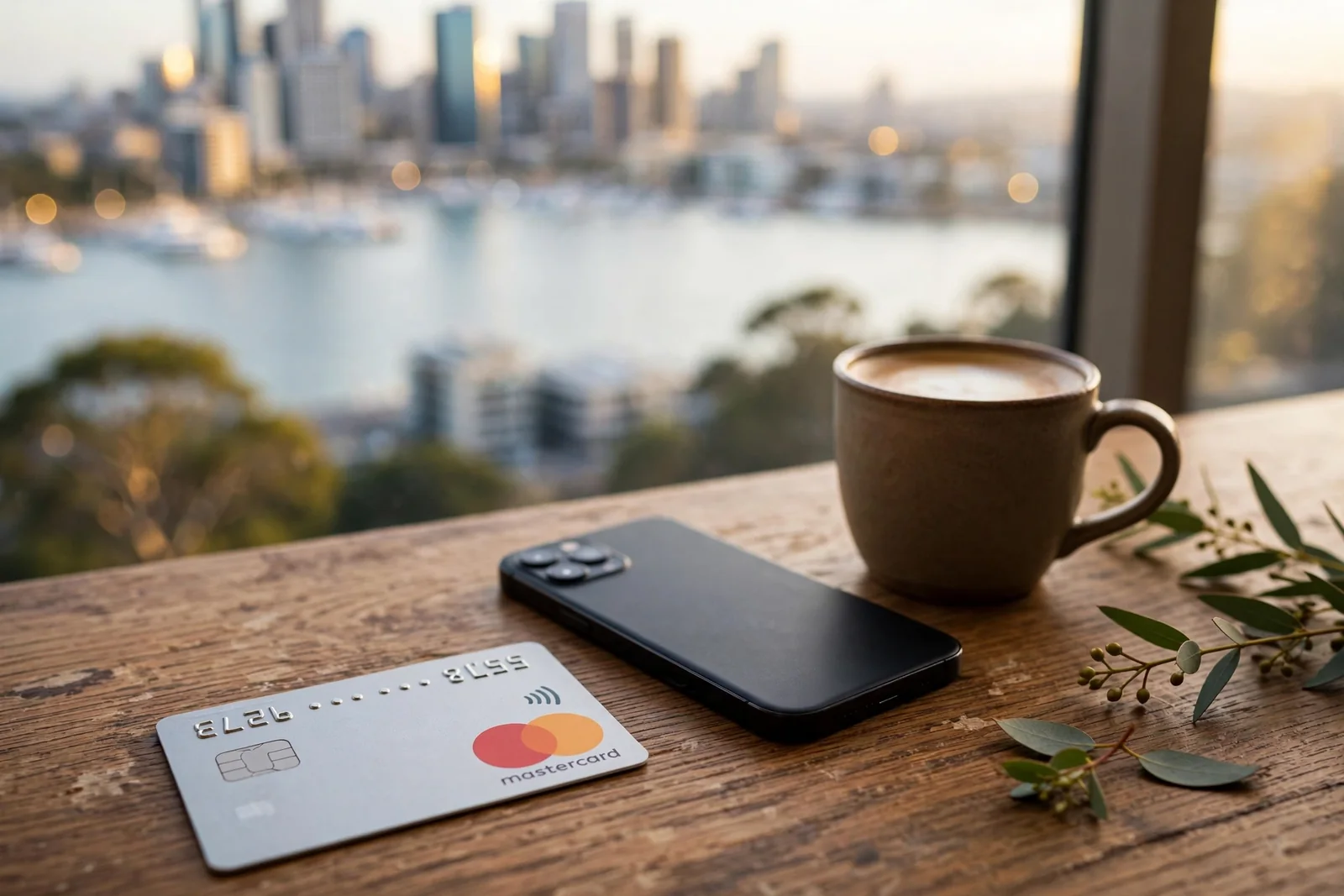
The phrase “Paysafecard pokies” can be commercially neat because it compresses several ideas into a few words. But compression hides the joins. The game category does not validate the payment claim; the payment claim does not validate the game; and neither changes the Australian legal context. A neat phrase is still only a phrase.
Casino games and payment methods are separate questions
A payment method and a casino’s game catalogue describe different parts of an online service. Seeing Paysafecard mentioned in a general payment context would not establish that any particular operator accepts it, or that it can be used for every transaction. It also says nothing about which games an operator offers. Those details cannot be inferred from one another.
I have seen how easily these categories get blurred in promotional language. A phrase such as “Paysafecard casino games” can sound as if the payment method is attached to a particular game. In practice, payment arrangements concern the account and cashier; game availability is a separate operator decision. A payment label is not a catalogue.
The same distinction applies to claims about paying for a particular game or group of games. A method might be discussed as a casino payment option without being confirmed for a specific account or transaction. The name of a payment service alongside a game-related term does not establish a working payment route. Specific availability depends on the operator’s own terms and the options shown for the account.
There is also an account-check stage. Before processing financial activity, online casinos commonly ask customers to complete identity and customer checks, often called Know Your Customer verification. That requirement concerns the customer and account; it does not confirm a payment method or determine which games are available.
In Australia, the legal boundary matters more than the wording on a payment page. The Interactive Gambling Act 2001 prohibits operators from providing real-money online casino services to people in Australia. Australian consumer law does not protect players who use offshore casinos. A payment reference should not be read as an endorsement, a guarantee of access, or evidence that a service is lawful to provide locally.
Keep the categories apart. Game availability is one question; payment acceptance is another; account verification and legal status are separate again. A search phrase that combines them does not make them a single condition. No shortcut.

Instant deposits do not establish instant withdrawals
“Instant” describes a particular movement of money, not the whole account journey. A deposit is money travelling into an account; a withdrawal is money being released from it. Those steps have different triggers and are handled under different conditions. Treating a quick payment-in as a promise of equally quick payment-out is a category mistake.
The distinction matters when Paysafecard and Australian pokies are discussed together. A phrase such as “instant Paysafecard” can sound as though it covers deposits and withdrawals alike. It does not establish either outcome at a particular casino. Nor does the fact that a payment option is familiar or fast elsewhere show that it is available for a gambling transaction, or that it can receive winnings. Payment speed belongs to a specific route and direction.
I have seen “instant” used as a neat label for the most visible part of a transaction: the moment funds appear in an account. That label leaves out what happens when money is requested in reverse. A withdrawal can involve separate operator checks and a separate transfer process; the deposit’s arrival time says nothing on its own about those steps. The distinction is operational, not semantic.
A limited Amex comparison makes the point. A specialist review describes Amex casino deposits as arriving immediately, while giving a possible clearance period of up to five days for withdrawals. That is a report about Amex, not Paysafecard, and it should not be stretched into a universal casino timetable. Even for the same named payment method, the direction of travel changes the timing claim.

The Amex comparison is useful only as a contrast: a fast deposit can coexist with a slower withdrawal. It cannot supply a Paysafecard withdrawal estimate, and it does not establish an instant Paysafecard payout in Australia. A claim about a deposit should therefore be read narrowly, as a statement about funds being credited, not as evidence about when winnings become available.
The word “instant” also tends to flatten several stages into one. A payment may appear to have been made quickly, while the account balance, withdrawal request, and eventual receipt of funds are distinct events. A displayed balance is not a payout. A submitted request is not confirmation that money has reached a bank account or another destination. The label alone does not say which event is being timed.
This is why “instant withdrawal” needs more than a payment-method name beside it. It would need to describe the withdrawal route and the point at which the clock starts and stops. Without that, the phrase can blur a casino’s internal handling with the time taken for funds to arrive through a payment channel. Those are not interchangeable measures.
I would not carry an Amex timing claim across to Paysafecard, or turn a deposit description into a payout promise. The same caution applies to claims about instant Paysafecard pokies or a no-deposit offer: those words do not, by themselves, establish that a withdrawal is supported or immediate. A promotional label is not a processing rule.

There is a further practical distinction between a payment method being accepted for an incoming transaction and being usable for a withdrawal. Timing cannot answer that eligibility question. A route might be discussed for deposits without being the route used to return funds. Those are separate terms, and a speed claim resolves neither one.
The useful reading is precise: “instant deposit” concerns the incoming payment described, while withdrawal timing requires its own evidence. The Amex example shows why the distinction matters; it does not predict Paysafecard performance. No shortcut follows.
Why casino withdrawals may use a different route
A payment method used to fund an account is not automatically a method for receiving winnings. Deposits and withdrawals are separate parts of the cashier, and an operator can set different eligibility rules for each. The practical distinction is easy to miss when a payment logo is treated as a promise about the whole transaction.
Amex illustrates the point. A withdrawal through Amex requires an earlier deposit made with that card. That condition ties the payout route to the account’s payment history; having an Amex card alone is not enough. A specialist review has also reported that some Australian-facing casino operators do not permit withdrawals to Amex. That is a report about particular operator terms, not a rule that can be applied to every cashier.
The same reasoning matters when Paysafecard appears in a discussion of casino payments. A reference to Paysafecard for deposits does not establish that a casino can return winnings through it. Deposit acceptance and withdrawal eligibility are distinct claims, and neither can safely be inferred from the other. The phrase “withdrawal available” can sound definitive; in practice, it needs to refer to the specific route, account conditions and applicable cashier terms.
Legal Risk
Under the Interactive Gambling Act 2001, it is illegal for operators to provide real-money online casino games to people physically located in Australia.
I have seen payment labels do too much work in promotional copy. A method may be listed because it can move money into an account, while the payout route is governed by a different set of rules. Read narrowly. No implied match.
There is also a broader Australian consumer point. Australian consumer law does not protect people who use offshore casinos. That leaves the operator’s stated withdrawal conditions especially consequential, but it does not make an offshore service lawful to provide to people in Australia. The Interactive Gambling Act 2001 prohibits operators from offering real-money online casino games to people physically located in the country.
So a Paysafecard deposit reference cannot, on its own, support a claim of a Paysafecard withdrawal route. The relevant distinction is method eligibility, not how quickly a payment is processed. A deposit option and a payout option are not interchangeable.
Comparing payment options without assuming they are interchangeable
Payment methods can look comparable in a cashier while working under different conditions. A card, a bank transfer and a digital asset are separate routes, not interchangeable labels for the same service. The distinction matters especially when a payment claim is being used to imply that a particular method, such as Paysafecard, is accepted. One method’s availability says nothing reliable about another’s.
A specialist review has reported that Visa may be accepted more widely than American Express at Australian online casinos. That is a time-sensitive comparison, not a rule for every operator or a guarantee that either card can be used. It also does not establish anything about Paysafecard. A cashier’s list is specific to the service and the account at the time it is viewed; a broad statement about card acceptance cannot fill in a missing method-specific condition.
The same caution applies to claims about other routes. Bitcoin and Ethereum are described as enabling immediate deposits and withdrawals with little or no fees. That is a general claim about cryptocurrency transactions, not proof that a particular gambling service accepts either asset, or that a withdrawal from that service would follow the same timing. A transaction can move quickly on one layer while the operator’s own rules and processing remain separate. Different mechanics. Different evidence.
A specialist review has also noted that bank transfers can take longer and carry higher fees. Those are possible trade-offs, not fixed terms for every transfer or provider. They cannot be used to infer Paysafecard’s costs, availability or processing time. Nor does describing the trade-offs amount to a recommendation to use any route for online casino gambling.
I have seen payment comparisons become misleading when a single attractive feature is treated as a complete verdict. “Fast” may refer only to the payment network; “low fee” may omit a fee applied elsewhere; “accepted” may describe deposits but not a route for receiving money. A comparison is useful only when it identifies what is being compared and whose condition applies. Without that, the labels do more work than the facts.
For a Paysafecard-specific decision, general comparisons with Visa, Amex, cryptocurrency or bank transfers cannot establish acceptance. They cannot substantiate a list of sites, a bonus tied to that method, or claims about games accessible through it. The payment route and the service’s terms need to match; one does not prove the other.
There is also a broader Australian consumer-protection distinction. Australian consumer law does not protect players who use offshore casinos. That matters when weighing any payment claim: an advertised feature is not the same as a locally protected service, and a familiar payment brand does not change that position.
The practical conclusion is narrow: compare like with like, and do not treat general payment characteristics as proof of a specific Paysafecard option. In Australia, real-money online casino games are prohibited services when offered to people in the country. Describing payment differences is not an endorsement of using offshore gambling services.
How do you check if casino sites accept Amex deposits?
Check the casino’s cashier or its current payment information for American Express availability. Acceptance can vary by casino and customer location.
Can you use an American Express gift card at an online casino?
Yes, an Amex gift card can be used for deposits at casinos that accept American Express, but not for withdrawals.
Which online casinos accept American Express for deposits?
Jackpot City Casino, Spin Palace, Ruby Fortune, Ignition Casino, Joe Fortune and PlayAmo are listed as supporting Amex deposits for Australian players. Availability can vary, so check the casino’s cashier.
How long do Amex casino deposits take to process?
Amex deposits are processed instantly.
Can I use Amex to withdraw winnings from an Australian online casino?
Some casinos allow Amex withdrawals, but not all do. The player generally needs to have deposited with Amex first, and withdrawal fees may apply.
Why does my Amex deposit get declined at some casinos but not others?
Amex may block payments to particular websites, and Australian banks may also block gambling-related transactions on Amex cards. Acceptance therefore varies between casinos and card issuers.
How can I know if an online casino will accept American Express?
Look for American Express in the casino’s current cashier or payment information, and check that it applies to Australian customers. A general payment list may not reflect availability for your location.
Written by the editors at Clubhouse Casino.