

Know the limits before choosing a mobile casino
A practical guide to offshore access, browser and app options, real-money play, bonuses, withdrawals and mobile safety controls.

Table of Contents
Table of Contents
- The legal line behind offshore casino access
- Real-money play: the operator, the location and the age threshold
- Why mobile casino play usually happens in a browser
- iPhone access without assuming there is an App Store app
- Android access and the risks of installing outside Google Play
- iOS, iPad and the deposit route are separate decisions
- “Free” casino apps mean virtual credits, not withdrawable cash
- Welcome bonuses are governed by the wagering conditions
- Withdrawals: verification, timing and the limits behind a payout claim
- Mobile play has practical failure points and built-in controls
The legal line behind offshore casino access
The legal distinction is between the operator and the individual. Under the Interactive Gambling Act 2001, an operator must not provide online casino-style games to people in Australia. That covers services such as online poker, blackjack, roulette and pokies. The rule is directed at the business supplying the service; the Act does not make an Australian individual’s act of playing at an offshore mobile casino illegal.
That distinction can be easy to miss when a service is described as an app. The label does not change the legal status of the underlying offer. A casino app aimed at Australian users may be accessible from a device, but access is not evidence that the operator is permitted to offer casino gambling here.
ACMA, the Australian Communications and Media Authority, actively blocks access to illegal gambling sites. Blocking is an enforcement measure, not a licensing scheme or an endorsement of sites that remain reachable. Some offshore services may still appear accessible, while others may be blocked or become unavailable. “Available” describes a technical circumstance, not a lawful Australian casino market.
UK casinos listed by payout speed
Choosing a casino app in Australia calls for checking the details that matter to you, such as licensing, deposit minimums and payout methods or speeds where these are stated. This list offers a concise reference to the information available for each operator.
Vegaz Casino
- License
- Curacao OGL/2024/1335/0780
- Min. deposit
- EUR 20
Vegaz Casino lists a Curaçao OGL licence, number OGL/2024/1335/0780. Its minimum deposit is EUR 20.
LevelUp Casino
- License
- Curacao eGaming OGL/2023/174/0082 (Dama N.V.)
- Min. deposit
- A$15
LevelUp Casino lists a Curaçao eGaming licence, OGL/2023/174/0082, associated with Dama N.V. The minimum deposit is A$15.
WinSpirit Casino
- License
- Curacao eGaming OGL/2024/923/0383 (Antillephone N.V.)
- Min. deposit
- A$30
WinSpirit Casino lists a Curaçao eGaming licence, OGL/2024/923/0383, associated with Antillephone N.V. Its minimum deposit is A$30.
MrPacho
- Payout speed
- crypto 30-120 minutes, fiat 24-72 hours
- Min. deposit
- A$30
MrPacho states crypto payout times of 30–120 minutes and fiat payout times of 24–72 hours. The minimum deposit is A$30.
Roby Casino
- License
- Curacao eGaming (Roby Games Ltd)
Roby Casino lists a Curaçao eGaming licence under Roby Games Ltd.
House of Pokies
- License
- international iGaming licence – jurisdiction not named in the source
- Payout speed
- PayID 1-24 hours
- Min. deposit
- A$30 (PayID from A$10)
House of Pokies lists an international iGaming licence, though the jurisdiction is not named. It states PayID payouts of 1–24 hours and a A$30 minimum deposit, with PayID deposits from A$10.
Rollero Casino
- License
- Curacao Gaming Control Board OGL/2023/176/0095 (Hollycorn N.V.)
Rollero Casino lists a Curaçao Gaming Control Board licence, OGL/2023/176/0095, associated with Hollycorn N.V.
Wild Tokyo
- License
- Curacao
- Payout speed
- crypto 30-60 minutes, fiat 1-5 days
- Min. deposit
- A$10
Wild Tokyo lists a Curaçao licence and states crypto payout times of 30–60 minutes and fiat payout times of 1–5 days. The minimum deposit is A$10.
SkyCrown
- License
- Tobique Gaming Commission
- Payout speed
- crypto ~10-15 minutes, fiat 1-5 days
- Min. deposit
- A$30
SkyCrown lists a Tobique Gaming Commission licence. Its stated payout times are around 10–15 minutes for crypto and 1–5 days for fiat; the minimum deposit is A$30.
Bizzo Casino
- License
- Curacao Gaming Control Board (TechSolutions Group N.V.)
Bizzo Casino lists a Curaçao Gaming Control Board licence under TechSolutions Group N.V.
In practice, the market encountered by Australians is offshore and crypto-friendly. That description is not a recommendation: offshore status means the service sits outside Australia’s domestic protections, and crypto payment options do not change the legal line. There is no Australian government body to hear a complaint if an offshore casino refuses to pay winnings. A VPN used to reach a blocked casino may also lead to winnings being voided and an account being closed.
I have seen how interface language can make access look routine. It does not settle who is responsible under Australian law, or provide the safeguards associated with a locally regulated service. The practical point is narrower than advertising suggests: the operator’s offer is prohibited, while the individual player is not made an offender under this Act merely for playing offshore.
A clean-looking app is not a legal clearance.
Real-money play: the operator, the location and the age threshold
Real-money access from a mobile device involves more than opening a casino page or installing an app. The operator decides which countries it will accept, what identity checks it requires and which payment routes it makes available. In Australia, this activity sits in an offshore, crypto-friendly market: the services discussed are not Australian-licensed casino products, and describing how access works is not a recommendation to use them.
The first practical condition is location acceptance. An offshore operator may list Australia among the places it accepts, or its registration form may permit an Australian address, but neither should be assumed. Acceptance can differ between operators and may be affected by the operator’s own terms. A punter must confirm that the site accepts their location before making any deposit. If it does not, trying to get around that restriction can create problems with the account and any balance in it.

There is no Australian government body that can hear a complaint if an offshore casino withholds winnings. That is a material difference from dealing with a local service subject to Australian oversight. The operator’s own complaints process may be the only route it offers, and the existence of that process does not mean an Australian authority can compel the operator to resolve a dispute. The uncomfortable part is the lack of local recourse.
What an offshore licence tells you
Curaçao, the Malta Gaming Authority (MGA) and Gibraltar are among the jurisdictions associated with offshore casinos that accept Australian players. Those names describe where an operator may be licensed; they do not mean that the casino holds an Australian licence or that Australian government protections apply.
A licence reference is a starting point for understanding the operator’s claimed regulatory home, not a guarantee about an individual account or a payout. The operator and the licensing jurisdiction are separate from the player’s location. A punter in Australia remains in Australia even when a company is registered or licensed elsewhere. That distinction is easy to lose in app-store-style descriptions that make an offshore service sound like an ordinary local product.
Real-money casino apps may be described as “available” to Australians because a site loads, a registration form opens, or an app can be installed. Availability in that technical sense does not establish that the operator accepts the person’s location, that every account will pass verification, or that a withdrawal will be paid. A working login is not a promise of recourse. Nor does a licence name displayed on a page settle what happens if there is a dispute.
No Local Recourse
There is no Australian government body to hear a complaint if an offshore casino refuses to pay winnings.
Age and account responsibility
A person must be at least 18 to register and gamble in Australia. An offshore operator may also require identity details to establish who holds the account and whether the registration information is consistent. The age threshold is not a formality that can be avoided by using a phone app: mobile access does not change the requirement.
Account ownership matters in practice. A registration made with inaccurate details can conflict with later identity checks, while another person’s account is not a substitute for having one’s own eligibility. The precise checks and documents are set by the operator, so the terms should be read before an account is opened. This is a matter of access and account conditions, not a reason to treat offshore access as locally protected.
Searches for real-money casino apps often blur three different things: an app-shaped interface, an operator willing to accept an Australian address, and a service with a route for resolving disputes in Australia. Those are not interchangeable. A site can be usable on a phone without being an Australian service; an offshore licence does not create local oversight; and the ability to deposit does not settle whether a later withdrawal will be honoured.
Before any deposit
The sequence matters: confirm location acceptance first, understand which offshore operator is involved, and read the account terms before transferring money. A deposit is not a test of whether the operator will accept the location; it is a financial commitment made before that question should be left uncertain. If the operator’s terms exclude Australia, or its position is unclear, proceeding risks an account dispute without an Australian government body available to hear a complaint about withheld winnings.

Using a VPN to reach a blocked casino may void winnings and lead to account closure. A changed connection location does not change the punter’s actual location, and it may put the account information at odds with the operator’s terms. The apparent workaround can therefore make the position worse, not safer.
The practical standard is less glamorous than the app language suggests. An offshore service may present itself as a real-money casino app and may display a foreign licence, but Australian location acceptance and the absence of local complaint recourse remain central conditions. Check before depositing. Keep the distinction clear.
Why mobile casino play usually happens in a browser
On a phone, “app” can mean three different things: a website opened in a browser, a Progressive Web App (PWA) saved to the home screen, or a native app installed on the device. The distinction matters because the label does not tell anyone where the software comes from, how it is updated or what account it uses.
For Australian users, browser access is the normal route to offshore real-money casino services. Most mobile sessions open the casino website in a browser, with the same account used on desktop. That continuity is practical: the mobile version is another way into the website, not a separate account or a separate casino.
The browser also avoids a common mismatch between what an operator offers and what a phone’s app store carries. Casino apps are rarely listed on the major Australian app stores, and operators that accept Australian players typically rely on browser access or PWAs rather than native mobile apps. A search for an app, therefore, may lead to a website instead. That is the ordinary format here.
Mobile Browser
The most direct option requiring no installation; the same account is used across desktop and mobile.
Progressive Web App (PWA)
A home-screen shortcut that provides an app-like entry point while connecting to the website.
Native App
Software built for a specific operating system; less common for offshore services in this market.
What a PWA changes
A PWA is a shortcut to a casino website that behaves more like a native app on a mobile device. It can be installed from the site itself: an install or add-to-home-screen prompt is tapped, then the installation is confirmed. The result is an icon on the home screen that opens the site in an app-like view.
The underlying destination remains the website. A PWA does not become a native app simply because it has an icon, and it does not automatically create a separate service or account. It is a different doorway to the same online platform. In day-to-day use, that can make a frequently visited site easier to reopen; it does not establish that the operator is legitimate or that the service is safe.
That distinction is easy to blur in advertising. “App experience” may describe a PWA or a mobile-optimised website, not software reviewed and distributed through an app store. The wording sounds like a product category. Often, it is a shortcut.
Browser, PWA or native app
A mobile browser is the most direct option: open the site, sign in and use its mobile layout. It requires no separate app installation, and the same account can be accessed on desktop. The trade-off is that the site must be reopened through the browser rather than through a dedicated home-screen icon.
A PWA sits between a browser bookmark and a native app. It gives the site an app-like entry point while still connecting to the website. A native app, by contrast, is a program made for a particular operating system and installed on the device. For casino services in this market, native apps are less often the route offered; browser play and PWAs are more typical.

None of these formats answers the questions that matter about an offshore service. A polished interface does not prove that an operator is trustworthy, and an app-like appearance is not evidence of independent approval. Real-money services discussed in this context are offshore and crypto-friendly, not Australian-licensed casino services. There is no Australian government body to complain to if an offshore casino refuses to pay winnings.
There are also practical risks around installation. Sideloaded casino apps carry security risks, and their safety depends on the operator. A VPN used to reach a blocked casino may result in winnings being voided and an account being closed. The access method does not remove those risks.
I have seen the format do more work in an operator’s presentation than it does in the underlying service. A home-screen icon can feel like a sign of permanence; technically, it may lead to much the same website as a browser tab. The useful distinction is not “app versus no app” but what is actually installed, where it came from and what it connects to.
For most Australian mobile access, the browser remains the baseline. A PWA can make that route feel more app-like, while a native app is not the default format. The icon is not the service.
iPhone access without assuming there is an App Store app
An iPhone search for a casino app can create the wrong expectation: that a real-money product will be listed, reviewed and downloadable from the Australian Apple App Store like an ordinary game. In practice, casino apps are rarely listed there in Australia. For offshore operators that accept Australian users, access is more often through the operator’s website than through an App Store download.
That distinction matters before any account is created. An app’s absence from the store does not, by itself, establish whether a service is safe or unsafe. It does mean there is no App Store listing to rely on as a shortcut for checking who operates it, how it handles data or what terms apply. I treat the download route as part of the risk assessment, not as proof of quality.
Some operators may offer an iPhone app for installation outside Apple’s store. That is sideloading. It places more responsibility on the operator and the installation source: a file supplied by an untrustworthy party could expose the device or personal information to security problems. Even when the operator itself supplies the app, safety still depends on that operator’s practices. A polished icon and a smooth sign-in screen are not security evidence.
There is a separate practical risk in following unofficial links or instructions. A page that imitates an operator can distribute a misleading download, collect login details or direct a user towards a service that is not the one it claims to be. The visible interface may resemble an established casino while the underlying destination is different. That is why an installation prompt should not be treated as an endorsement.
The real-money services encountered by Australians in this area are offshore and crypto-friendly; that describes the market, not a recommendation. The Interactive Gambling Act prohibits operators from providing online casino-style games to people in Australia, while individual players are not made illegal by playing offshore. ACMA blocks access to illegal gambling sites, so availability can change. A punter must confirm that a site accepts their location before depositing. Using a VPN to reach a blocked casino may void winnings and result in account closure.

The financial recourse is also limited. If an offshore casino refuses to release winnings, there is no Australian government body that can hear a complaint and compel payment. That exposure does not disappear because an iPhone app looks native, has a familiar layout or was installed from a link supplied by the operator. Presentation is not protection.
For that reason, “best” is not a useful label for an iPhone casino app unless the basic checks come first: who controls the service, whether the operator accepts the user’s location, what information the app requests and whether the terms can be read independently of the download flow. A browser page may be the access route, but it does not make the offshore service locally regulated. An app download does not change that status either.
I would not infer trust from the word “official” on a download page. The key question is who is accountable for the software and the account behind it, and what happens if access or a payout is disputed. If those points cannot be established, installing the app adds device risk without resolving the larger uncertainty. An app is not a safeguard.
Android access and the risks of installing outside Google Play
On Android, the important distinction is between a social casino app and real-money access. Social and free-play apps that use virtual credits are available through Google Play in Australia. Their presence in the store does not mean that real-money casino apps are available there too: casino apps are rarely listed on Google Play for Australian users.
That gap can lead to an installation prompt on an operator’s website or a downloadable Android package file. Installing software from outside Google Play is sideloading. It bypasses the store’s usual distribution route, so the app’s safety depends on the operator and on whether the file is genuine and has been kept secure. A polished page is not proof. I would treat an unfamiliar installation file as a security decision, not just a quicker way to open a site.
Browser access avoids installing a separate casino package, while an installed app may ask for permissions or updates. Those choices do not make an offshore service locally authorised. The market remains offshore and crypto-friendly, and access may be blocked. A VPN used to reach a blocked casino can breach its terms; the operator may void winnings and close the account. A workaround is not a safeguard.
Before any deposit, the operator must explicitly accept the user’s location. That confirmation does not remove the underlying risks: if an offshore casino withholds winnings, there is no Australian government body to take the complaint. Keep those limits in view before choosing between a store-listed social app, a browser, or a sideloaded real-money app. The installation route changes; the exposure does not.
iOS, iPad and the deposit route are separate decisions
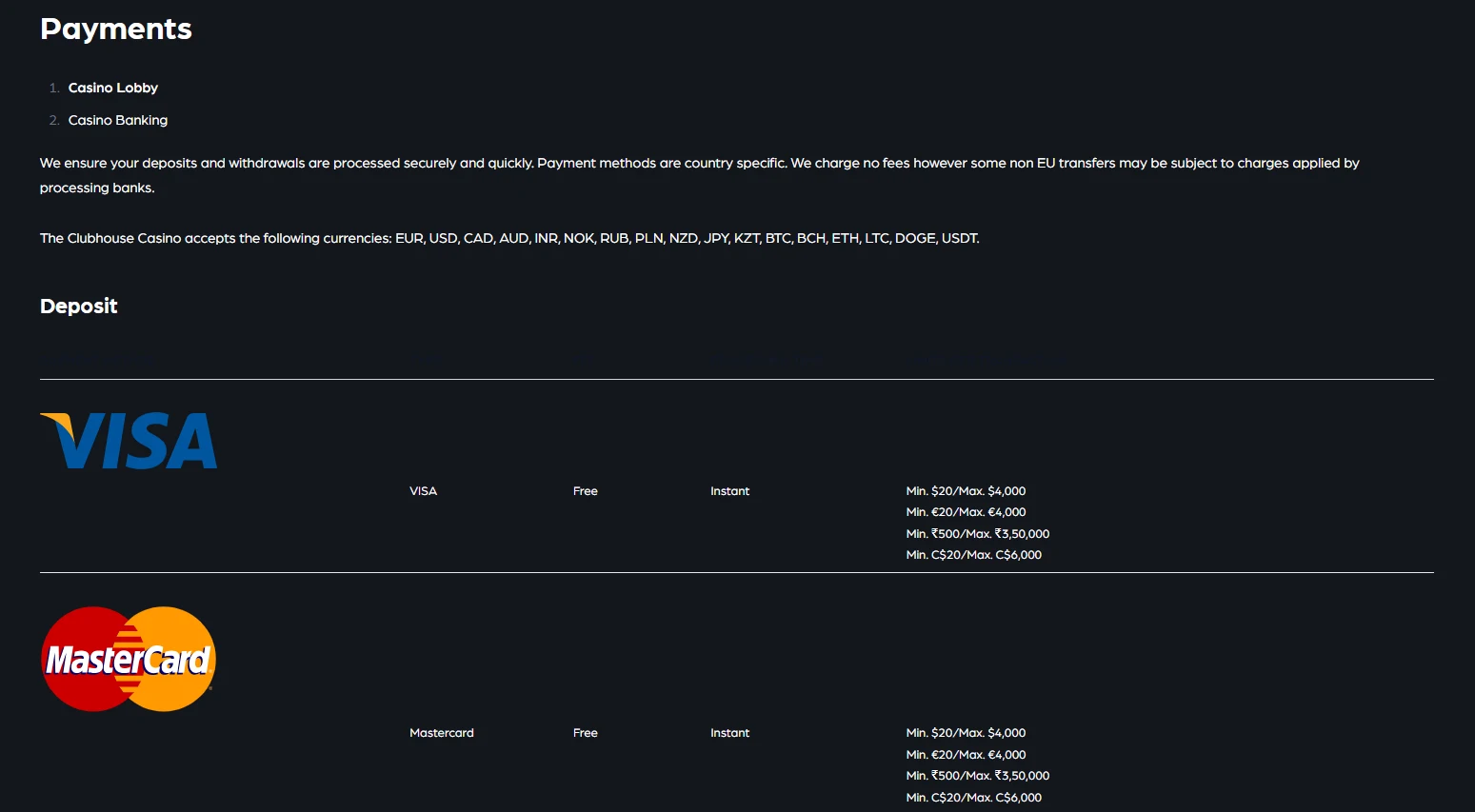
An iPad can be used to reach a casino website, but the device itself does not determine which deposit methods are available. The relevant details sit in the operator’s payment menu and account rules. I treat access and payment as separate checks: a page opening correctly on iOS does not establish that a particular method will appear or process for that account.
A specialist review describes PayID deposits as near-instant and typically free. That is a claim about deposit processing, not a promise that every operator offers PayID or that every transaction will be handled identically. Availability can depend on the payment options shown by the operator. The wording matters: “instant” is not a guarantee about a withdrawal, which follows a different process.
The same specialist-review material describes PayID, BPAY, cards and cryptocurrency among mobile deposit routes, with processing times varying by method. A payment option appearing in a general list does not mean it is available on every site or suitable for every transaction. The payment screen and the operator’s terms are the practical reference points.
POLi is a historical trap in older payment descriptions. It ended its Australian operations in September 2023 and no longer handles local transactions. A page that still presents POLi as a current Australian option is out of date.
Credit cards must not be accepted for online gambling services. Their presence in a generic list of payment methods should not be read as permission to use them for gambling deposits. Some descriptions use “cards” broadly; that wording does not override the restriction on credit-card payments.
Deposit processing also says nothing by itself about how quickly money can later be withdrawn. A fast deposit is a payment-in route, not evidence of a fast cash-out route. I have seen those ideas blurred together in promotional copy. They are not interchangeable.
Do
- Check the operator's payment menu
- Read the specific terms for each method
- Verify the current processing descriptions
Don't
- Rely on generic payment lists
- Use credit cards for gambling deposits
- Assume fast deposits mean fast withdrawals
For an iOS device or iPad, the sensible distinction is therefore between the screen used to access the account and the payment route offered within it. A no-deposit label concerns an offer, not a deposit method; the phrase alone does not establish what the offer means or what conditions apply. “Good” is not a payment feature. The useful details are whether the method is currently presented, what its processing description says, and whether the terms permit the intended transaction.
“Free” casino apps mean virtual credits, not withdrawable cash
A free-play casino app is a social game built around virtual credits. Those credits let the game continue, but they are not a balance of Australian dollars and cannot be treated as cash winnings. The distinction matters: a screen showing a credit total does not, by itself, mean money has been deposited, won or made available for withdrawal.
Social casino apps using virtual credits are legal to use in Australia and are available through the Google Play Store and Apple App Store. That is a different category from offshore real-money casino access. The familiar casino-style layout can make the two look similar, but the function of the credits is the dividing line. Virtual play stays within the app; it does not create a cash payout.
I have seen the word “free” do more work than it should. It can describe the absence of a cash stake in a particular game, not every feature or condition attached to an app. The useful test is plain: are the credits only for entertainment inside the app, or does the service take real-money deposits and promise cash withdrawals? In the first case, the balance is part of the game. It has no cash value.

That also helps sort out searches for free casino game apps or casino apps with free play. A free-play app is not a route to real-money gambling merely because it uses casino imagery, familiar game mechanics or a credit counter. Nor does a large virtual balance establish that a game is generous in any financial sense. The credits are there to play with, not to cash out.
“Safe” and “trusted” are separate claims. Availability in a major app store identifies where an app can be obtained; it does not turn virtual credits into money or establish that every feature suits every user. The relevant distinction remains what the app does with its credits. A social game uses them within its own play experience. Real-money gambling involves deposits and potential cash withdrawals, which is a different arrangement.
The wording around “free spins” can blur that boundary, too. In a social game, a free turn or a supply of virtual credits remains part of the virtual-credit model. The phrase alone does not show that a cash prize can be won. I would read the label as a description of a game feature, not as evidence of withdrawable value.
For a punter comparing apps, the important question is not how casino-like the interface looks. It is whether the credits have value outside the app. If they are virtual and cannot be withdrawn as cash, the app is free-play entertainment rather than a real-money casino. Clear categories. No cash balance.
Welcome bonuses are governed by the wagering conditions
A welcome offer can look generous in a banner and still be difficult to use. The headline describes the promotional credit; the terms determine whether it can be converted into a withdrawable balance. I have seen the gap between those two things drive most of the confusion. The mechanics matter more than the label.
- Calculate the wagering requirement base
- Identify which games contribute to wagering
- Check for a minimum deposit threshold
- Note the expiry date and time limit
- Verify the maximum cashout cap
A wagering requirement sets how much qualifying play must be recorded before bonus-related funds can be withdrawn. One specialist review describes welcome offers with requirements ranging from 30x to 50x the bonus amount, and treats anything above 40x as steep. Those figures are that review’s assessment, not a fixed rule across offshore crypto-friendly casinos. Operators set their own conditions, and the calculation may apply to the bonus, the deposit, or both. The wording decides which.
That distinction changes the workload substantially. A requirement tied to the combined deposit and bonus balance creates a different target from one tied only to the bonus. The advertised figure alone is not enough to compare offers. I check the definition of the wagering base first; otherwise, the multiplier can look clearer than it is. Read the formula, not just the number.
The minimum deposit is another condition that can alter the practical value of a sign-up offer. A bonus may be unavailable until a deposit reaches the operator’s stated threshold, even when its banner gives the impression that registration is enough. A no-deposit offer removes that particular entry condition, but it does not necessarily remove wagering requirements, game restrictions, expiry dates or a cashout cap. “Free” describes the route into the promotion, not an unconditional cash payment.
Time limits need the same attention. One specialist review reports that many offers require wagering to be completed within 7–10 days; it also notes that missing the stated deadline can mean losing the bonus. This is not a timetable that applies to every operator. The individual terms control, so the expiry clock and the consequence of missing it need to be clear before an offer is claimed. A short window can make a large-looking credit impractical.
The remaining clauses can narrow what counts. Check which game categories contribute to wagering and whether some are excluded or count differently. Then look for the expiry date, any maximum cashout and conditions that cancel the bonus or winnings. These are not footnotes in any useful sense: they define what the promotion allows. A specialist review’s comparison of offers likewise identifies wagering requirements, minimum deposits and time limits as central to their practical value.
Searches for casino apps with a welcome bonus, a sign-up bonus or real rewards often collapse different conditions into one promise. In practice, “real rewards” may still be promotional funds subject to release rules. Daily promotional credits or a no-deposit offer should be assessed by the same terms, not by the wording used to attract attention. Nothing is unconditional.
There is also an advertising boundary. Australian restrictions apply to gambling inducements and promotions, including the 5:00 AM–8:30 PM period. That does not make an offshore promotion lawful merely because its banner is not shown during those hours; the legal position and the offer’s terms are separate questions. No recommendation follows from a promotion.
Before claiming, the essential checks are the wagering calculation, eligible games, minimum deposit, expiry date and cashout cap. If any condition is unclear, the headline cannot resolve it. The small print is the offer.
Withdrawals: verification, timing and the limits behind a payout claim
A “fast payout” label leaves out the steps that determine when money reaches an account. I separate the casino’s own processing from the payment provider’s transfer: a withdrawal may sit in a pending queue before it is approved, then take additional time to arrive. The clock does not necessarily start when the request is submitted.
Withdrawal Process
- 1
Request Submission
The player submits a withdrawal request, which enters the casino's pending queue for approval.
- 2
KYC Verification
The operator verifies identity through documents such as a selfie, ID, or proof of address.
- 3
Fund Transfer
Once approved, the funds are sent via the permitted route, with timing depending on the provider.
A specialist review reports that e-wallet withdrawals can arrive within 24 hours after the casino’s pending period. That is a source-specific claim, not a timetable that applies across offshore crypto-friendly casinos. The operator’s published terms should explain its pending process and any further checks. A displayed processing estimate is not a guarantee of the arrival time.
The first withdrawal commonly brings identity checks. KYC verification may require a selfie or identity document, along with proof of address. In practice, a delay can arise because a document is missing, unclear or does not match the account details. I have seen payout claims judged by the payment method alone; that misses the part often controlled by the casino. Verification comes first.
Payment rules can also affect the route. A specialist review notes that some casinos require a withdrawal to use the method used for deposit, while other methods are available only for deposits. These policies differ, so a method shown on the cashier page does not, by itself, establish that it can receive a payout. The withdrawal terms matter.
The limits behind a payout claim are therefore procedural as well as technical: verification status, the casino’s approval queue and the permitted withdrawal route. None of those details should be inferred from an app label or a general claim that an operator “actually pays”. Any location acceptance must be confirmed before a deposit; operators in this market are offshore and crypto-friendly, and the Australian government has no body that can hear a complaint if an offshore casino withholds winnings. Using a VPN to reach a blocked casino may void winnings and lead to account closure.
A payout is not settled when a request is entered. It is settled when the casino approves it and the receiving method completes its part. Read the withdrawal conditions before any funds are committed. No shortcut.

Mobile play has practical failure points and built-in controls
A specialist review identifies weak connections, limited device memory, outdated browsers and too many apps running in the background as common sources of mobile casino problems. The symptoms can look like a fault with a game: a page may stall, take time to respond or close unexpectedly. I separate the device and connection from the service itself before drawing conclusions. One failure does not establish the cause.
A practical check is to close unused background apps, make sure the browser is current and retry on a more stable connection. Low memory can leave less room for a demanding page to run; an old browser can also struggle with current website features. If the problem persists across sessions, the issue may not be the phone. That distinction matters. Repeating the same action on a struggling device can create confusion about whether a transaction or game action completed.
Operational reliability is separate from the controls intended to limit gambling. A specialist review also describes deposit, loss and wager limits, session time limits and self-exclusion as available responsible-gambling tools. Their names indicate different boundaries: a deposit limit concerns funds added, a loss limit concerns losses, a wager limit concerns amounts staked, and a session limit sets a time boundary. Self-exclusion is a separate option for restricting access.
I have seen control labels treated as reassurance, when their value depends on what they actually restrict and how the setting is applied. A limit should not be mistaken for a guarantee that gambling will remain manageable; it is a boundary mechanism, not a cure for harm. Self-exclusion is the more decisive control named here, rather than a setting for adjusting activity.
The same care applies when a mobile session behaves unpredictably. Technical checks do not make gambling safer, and controls do not repair a failing connection or browser. Those are different problems, requiring different responses. If limits are not available or do not work as expected, that is a material concern about the operator’s safeguards, not a device issue.
Clear separation helps: troubleshoot the phone without treating access as an objective, and assess safeguards without mistaking smooth performance for responsible conditions. Reliability is not protection.
Can I play mobile casinos for real money without an app?
Yes. Most casinos that accept Australian players are accessed through a mobile browser, so you can play without installing a native app. Some offer a Progressive Web App that can be added to your home screen.
How do wagering requirements actually work in practice?
A wagering requirement means you must wager the specified multiple of the bonus amount before it is cleared. Welcome bonuses commonly require 30x to 50x wagering; requirements above 40x are steep, and many bonuses must be cleared within 7–10 days.
Can I use the same account on my phone and computer?
Yes. Most Australian mobile casino access is through a browser, using the same account on mobile and desktop.
Can players use real-money mobile casinos in Australia?
Playing at an offshore mobile casino is not illegal for an individual under the Interactive Gambling Act 2001, but operators are prohibited from offering online casino games to people in Australia. You must be at least 18, and an offshore operator may or may not accept your location.
What is the real difference between a native app and a mobile browser casino?
A native app is installed as an app, while browser casinos are accessed through a mobile website; casinos accepting Australians typically use browser play, as their apps are rarely listed in local app stores. A Progressive Web App is a website shortcut that behaves much like an app and can be added to your home screen.
Published by the Clubhouse Casino team.