


Check the exit route before choosing a deposit method
Deposit availability does not confirm withdrawal access; cashier terms, payment providers and route-specific timing can affect how funds are returned.
Table of Contents
Table of Contents
- The Payment Choice Is Only Half the Transaction
- What Australian Payment Routes Actually Mean
- A Payment Gateway Is a Route, Not a Guarantee
- Payment Systems and the Cost of Waiting
- The Cashier Can Change the Terms at Withdrawal
- Providers, Fees and the Less Visible Conditions
- “Instant” Deposits Do Not Mean Instant Cashouts
- Apps and Vouchers Have Different Exit Routes
- Mobile Payments Still Need a Separate Cashout Plan
- Withdrawal Timing Depends on the Route
The Payment Choice Is Only Half the Transaction
A payment button in a cashier answers a narrow question: whether that route can be used to send money in at that moment. It does not, by itself, show how money could come back out. A specialist review describes casino payment methods as potentially different for deposits and withdrawals. That distinction matters because a deposit choice and a cashout route are separate parts of the transaction, even when the same cashier presents them together.
I have seen the deposit side treated as the headline feature: a row of familiar logos, a phone-payment option, perhaps a cryptocurrency symbol. The design makes the choice look complete. It is not. The operator’s withdrawal rules may restrict cashouts to a different set of methods, and a route shown for deposits should not be read as confirmation that it works in reverse. The practical test is whether the cashier’s withdrawal terms explicitly name the method and explain any conditions attached to it.
This is not a recommendation to use an offshore casino. Under Australia’s Interactive Gambling Act 2001, providing real-money online casino games to people physically in Australia is illegal for operators. The mechanics described here explain why a payment menu can be incomplete; they do not make an offshore service lawful or imply that an Australian player’s balance has local consumer protection.
UK casinos listed by payout speed
Choosing a casino payment method means weighing the deposit requirements, payout options and available processing information. This overview highlights the payment-related details provided for each option so Australian players can check what is relevant to them.
Vegaz Casino
- License
- Curacao OGL/2024/1335/0780
- Min. deposit
- EUR 20
Vegaz Casino has a stated minimum deposit of EUR 20. Its listed licence is Curacao OGL/2024/1335/0780.
LevelUp Casino
- License
- Curacao eGaming OGL/2023/174/0082 (Dama N.V.)
- Min. deposit
- A$15
LevelUp Casino has a minimum deposit of A$15. It is listed under Curacao eGaming OGL/2023/174/0082 (Dama N.V.).
WinSpirit Casino
- License
- Curacao eGaming OGL/2024/923/0383 (Antillephone N.V.)
- Min. deposit
- A$30
WinSpirit Casino lists a minimum deposit of A$30. Its licence is Curacao eGaming OGL/2024/923/0383 (Antillephone N.V.).
MrPacho
- Payout speed
- crypto 30-120 minutes, fiat 24-72 hours
- Min. deposit
- A$30
MrPacho lists crypto payout times of 30–120 minutes and fiat payout times of 24–72 hours. The minimum deposit is A$30.
Roby Casino
- License
- Curacao eGaming (Roby Games Ltd)
Roby Casino is listed as licensed under Curacao eGaming (Roby Games Ltd). No deposit minimum or payout timing is specified here.
House of Pokies
- License
- international iGaming licence – jurisdiction not named in the source
- Payout speed
- PayID 1-24 hours
- Min. deposit
- A$30 (PayID from A$10)
House of Pokies lists PayID payouts of 1–24 hours and a A$30 minimum deposit, with PayID deposits from A$10. Its source describes an international iGaming licence but does not name the jurisdiction.
Rollero Casino
- License
- Curacao Gaming Control Board OGL/2023/176/0095 (Hollycorn N.V.)
Rollero Casino is listed under Curacao Gaming Control Board OGL/2023/176/0095 (Hollycorn N.V.). No payment limits or payout times are specified here.
Wild Tokyo
- License
- Curacao
- Payout speed
- crypto 30-60 minutes, fiat 1-5 days
- Min. deposit
- A$10
Wild Tokyo lists crypto payouts of 30–60 minutes and fiat payouts of 1–5 days. Its minimum deposit is A$10.
SkyCrown
- License
- Tobique Gaming Commission
- Payout speed
- crypto ~10-15 minutes, fiat 1-5 days
- Min. deposit
- A$30
SkyCrown lists crypto payouts at approximately 10–15 minutes and fiat payouts at 1–5 days. The minimum deposit is A$30, and the listed regulator is the Tobique Gaming Commission.
Bizzo Casino
- License
- Curacao Gaming Control Board (TechSolutions Group N.V.)
Bizzo Casino is listed under the Curacao Gaming Control Board (TechSolutions Group N.V.). No deposit minimum or payout timing is specified here.
Verification is part of the payment path
A payment can appear to have gone through while the account still needs review before a withdrawal is released. A specialist review describes operators as being able to ask for evidence in three areas: identity, residential address and ownership or use of the payment method. That can mean a government-issued identity document, an address document dated within the previous three months, and proof connecting the account holder to the payment instrument.
The request is not necessarily a sign that the payment itself failed. It is a separate check on who controls the account and whether the payment route belongs to that person. From the operator’s side, the purpose is to reconcile the account name, the supplied documents and the transaction record. From the customer’s side, it creates a second stage between seeing a balance and being able to withdraw it.
The wording of a document request matters. “Proof of payment method” can require more than naming a bank or wallet; it may mean showing enough of an account or statement to establish ownership. Sensitive details should not be sent through an unverified channel. The operator’s own secure upload process and stated document requirements are the relevant reference points.

A visible balance is not a completed cashout
Promotional language often compresses the process into a single idea: deposit, play, withdraw. The actual sequence has gates. The incoming route has to be accepted; account checks may need to be completed; and a withdrawal must be offered through a supported method. If any one of those conditions is unresolved, the number displayed in an account is not the same as money received in a bank account or wallet.
No-deposit promotions can have their own wagering, verification and withdrawal conditions as well. A balance generated by an offer does not remove the need to establish identity or satisfy the terms attached to it. The promotional label describes how the balance began, not whether it is immediately withdrawable.
I would treat a cashier as a set of separate permissions, not a universal payment promise. Deposit availability is one permission. Withdrawal availability is another. Verification is the check connecting the account to both. The distinction is easy to miss when the interface puts every logo in one neat row.
That is the transaction, not the advert.
What Australian Payment Routes Actually Mean
Australian payment infrastructure and an online cashier are separate parts of a transaction. A method can exist in the local banking system without appearing as an option in a particular payment menu. That distinction matters when assessing casino payment methods in Australia: the name of a familiar service does not establish that an operator accepts it, or that a transaction will be permitted by the bank.
Legal Status
Under the Interactive Gambling Act 2001, providing real-money online casino games to people physically in Australia is illegal for operators.
PayID works through the New Payments Platform. It lets an account holder connect a bank account to a mobile number, email address or ABN, rather than relying on account details for each transfer. Every major Australian bank supports PayID. That is a statement about the domestic banking network, not a promise that a particular cashier will offer PayID. A specialist review describes PayID deposit availability as dependent on the operator, so bank support and cashier support need to be treated as distinct questions.
There is a further legal distinction. The Interactive Gambling Act 2001 makes it illegal for operators to provide real-money online casino games, including pokies and table games, to people physically in Australia. A payment route’s technical existence does not make such a service lawful or indicate that an offshore operator complies with Australian law.
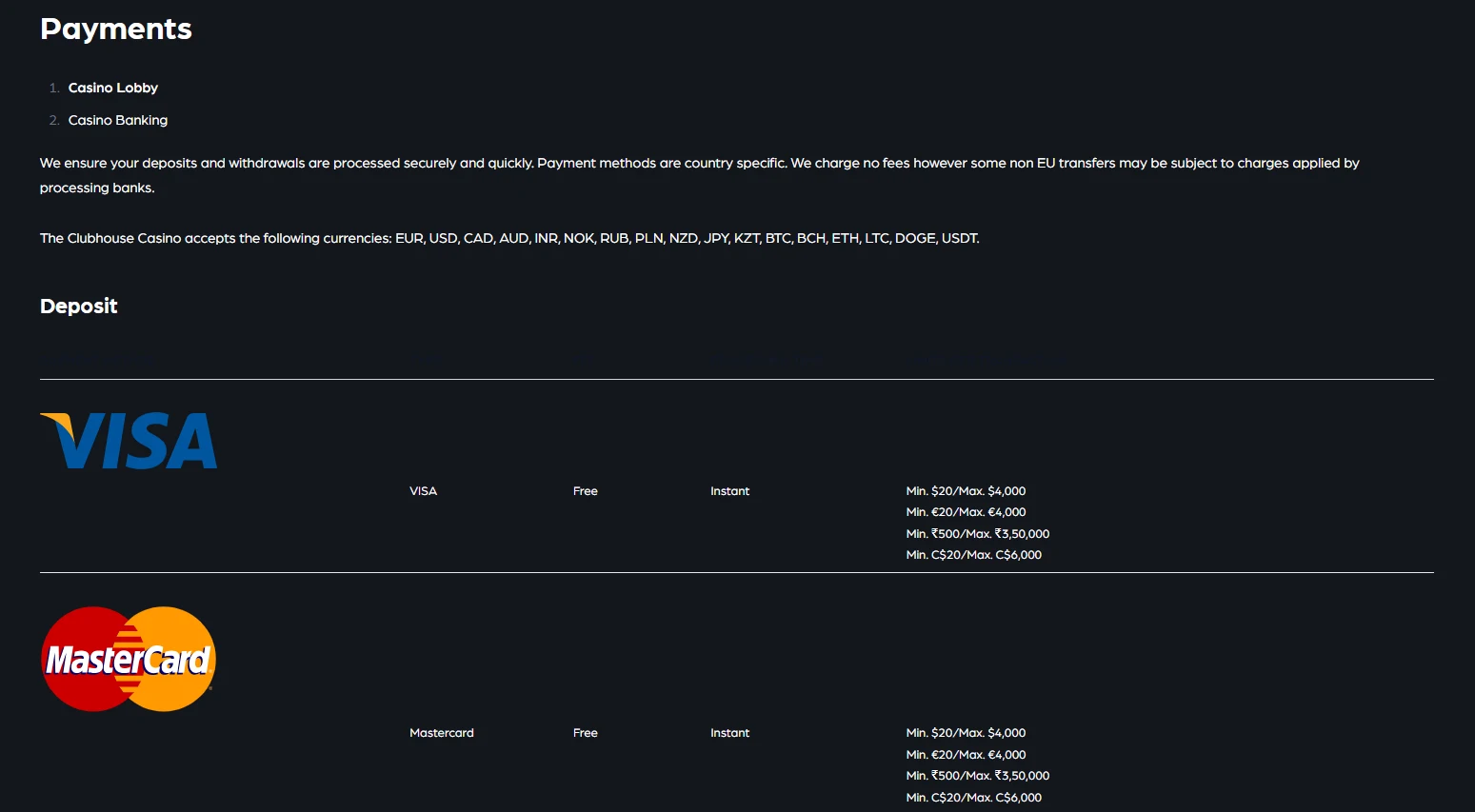
Card payments illustrate how the bank’s role can override what a cashier appears to offer. A specialist review reports that many standard Visa and Mastercard transactions to offshore casinos are blocked by Australian financial institutions. As a result, seeing a card logo on a website is not proof that a payment from an Australian account will go through. The decision can be made at the financial institution’s end, beyond the cashier’s display.
That distinction also changes how familiar terms should be read. “Fast payment” may describe the intended route, not the outcome of a particular transaction. A domestic bank transfer service, a card network and an operator’s cashier are different parts of the path; acceptance at one point does not guarantee acceptance at another. A blocked card attempt is not evidence that the card itself is unusable for ordinary purchases. It reflects the specific transaction and the controls applied to it.

The practical picture is therefore not a simple ranking of Australian casino payment methods. PayID has broad bank-level support, but a specialist review characterises its deposit availability at casinos as operator-dependent. Standard card payments face reported blocking by Australian financial institutions, even where a cashier displays Visa or Mastercard. Those are different limitations: one concerns whether the operator offers a route, the other whether the institution allows a particular transaction.
I have seen payment menus treated as if they were a map of the whole system. They are not. They show what a cashier presents at a given moment; they do not settle the status of the underlying service in Australia or determine what a bank will process. Local infrastructure, operator configuration and financial-institution controls each have their own part in the result. Separate layers.
A Payment Gateway Is a Route, Not a Guarantee
A casino payment gateway is the connection between a payment route and the operator’s cashier. It passes transaction details between the two sides and returns a result: accepted, declined, or awaiting further handling. That makes the gateway part of the payment path, not a promise that every transaction will work or that the displayed amount will reach the account unchanged.
I have seen payment pages make a route look simpler than it is. A cashier may display familiar payment logos, but the actual transaction still depends on whether the operator has enabled that route, whether the gateway can process it, and whether the customer’s bank accepts it. The logo is an entrance, not a receipt.
The distinction matters because “supported” can describe only one part of the chain. A payment gateway for an online casino may connect the cashier to a provider, while the provider relies on a separate banking or payment network. Each handoff can affect whether the transaction proceeds. A successful authorisation at one stage does not, by itself, prove that the full amount has been credited at the other end.
Where the exchange rate enters
Currency conversion is one cost that can sit quietly inside the route. If an amount in Australian dollars is converted to euros, the conversion can cost 2–4%. The cashier’s displayed figure and the account’s credited value may therefore differ, even when the original transaction was accepted.
That difference is not necessarily a separate line item labelled “gateway fee”. It can arise through the conversion applied along the route. The useful check is the currency in which the cashier quotes the transaction and the currency in which the payment provider processes it. If those do not match, the exchange rate becomes part of the cost.
This is why payment technology is not just a question of which button appears on screen. It determines how the transaction is passed along, where a conversion occurs, and which party reports the final amount. A clean-looking interface can conceal a less tidy route.
Searches for online casino payment options often bring up Apple Pay, Google Pay or Klarna beside gateways, as though they were interchangeable parts. They are not. A digital wallet or payment brand is a way to initiate or authorise a payment; the gateway is the processing connection used by the cashier. Whether a particular option appears or works depends on the operator’s setup and the payment path behind it. A brand name alone does not establish that a route is available, or what currency it will settle in.

The practical reading is straightforward: treat the cashier as the start of a transaction, not evidence of its final cost. Check the quoted currency and the amount that will be credited before confirming. The route matters. So does its exchange rate.
Payment Systems and the Cost of Waiting
A payment option can be dependable in one sense and still be a poor fit for time-sensitive use. BPAY makes that distinction visible: it is a payment system that can serve as a fallback when PayID is unavailable, but the wait for a payment to arrive changes what that fallback is useful for.
A specialist review describes BPAY payments as taking one to two business days. The same kind of review characterises the method as rarely used for real-time gameplay and notes its potential role when PayID cannot be used. Those are practical observations, not a promise that every cashier handles a BPAY payment on the same timetable. Availability and processing depend on the service being assessed, so the payment option shown in a cashier should not be mistaken for an instant credit.
That gap matters because “available” can mean only that a route is offered. It does not tell anyone when the funds will be recognised or whether the timing suits the intended use. With BPAY, the stated settlement window is measured in business days, not moments. A payment system can therefore be functional without being immediate.
I learned to separate those two ideas when checking payment flows: acceptance answers whether a route can be used; timing answers when it becomes useful. The distinction is easy to miss in a menu. A method displayed beside faster-looking options can seem like another equivalent choice, even though the time cost is different. It is not equivalent for every purpose.
BPAY makes more sense as a contingency than as a real-time tool. If PayID is unavailable and the transaction can wait, a slower route may still have a place. If the purpose depends on funds appearing promptly, the described one-to-two-business-day period is a material drawback. “Backup” is the operative word. It describes resilience when another route is missing, not speed.
There is no need to dress that up as a benefit. A payment system has a role only in relation to the timing required, and a delayed settlement can make a perfectly usable option unsuitable for an immediate transaction. The cashier’s display is only the starting point; the expected processing period is what determines whether the route fits.
That is the practical cost of waiting. BPAY may fill a gap when PayID is not available, but its described timing puts it outside the pattern of real-time use. A fallback is useful when the alternative is no route at all and delay is acceptable. Where timing is central, the same fallback may simply be too slow. No hidden shortcut.

The Cashier Can Change the Terms at Withdrawal
A payment portal can show a route for adding funds without offering that same route for taking funds out. The two actions are separate settings in the operator’s cashier; seeing PayID beside a deposit option does not establish that PayID is available for withdrawals. A specialist review reports that PayID deposit availability depends on the operator and that withdrawal support needs separate confirmation. That distinction is the point to verify—not a reason to assume one cashier’s setup applies elsewhere.
I read a cashier menu as an entry point, not a promise about the full transaction. A listed method answers a narrow question: can this route be selected for the action currently shown? It does not settle what happens when a balance is withdrawn, whether the operator permits another route instead, or whether the displayed terms will still apply later. A “one-method” impression can be misleading. The terms are action-specific.
Before any deposit, the operator’s own payment rules should be checked for the withdrawal route, any restrictions attached to it, and whether the cashier shows that route for cashouts. If the wording only describes deposits, it has not answered the withdrawal question. If a support response is needed to interpret the terms, the useful answer is a direct confirmation of the method available for withdrawal, rather than a general statement that the payment system is supported.
This is especially relevant to PayID because its presence in a deposit menu is not evidence of cashout support. A payment portal may present a familiar local option while the operator’s withdrawal rules specify something different. The displayed menu and the written rules should agree; where they do not, the uncertainty belongs to the operator’s side of the transaction, not to the payment brand.
Do
- Confirm the cashout method before depositing
- Check operator payment rules for withdrawal restrictions
Don't
- Assume deposit methods are also available for withdrawals
- Infer withdrawal support from a general payment-page description
I would also separate a payment brand’s general availability from the operator’s own arrangement. A route can exist in the Australian banking environment and still be absent from a particular cashier. The reverse assumption is just as unsafe: a logo or name on a portal does not prove that every transaction type is enabled. Check the specific action, not simply the list of familiar names.
The practical test is plain: confirm the cashout method before putting money in, and keep the answer tied to the operator and the account in question. Do not infer withdrawal support from a deposit screen, a general payment-page description, or a broad claim that a method is accepted. Small wording difference. Big consequence.
This is a payment-mechanics explanation, not an endorsement of offshore gambling. Under the Interactive Gambling Act 2001, operators cannot provide real-money online casino games to people physically located in Australia. A cashier’s available options do not change that legal position.
Providers, Fees and the Less Visible Conditions
A payment provider’s name tells only part of the cost story. The charge may sit with the wallet, the casino, or the route used to move money between them. I have found that the headline method can look simple while the terms attached to a withdrawal or an idle account do the real work. Small print matters.
A specialist review reports that Skrill withdrawals to a bank take 1–2 days, while some casinos add a 1–3% transaction fee. Those are separate parts of the calculation: the time relates to the bank withdrawal, and the percentage is a possible casino charge. It is not a universal Skrill tariff, so the relevant cashier terms determine whether that extra cost applies. A fee described as a transaction charge can reduce the amount received without changing the stated processing window.

Neteller has a different figure in the reported terms: a specialist review gives a 1.45% fee for credit-card funding. That is a provider funding charge, not a reason to treat a credit card as an acceptable way to fund gambling. Australian restrictions make that distinction important; this figure is useful only as an illustration of how a provider may price a funding route. It should not be read as a suggested casino deposit method. Different transaction, and different risk.
There can also be a cost when an account is left untouched. A specialist review reports that some casinos charge $10 per month after 90 days without logging in. That is an inactivity condition, not a payment-processing fee, and it may continue to affect a balance even when no new transaction is being made. The wording matters: the reported term applies to some casinos, not every operator or every provider. A wallet’s own fees and a casino’s account charges are not interchangeable.
This is why I separate provider pricing from the cashier’s rules. Skrill’s bank withdrawal window does not establish what a particular casino will charge; Neteller’s funding fee does not describe a withdrawal; and an inactivity clause belongs to the account terms rather than the payment network. Labels such as “free” can conceal that split. Free to transfer is not necessarily free to hold.
Skrill
Bank withdrawals take 1–2 days; some casinos may apply a 1–3% transaction fee.
Neteller
Reports indicate a 1.45% fee for credit-card funding.
Inactivity Fees
Some casinos charge $10 per month after 90 days without logging in.
The practical comparison is therefore narrow but useful: check the stated processing time, identify who imposes each fee, and look for inactivity language in the account terms. For any real-money casino service, the legal position in Australia also matters: the Interactive Gambling Act 2001 prohibits operators from providing online casino games to people physically in Australia. Provider fees do not change that.
“Instant” Deposits Do Not Mean Instant Cashouts
“Instant” describes a particular step, not the whole payment cycle. A specialist review reports that Visa and Mastercard deposits can appear immediately when accepted. That says nothing about how quickly a withdrawal is approved, released or credited. The two transactions run through different processes.
There is an important Australian limitation: many standard Visa and Mastercard payments to offshore casino operators are blocked by financial institutions. An advertised instant payment option is therefore not proof that a card transaction will go through, and it should not be read as a recommendation to fund gambling by credit card.
From the operator’s side, a deposit can be automated at the cashier while a withdrawal waits for staff handling. Bank transfers show the difference clearly. A specialist review describes casino bank-transfer requests as being processed manually once or twice a week. In that account, a withdrawal requested on Friday could reach the bank by Wednesday. The delay is not necessarily the time the bank needs to move the money; it may begin before the transfer is released.

I have seen “instant” used as a neat label for the part of the transaction that is easiest to automate. It is less informative about the part that determines when funds arrive. A deposit confirmation and a cashout timetable are separate pieces of information.
The same distinction matters when comparing payment integration. A method appearing in an operator’s payment menu does not establish that every stage is automated, or that its deposit timing applies to withdrawals. For bank transfers, manual review and scheduled processing can put several days between a request and receipt. A quick deposit cannot cancel that queue.
So timing claims need to be read narrowly. “Instant” may describe the deposit being credited, while a bank withdrawal can depend on when the operator handles it and when the transfer is sent. In Australia, the legal setting also matters: the Interactive Gambling Act 2001 prohibits operators from providing real-money online casino games to people located in the country. Payment-speed labels do not change that status.
Different clocks. Different steps.
Apps and Vouchers Have Different Exit Routes
An app-based payment and a prepaid voucher can both appear in a cashier’s deposit menu, but that does not make them interchangeable or give them the same way out. The important distinction is what happens to the funds after they have been used to pay in. A deposit route is not automatically a cashout route.
Apple Pay vs Vouchers
Apple Pay uses biometric authentication via a digital wallet for deposits. Prepaid vouchers have a built-in spending cap based on the loaded amount, but generally cannot be used for cashouts.
A specialist review describes Apple Pay deposits as being made through the phone’s digital wallet, with biometric authentication used to approve the payment. That changes the checkout step: the payment is authorised on the device rather than by entering card details into the cashier. It does not, by itself, establish that a particular operator accepts Apple Pay, or that money can later be returned through it. In this context, Apple Pay is a deposit-side option, not a withdrawal method.
The practical appeal is clear enough: the wallet can make a payment feel like a single tap. “Seamless” is the sales word; operationally, the cashier still has to support that route, and the payment still has to be accepted. I would not treat the presence of a wallet button as evidence of a complete deposit-and-withdrawal arrangement. Different job.
Prepaid vouchers work differently. The amount available is limited to what was loaded onto the voucher, so the payment cannot draw beyond that balance. That creates a built-in spending cap, but it also leaves a separate question when funds need to be paid out. Voucher deposits generally cannot be sent back to the voucher itself. A different cashout method is therefore needed.
That limitation is easy to miss when the cashier presents a voucher as a simple way to pay. The voucher handles the incoming side; it does not provide a matching exit. Any balance or winnings associated with a deposit may be subject to the operator’s own payment rules, so the deposit option alone says nothing about the route available for a withdrawal.
These distinctions matter beyond convenience. A payment button can describe how funds enter an account without telling the whole story about where funds can go afterwards. Apple Pay and vouchers belong on that deposit-side reading here, not in a list of withdrawal methods.

There is also a wider Australian context: the Interactive Gambling Act 2001 prohibits operators from providing real-money online casino games to people located in Australia. Payment mechanics do not change that legal position. A digital wallet is not a workaround, and a prepaid voucher does not alter the nature of the service being paid for.
Mobile Payments Still Need a Separate Cashout Plan
PayID is a mobile-to-bank link, not a separate balance held in a phone. Through Australia’s New Payments Platform, a mobile number, email address or ABN can identify a linked bank account. That makes the payment route feel direct, but it does not determine how a transaction is handled by an operator’s cashier.
The distinction matters because a deposit option is not proof of a matching withdrawal route. A specialist review describes PayID deposit availability as dependent on the operator and says cashout support needs separate confirmation. That is a report about the operators it examined, not a rule that can be applied across the market. The cashier’s own withdrawal terms are the relevant point to check; a PayID logo beside a deposit button settles only the deposit question.
I have seen the mobile label do too much work in people’s minds. It suggests that money can move in both directions through the same familiar link. In practice, the cashier can treat incoming and outgoing transactions differently, so the bank account connected to a PayID does not by itself establish an exit route. A mobile casino payment can be convenient at the point of entry and still leave the withdrawal process dependent on another method.
There is also a legal boundary that cannot be blurred by payment technology. Under the Interactive Gambling Act 2001, providing real-money online casino games to people in Australia is illegal for operators. A payment facility does not change that status.
For any lawful financial transaction, the useful habit is to separate the questions: what does the payment screen accept, and what route do the written terms specify for money going back out? Treating those as one question is how a familiar mobile link gets mistaken for a complete payment plan. Small distinction. Big consequence.
Withdrawal Timing Depends on the Route
A withdrawal has two clocks: the operator’s handling time and the time taken by the payment network. The cashier may approve a request before the funds reach a bank account or wallet. Comparing payment routes by a single “fast” label hides that distinction.
These mechanics are descriptive, not an endorsement of real-money online casino use. Under the Interactive Gambling Act 2001, operators cannot provide real-money online casino games to people physically in Australia. A payment route does not change that legal position.
E-wallets and bank transfers
An e-wallet can shorten the wait compared with a traditional bank transfer, but the timing depends on the particular service and operator. A specialist review describes MuchBetter withdrawals as faster than bank cashouts, while giving bank transfers a possible wait of up to five days. That is a reported comparison, not a fixed service promise: processing queues, approval and the receiving institution remain separate parts of the journey.
Bank transfers have a different trade-off. They move funds into a bank account, but casino requests may be handled manually rather than sent straight through as an automated payment. A specialist review reports that some operators process these requests once or twice a week; in its example, a Friday request could arrive by Wednesday. The time on the cashier’s screen therefore may not include the wait for the next processing run.
Fees affect the comparison too. A specialist review reports flat bank-transfer charges of $5–$15 at some casinos. That fee can make a slower route more costly, particularly when the amount being withdrawn is modest. The cashier’s displayed terms matter more than a general description of the method.
Cryptocurrency withdrawals
Crypto withdrawal times vary with the currency and network conditions. One specialist review puts Litecoin processing at about 10 minutes, while another describes a 10–30-minute window and low fees. Those are separate reported estimates, not a guaranteed clock. Bitcoin may take as long as an hour during network congestion, according to a specialist review. Ethereum network gas fees can also reduce the amount received, as noted in a specialist review.

Some specialist reviews describe crypto withdrawals as free of casino-side charges. “Free” needs careful reading: a lack of operator fee does not remove network costs, and the value received can be affected by fees or currency movement. The route may also require a compatible wallet address; an incorrect address or network selection can make a transfer unrecoverable.
Blockchain transactions are irreversible once confirmed and have no chargeback option. That changes the risk calculation. A bank transfer delay is frustrating; a mistaken blockchain transfer may not be retrievable at all.
Compare the whole route
In my experience, the useful comparison is not simply which method has the shortest quoted time. It is where the clock starts, whether the operator must approve the request manually, what fees apply, and how the funds arrive at the other end. A quick network settlement does not speed up an operator’s review queue.
Reported timings and charges can vary by operator and over time, so they should not be treated as universal terms. The withdrawal method, currency, fees and processing conditions need to be confirmed before any transaction. Deposit availability alone tells nothing about how a later payout will be handled.
Different clocks. Different risks.
Do Australian online casinos charge fees for deposits or withdrawals?
They may: bank transfers can incur a flat fee of $5–$15, and some Skrill withdrawals carry a 1–3% fee. Currency conversion from AUD to EUR can cost 2–4%, while crypto withdrawals are usually free.
Which casino payment method is best for Australians?
PayID is a widely supported AUD deposit route, but availability depends on the operator, and withdrawal support must be checked separately. For crypto withdrawals, Litecoin is described as faster and lower-fee than Bitcoin.
What is PayID and how does it work in Australian online casinos?
PayID links an Australian bank account to a mobile number, email address or ABN through the New Payments Platform. A casino can accept PayID for deposits only if its cashier offers it; check separately whether withdrawals are supported.
Do Australian online casinos accept Bitcoin and crypto?
Some offshore casino operators accept cryptocurrency, with Litecoin and Bitcoin described as withdrawal options. Availability varies by operator, and a deposit option does not guarantee that the same method is available for cashouts.
Is crypto deposits legal at online casinos in Australia?
Using crypto does not change the legal status of the service: under Australia’s Interactive Gambling Act 2001, operators cannot provide real-money online casino games to people physically in Australia.
What happens if my bank blocks a transaction to an online casino?
The payment may not go through even if the casino displays a card option. Many standard Visa and Mastercard transactions to offshore casinos are blocked by Australian financial institutions.
Written by the editors at Clubhouse Casino.