


Separate casino claims from what the law supports
Australia’s rules distinguish operators from players, while offshore sites’ bonuses, verification and payment options require separate scrutiny.

Table of Contents
Table of Contents
- The Legal Reality Behind Australian Online Casinos
- What an Offshore Casino Site Can—and Cannot—Guarantee
- Real-Money Play: The Stakes Beyond the Balance
- ‘No Deposit’ Offers: Read the Turnover Before the Headline
- New Sites, Old Checks: Verification and Game Settings
- Signup Bonuses and Codes: The Conditions Behind the Offer
- Apps, Crypto and ‘Top’ Claims: What the Available Evidence Can Say
- Mobile Play Does Not Change the Odds
- Free Spins and Chips: The Cash-Out Limit Is the Detail
- PayID Transfers: Convenient Infrastructure, Not a Trust Badge
The Legal Reality Behind Australian Online Casinos
The phrase “best Australian online casino” can sound like a straightforward comparison, but it sits awkwardly with the law. Australia has no licensed online casino. The Interactive Gambling Act 2001 prohibits companies from providing real-money online casino games, including pokies, to people in Australia, and no domestic licences for those services have been issued. A ranking can describe what a site claims to offer; it cannot turn that site into an Australian-regulated casino.
That distinction is the first thing I keep in view when assessing this market. The law is aimed at operators, not at individual players. Australians are not made criminally liable simply for playing on an offshore site that accepts them. But that does not make offshore gambling an endorsed or locally supervised activity. The operator’s position and the player’s position are different questions.
What the law regulates
The Act covers online casino-style games such as pokies, poker, blackjack and roulette when they are offered for real money to people physically located in Australia. The central issue is not whether a site uses Australian language, takes Australian customers or presents itself as an “Aussie casino”. It is whether the service is being provided to people in Australia and whether the operator has the required domestic authorisation. No such online casino authorisations have been issued.
UK casinos listed by payout speed
Choosing an online casino in Australia involves more than browsing a game list: licensing, payment options and practical deposit or payout details can help set expectations. This selection highlights the specific details available for each operator.
Vegaz Casino
- License
- Curacao OGL/2024/1335/0780
- Min. deposit
- EUR 20
Vegaz Casino lists a Curacao OGL licence (2024/1335/0780). Its minimum deposit is EUR 20.
LevelUp Casino
- License
- Curacao eGaming OGL/2023/174/0082 (Dama N.V.)
- Min. deposit
- A$15
LevelUp Casino lists a Curacao eGaming licence (OGL/2023/174/0082) held by Dama N.V. The minimum deposit is A$15.
WinSpirit Casino
- License
- Curacao eGaming OGL/2024/923/0383 (Antillephone N.V.)
- Min. deposit
- A$30
WinSpirit Casino lists a Curacao eGaming licence (OGL/2024/923/0383) held by Antillephone N.V. Its minimum deposit is A$30.
MrPacho
- Payout speed
- crypto 30-120 minutes, fiat 24-72 hours
- Min. deposit
- A$30
MrPacho lists crypto payouts in 30–120 minutes and fiat payouts in 24–72 hours. The minimum deposit is A$30.
Roby Casino
- License
- Curacao eGaming (Roby Games Ltd)
Roby Casino lists a Curacao eGaming licence held by Roby Games Ltd. No deposit or payout details are provided here.
House of Pokies
- License
- international iGaming licence – jurisdiction not named in the source
- Payout speed
- PayID 1-24 hours
- Min. deposit
- A$30 (PayID from A$10)
House of Pokies lists an international iGaming licence, though the source does not name its jurisdiction. PayID payouts are listed at 1–24 hours; the minimum deposit is A$30, or A$10 via PayID.
Rollero Casino
- License
- Curacao Gaming Control Board OGL/2023/176/0095 (Hollycorn N.V.)
Rollero Casino lists a Curacao Gaming Control Board licence (OGL/2023/176/0095) held by Hollycorn N.V. No deposit or payout details are provided here.
Wild Tokyo
- License
- Curacao
- Payout speed
- crypto 30-60 minutes, fiat 1-5 days
- Min. deposit
- A$10
Wild Tokyo lists a Curacao licence. Its stated payout speeds are 30–60 minutes for crypto and 1–5 days for fiat; the minimum deposit is A$10.
SkyCrown
- License
- Tobique Gaming Commission
- Payout speed
- crypto ~10-15 minutes, fiat 1-5 days
- Min. deposit
- A$30
SkyCrown lists a Tobique Gaming Commission licence. Crypto payouts are listed at approximately 10–15 minutes and fiat payouts at 1–5 days; the minimum deposit is A$30.
Bizzo Casino
- License
- Curacao Gaming Control Board (TechSolutions Group N.V.)
Bizzo Casino lists a Curacao Gaming Control Board licence held by TechSolutions Group N.V. No deposit or payout details are provided here.
The Australian Communications and Media Authority (ACMA) is the primary regulator enforcing the Act. Its role includes blocking access to illegal offshore gambling sites. Internet service providers are required to comply with ACMA’s blocklist. As a result, an offshore site may be inaccessible through an Australian connection even if it has previously been reachable. A block is a regulatory measure, not a review of whether a casino’s games are fair or its claims are reliable.
This is where promotional language can blur separate issues. “Australian-friendly” may refer to a site’s currency, customer support or willingness to accept Australian registrations. It does not establish that the operator holds an Australian casino licence. There is no local online casino licence to check against, and no domestic licensing category that makes an offshore casino locally regulated.
A search for the best Australian online casino in 2026 therefore cannot be read as a search for a locally licensed provider. That category does not exist. Any comparison of offshore sites is a comparison of services operating outside Australia’s domestic casino-licensing framework, not a recommendation that the services are authorised here.
The player’s position is not the operator’s position
The law’s focus on companies matters. An operator can breach the Act by providing prohibited services to people in Australia; that does not mean an individual player faces the same legal consequences merely for using an offshore site. The player’s lack of liability should not be mistaken for a guarantee of protection. It only describes who the law targets.

In practice, the combination can feel counterintuitive: a person may encounter an offshore site that accepts Australian customers, while the service itself remains outside the domestic licensing system and may be subject to blocking. Acceptance by a website is not evidence of Australian approval. Nor does a site’s continued availability prove that ACMA has assessed or endorsed it.
This is why I treat legal status as a boundary, not a badge to be inferred from a site’s branding. An “online Aussie casino” can mean a site marketed to Australians or one that allows Australian registrations. Neither description changes the underlying position: no online casino is licensed in Australia, and the law prohibits operators from offering real-money casino games to people here without a domestic licence.
Age and practical caution
The legal age for gambling in Australia, including online pokies, is 18. That threshold does not alter the licensing position. Being old enough to gamble does not convert an offshore casino into an Australian-regulated one, and the fact that a site accepts an adult customer does not show that it has domestic authorisation.
I would not describe an offshore option as “safe” simply because it is accessible, familiar-looking or labelled for Australian players. The legal framework does not provide a domestic licence for online casinos, and ACMA’s blocking role makes clear that access can be restricted. The sensible reading of a comparison page is therefore narrow: it can help explain the claims and risks associated with offshore services, but it cannot present them as Australian-licensed casinos.
No Local Licence
Australia has no licensed online casinos; providing real-money online casino games to people in Australia is prohibited under the Interactive Gambling Act 2001.
No local licence exists. That is the starting point.
What an Offshore Casino Site Can—and Cannot—Guarantee
A polished website can make an offshore casino look established. Clear terms, a support channel and a professional design may help explain how the business presents itself, but none of them guarantees that a withdrawal will be approved or paid. “Trusted” is a claim, not a remedy. The distinction matters most after a balance has become a request for money.
The practical limit is stark: if an offshore casino refuses to pay winnings, Australian players have no legal recourse in Australia. That does not mean every dispute ends in non-payment. It means the usual signals of reliability cannot create an Australian route to recover funds. A site’s own complaint process may exist, but it is not the same thing as enforceable local recourse.
I have seen how trust is built on a page: familiar payment marks, confident language, a help desk and a tidy set of terms. These details can tell something about the operator’s presentation. They cannot, by themselves, establish what will happen when a large withdrawal is requested. A support agent can explain a rule; that does not guarantee a favourable decision under it.
Withdrawal terms deserve particular attention because the headline balance is not the same as money arriving in a bank account. Some casino terms impose a ceiling on how much can be withdrawn over a stated period. A specialist casino review has reported weekly or monthly limits in the range of $5,000 to $10,000. Its example is a $50,000 jackpot potentially being paid through a multi-year schedule. That is a reported possibility, not a universal rule—and the operator’s own written terms are the place to establish whether a cap applies.

A withdrawal ceiling changes the meaning of “paid”. The casino may not be refusing the full amount outright; it may release it in instalments, subject to its schedule and conditions. From the player’s side, though, the distinction can feel thin: winnings that remain inside an account are not funds in hand. The timing and total payout mechanics matter as much as the balance displayed on screen. Slow money. Real uncertainty.
This is why a broad promise such as “fast withdrawals” is less useful than the terms that govern the actual cash-out. A payment description may speak to processing, while a separate limit controls how much can leave during a week or month. Those are different parts of the process. Reading only the promotional wording can leave the key restriction out of view.
The same caution applies to labels such as “best” or “trusted” when used for offshore casino sites. A ranking or review can compare visible features, but it cannot turn an offshore operator into one with Australian legal recourse. Nor does a polished presentation prove that a future dispute will be resolved in the player’s favour. Trust signals are evidence to weigh, not guarantees to rely on.
A site may answer questions promptly before a deposit and still handle a later withdrawal differently. That contrast is not proof of misconduct; it is a reason to judge the terms by what they say about withdrawals, not by the tone of the welcome page. The ceiling, the schedule and the conditions attached to release are the operational details.
For Australian players, the point is not that every offshore casino will withhold winnings. It is that no combination of branding, customer service or reassuring language removes the consequence of a refusal: there is no Australian legal route to recover the money. A claim can sound dependable. The remedy may still be absent.
Real-Money Play: The Stakes Beyond the Balance
A deposit is not always just the amount shown on the screen. The payment route can change what leaves a bank account, when it leaves, and whether the transaction is approved at all. In practice, I separate the advertised balance from the cost of funding it. They are not the same figure.
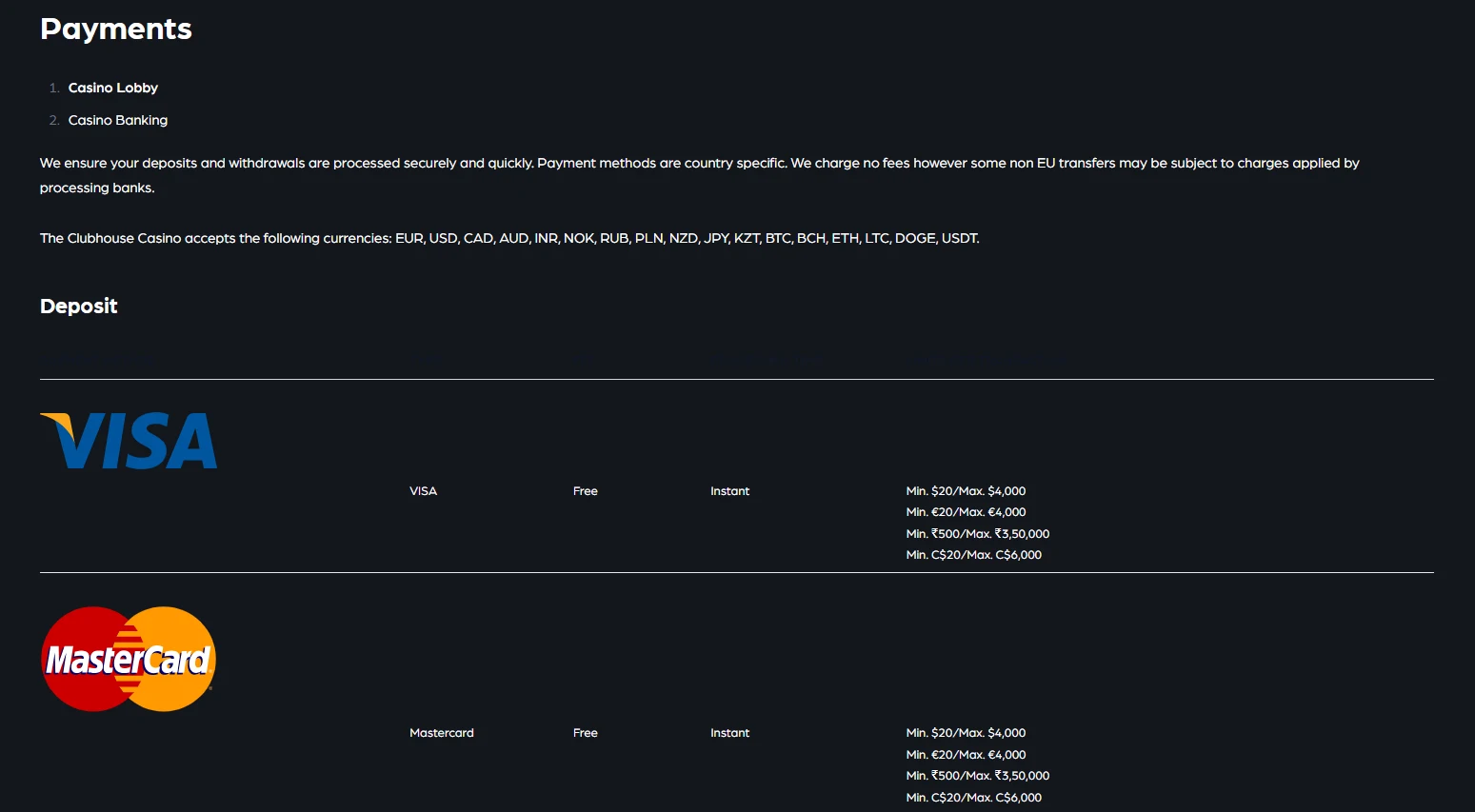
A specialist gambling review reports that Australian banks and card providers are blocking more payments to gambling merchants they recognise. That does not mean every attempted payment will fail, or that a declined transaction proves anything about the casino. It means an approval cannot be assumed simply because a payment option appears on a site. A payment may be refused by the bank or card issuer before the casino receives it.
That distinction matters when planning real-money play. A displayed deposit method describes what the operator is prepared to accept; it does not override the bank’s own decision. Repeated attempts do not turn a blocked transaction into a reliable funding route. Nor should a successful payment be read as an endorsement by the bank. It is only a processed payment.
The card charge behind the deposit
A specialist gambling review also warns that a card deposit can be classified as a cash advance rather than an ordinary purchase. The treatment depends on the bank or card issuer. If it is processed that way, the charge may attract a fee of 3–5%, and interest may start immediately instead of following the timing associated with a standard card purchase.

That changes the arithmetic before any bet is placed. A deposit of a given amount can cost more than that amount once the fee and interest are included. The account balance on the casino page will not show those additions; they appear under the card provider’s terms and on the account statement. The deposit receipt is not the full cost.
This is one reason I do not treat a card as a neutral bridge between a bank account and a gambling balance. The same amount can have a different cost depending on how the issuer codes it. A transaction that looks routine in the checkout window may be handled differently in the card account. Check the issuer’s cash-advance rules before relying on a card, rather than inferring the cost from the deposit screen.
Approval is not a safety signal
The reverse mistake is just as common: assuming that a payment which goes through has been checked for more than payment processing. Bank approval does not establish that the gambling service is reliable, that a withdrawal will be paid, or that the displayed balance can be recovered without difficulty. It means the transaction was accepted at that point.
I have seen payment wording do a quiet bit of persuasion. “Instant” describes the deposit experience, not the total financial exposure. The money may become available quickly while the card charge still carries its own fees and interest, or while later attempts to deposit are blocked. Fast access is not low cost.
For anyone considering an aussie casino for real money, the sensible comparison is therefore not just between deposit buttons. It is between the amount leaving the account, any fee or interest the card issuer may apply, and the possibility that a gambling transaction will be declined. If those terms are unclear, the displayed deposit amount is an incomplete picture.
Real-money play starts with money already at risk before the first spin. The account balance is only one part of that calculation. The bank’s classification, approval decision and charges sit outside it—and can make the same deposit more expensive than it first appears.
‘No Deposit’ Offers: Read the Turnover Before the Headline
A “no deposit” offer sounds as if the casino is putting usable money in a player’s balance without asking for anything first. The wording describes how the bonus is received, not whether its value can be withdrawn. The condition that changes the calculation is wagering, also called turnover: the amount that must be bet before bonus-related winnings become eligible for cash-out.
I have seen how the headline does its work. It gives the offer a simple dollar value; the terms define what has to happen before that value can leave the account. A specialist casino review suggests treating a requirement of 35x or less as a more manageable benchmark and describes anything above 40x as punishing. That is a review’s assessment, not a rule that makes a promotion worthwhile by itself. The multiplier matters, but so does the amount it applies to.

Consider the review’s example of a $500 bonus with a 40x requirement. If turnover is calculated on the bonus alone, the required betting reaches $20,000 before any winnings can be withdrawn. That is the part the short headline cannot convey. A balance can look substantial while remaining subject to a long sequence of bets, with no certainty that the balance will survive them.
The base used for the multiplier can change the result sharply. In another example from the specialist review, a 35x requirement applies to the combined $500 deposit and $500 bonus. The calculation is 35 times $1,000, so the required turnover is $35,000. The multiplier is lower than in the first illustration, yet the total betting requirement is greater because it applies to both amounts.
That is why “35x” or “40x” cannot be read in isolation. The offer’s terms need to say whether turnover applies to the bonus, the deposit, or the combined amount. If that base is unclear, the headline does not tell the whole cost of accepting the promotion. Not a small detail.
For a no-deposit offer, the first practical check is whether the wagering condition applies to bonus funds, winnings from those funds, or both, and what event completes the requirement. The precise wording matters: a bonus may be credited immediately while withdrawal eligibility remains conditional. A code does not change that arithmetic; it is a way of attaching an offer, not evidence that the balance is withdrawable.
Bonus Turnover Calculation
- 1
Identify the Base
Determine if the multiplier applies only to the bonus or to the combined deposit and bonus.
- 2
Apply the Multiplier
Multiply the identified base by the wagering requirement (e.g., $500 bonus × 40x = $20,000 turnover).
- 3
Determine Eligibility
Complete the required betting volume before bonus-related winnings become eligible for cash-out.
Free spins can have a separate restriction. A specialist casino review notes that winnings from a free-spin offer may be subject to a cash-out cap. In that case, completing wagering does not necessarily mean every amount shown in the account can be withdrawn. The cap and the turnover condition do different jobs, so neither substitutes for checking the other.
The useful comparison is therefore not the largest headline or the word “free”. It is the amount the multiplier applies to, the total turnover it produces, and any separate limit on what can be cashed out. A bonus can be received without a deposit and still come with conditions that make its practical value quite different from its advertised figure.
New Sites, Old Checks: Verification and Game Settings
A site can be new to the market, newly launched or simply unfamiliar to the people assessing it. The label says little about what happens when an account reaches its first withdrawal. In my experience, the useful checks are less about launch language and more about the rules that take effect after a balance is built.
A specialist review reports that casinos often ask for identity checks before a first withdrawal. The process can involve a photo of an identity document, proof of address and, in some cases, a selfie holding the document. These are not interchangeable requirements: an account may pass one check and still be asked for another. The practical point is to establish what documents are required and when, rather than treating verification as a formality that can be sorted out later.

That timing matters. If documents are requested only at cash-out, the withdrawal cannot proceed until the operator has reviewed them. A new brand does not make that step less consequential, and polished signup pages do not explain how a document mismatch will be handled. Names, address details and account information should correspond; any uncertainty is better resolved before money is committed. A delay can be frustrating. It is also a condition of the process, not evidence by itself that a payment has been refused.
The game itself needs a separate check. A familiar pokie title is not necessarily running with the same return-to-player setting everywhere it appears. A specialist review notes that some providers give casinos a choice among multiple RTP configurations for a particular game. In other words, the title can look identical while its configured return percentage differs between venues.
That is an easily missed distinction. Recognition of a game is not evidence of an identical setting, and a provider’s name does not establish which configuration a particular casino has selected. Where the RTP is disclosed, the relevant figure is the one attached to that game at that site—not a percentage remembered from another version or location. Where it is not clearly stated, familiarity cannot fill the gap.
I have seen the word “new” do a lot of work in promotion: it suggests freshness, but says nothing about document handling or game configuration. “Rewards” can create the same distraction. Neither label answers the operational questions. The detail is in the terms and game information.
A sensible assessment therefore separates three things: the account’s verification requirements, the timing of those checks, and the RTP setting shown for each game. These are distinct matters; a clear answer on one does not settle the others. If the information is vague or difficult to locate, that is a reason to pause rather than infer that standard practice will apply.
- Check required identity documents (ID, proof of address, selfie).
- Confirm when verification occurs (at signup or at first withdrawal).
- Verify the specific RTP configuration for the chosen game at that site.
No launch claim can substitute for those checks. The useful evidence is specific, visible and tied to the account or game in question. Otherwise, “new” remains just a label.
Signup Bonuses and Codes: The Conditions Behind the Offer
A signup bonus is presented as an extra balance, but the balance is only one part of the deal. A code may unlock an offer or attach its terms to an account; neither wording tells how much betting is required before winnings become eligible for withdrawal. The operative detail is the wagering requirement, also called the turnover multiplier.
The calculation depends on what the multiplier applies to. In one common formulation, the requirement is calculated against the bonus alone. In another, it applies to the deposit and bonus together. Those bases produce very different totals, even when the headline amount and multiplier look similar. The terms need to state which calculation applies.
A specialist review suggests treating a requirement of 35x or less as a more manageable benchmark and describes anything above 40x as punishing. That is an assessment, not a universal rule or a promise about the value of an offer. The wording in the promotion’s own terms is what determines the actual obligation. A low-looking multiplier can still create substantial turnover when it applies to a combined deposit-and-bonus amount.
The arithmetic makes the distinction clear. A specialist review gives the example of a $500 bonus with a 40x requirement: the required betting turnover is $20,000. If the requirement instead applies at 35x to a $500 deposit plus a $500 bonus, the calculation becomes $35,000 in bets. The second offer has a lower multiplier, yet requires more turnover because the base is larger.

That is why “matched” or “welcome” is not enough to compare promotions. The useful reading order is the multiplier, its calculation base, and the point at which the operator treats the requirement as complete. A bonus code can change which promotion applies, but it does not make those mechanics disappear. If the terms are unclear about whether the deposit is included, the headline cannot settle the question.
I have seen promotional copy make the reward feel immediate while placing the withdrawal condition several lines deeper. That is not a quirk of wording: the headline sells the credit, while the turnover clause defines when it can be converted into withdrawable winnings. The distinction matters.
A promotional balance is not cash in hand. The multiplier determines the volume of qualifying bets needed before withdrawal eligibility, and the calculation base determines how quickly that volume grows. Small print. Big arithmetic.
An offer described as an Aussie casino signup bonus or attached to a code should therefore be read as a set of conditions, not as a recommendation. The promotional label says what is being credited; the terms say what must happen before the winnings can leave the account.
Apps, Crypto and ‘Top’ Claims: What the Available Evidence Can Say
“Top” is a ranking word, not a feature of a gambling service. It can describe a position in a comparison, but it does not establish what was measured, whether the comparison is current, or whether the services named were checked. I have seen promotional language do this work: a confident label stands in for details that would let a reader judge the claim. A ranking needs a clear basis; without one, the word carries little practical meaning.
Do
- Check for concrete deposit and loss limits
- Verify self-exclusion options
- Read specific terms for app delivery
Don't
- Trust labels like "Top" or "New" as quality markers
- Assume a phone icon confirms a dedicated app
- Rely on "crypto" labels as a safety signal
The same distinction matters when a service is described as new. “New” says something about timing, not quality or suitability. Nor does a polished listing establish that an operator has been independently assessed. A named service should not be treated as verified simply because it appears in a list or is presented as a leading choice.
An app label also needs to be read literally. It may refer to a dedicated application, a mobile-friendly website, or simply a service that can be opened on a phone. Those are not interchangeable. The label alone cannot confirm that an app exists, what it does, or whether it includes meaningful controls for limiting play. A phone-shaped icon is not a safety feature.
Crypto claims require the same restraint. A description such as “crypto casino” does not, by itself, establish which payment methods are available or how a transaction works. It says nothing about the quality of the games or the controls around gambling. Payment terminology is not a substitute for evidence about the service.
The checks that matter for responsible gambling are concrete: deposit limits, loss limits, session time limits and self-exclusion options. These tools can help set boundaries, but their presence does not make gambling risk-free. Their value depends on whether they are available and usable in practice, rather than merely mentioned in promotional copy.
BetStop is another term that needs precision. It applies to Australian-licensed operators and does not bind offshore sites. Since there is no Australian-licensed online casino, a reference to BetStop should not be read as a safeguard that covers offshore casino play. That distinction is easy to lose in a broad claim about “responsible gambling”.

My rule is simple: separate a label from a demonstrable feature. “Top” is not a test result. “App” is not proof of an installed product. “Crypto” is not proof of a particular payment route. And a responsible-gambling phrase is not the control itself. The details matter.
Mobile Play Does Not Change the Odds
A mobile casino is a way of viewing and operating a game on a smaller screen; it is not a different set of odds. The important mechanic is the same whether a pokie is opened on a phone or elsewhere: its Random Number Generator determines each spin as an independent event.
That independence has a practical consequence. A win, loss or run of similar results does not make a particular outcome more or less likely on the next spin. The game does not owe a win after a losing streak, and a recent win does not make another one due. I have seen players read patterns into short runs of results; the pattern may feel persuasive, but it does not change how the next spin is generated.
The screen can change what is visible: controls may be arranged differently, and game information may take more effort to locate. Those are interface matters, not evidence that the underlying outcome has changed. A mobile layout cannot make a spin “hot”, compensate for a cold run or improve the chance of a result.
There is also a difference between a game being usable on a mobile device and a casino having a particular app or browser option. Those are access details that need to be established for the specific service; the label “mobile” alone does not confirm how play is delivered. Nor does a polished phone interface tell anything about the game’s odds.
The useful distinction is simple: device and display on one side, random outcome on the other. Treating a phone as a way to change the odds confuses the presentation with the game mechanic. No adjustment.
Free Spins and Chips: The Cash-Out Limit Is the Detail
“Free” describes how a play is credited, not necessarily what can be withdrawn from it. With free spins, the important line in the offer terms may be a cap on winnings eligible for cash-out. A specialist review reports that such caps can apply. That is a reported condition, not a rule that applies to every offer.

The distinction is easy to miss in promotional wording. A banner can make the spins sound valuable while leaving the practical ceiling in the detailed terms. If winnings exceed that ceiling, the amount available to withdraw may still be limited. The displayed balance and the cash-out amount are not necessarily the same thing.
Free chips deserve the same close reading, but the wording alone does not establish how any particular offer treats winnings. The terms need to say whether a cash-out cap applies, what it covers, and how the operator calculates the amount eligible for withdrawal. Without that detail, a headline value says little about what can ultimately leave the account.
I have seen how these conditions work in practice: the promotion gets attention; the clause defining its limits does the less visible work. A cap is not the same as a wagering requirement. One sets a ceiling on eligible winnings; the other sets a condition that must be met before withdrawal. Treating them as interchangeable obscures the actual restriction.

The useful comparison is therefore not simply how many spins or chips are advertised. It is whether the terms state a cash-out limit clearly, and whether that limit applies to all winnings from the free play or only to a defined portion. If the wording is vague, the value of the offer is vague too. No headline fixes that.
This matters when assessing claims attached to an online casino presented as serving Australian players. Promotional language is not evidence of what a player can withdraw, and the cap may be more consequential than the free-play amount itself. Read the cash-out clause first. Then judge the offer.
PayID Transfers: Convenient Infrastructure, Not a Trust Badge
PayID is not a separate wallet. It is an alias layer on Australia’s New Payments Platform (NPP): a transfer can be addressed to an email address, mobile number or ABN instead of bank-account details. The NPP is available through all major banks and uses end-to-end encryption. To use PayID for a real-money casino deposit, it must first be linked to a bank account.

That describes the payment rail, not the business receiving the money. An online casino offering PayID has not thereby demonstrated that it is licensed, that its games are fair or that its published RTP settings are transparent. Payment convenience and operator oversight are separate questions. Easy to transfer is not the same as safe to trust.
There is another practical limit: banks can intervene. A specialist review has reported that some Australian banks, including members of the Big Four, sometimes block PayID transfers to gambling merchants they recognise. A transfer may therefore fail even when PayID itself is working as designed. That is a bank decision about the merchant or transaction, not evidence that the casino has passed a regulatory or fairness check.
The useful distinction is simple. PayID tells how a payment is addressed and routed; it does not settle who controls the destination or what protections apply once funds arrive. I have seen payment logos used as shorthand for credibility, when they establish only that a particular method is presented. Infrastructure, not a trust badge.
Do PayID deposits qualify for bonuses?
Yes, PayID is treated like any other qualifying deposit method. Check the bonus terms to confirm which methods qualify.
Can casinos change the RTP of their games?
Yes. Some game providers let casinos choose from multiple RTP settings, so the same pokie can have different return percentages at different casinos.
What is the legal age for online gambling in Australia?
You must be 18 or older to gamble in Australia, including on online pokies.
What is the best payment method for fast withdrawals in Australia?
E-wallets such as Skrill and Neteller are popular for their speed, though that does not guarantee a fast withdrawal from a casino.
What does “wagering requirement” actually mean?
It is the amount you must bet before bonus winnings can be withdrawn. For example, a $500 bonus with a 40x requirement means you must place $20,000 in bets.
What is the cost-benefit calculation of casino promotions?
Compare the bonus with the wagering needed to unlock it. For example, a $500 bonus at 40x requires $20,000 in bets; if the 35x requirement applies to a $500 deposit plus a $500 bonus, it requires $35,000 in bets.
Written by the editors at Clubhouse Casino.