


Separate casino claims from the protections behind them
In Australia’s offshore casino market, access, payment options and operator claims do not amount to domestic licensing or oversight.

Table of Contents
Table of Contents
- What “trusted” can mean in Australia’s offshore casino market
- Casino sites and pokies: the gap between access and oversight
- PayID transfers: useful rails, no trust guarantee
- What a “best” casino claim can—and cannot—tell about a pokie
- Bitcoin deposits: what the available evidence does not establish
- Real-money play, bonuses and the cost hidden in turnover
- Wallets and withdrawals: speed is only part of the transaction
- Crypto casinos: the limits of what can be verified
- Casino apps and mobile access: trust is not a screen feature
- Pokie outcomes: randomness is not a pattern to read
What “trusted” can mean in Australia’s offshore casino market
“Trusted” sounds like a quality mark. In Australia’s online casino market, it is not. There is no Australian-licensed online casino, so the word cannot mean that a site has been approved under a domestic casino licensing system or that an Australian regulator stands behind its promises.
The legal starting point is the Interactive Gambling Act 2001. It prohibits companies from providing real-money online pokies to people in Australia without a domestic licence, and no such licences have been issued. That leaves a sharp gap between the language used by offshore operators and the protections available at home. A claim to be the most trusted online casino in Australia does not alter the operator’s legal status.
I learned to separate the label from the mechanism behind it. In business, “trusted” often means that a company has built a reputation, publishes policies, or has a history of dealing with customers in a particular way. Those things may help describe an operator. They are not a substitute for local licensing, and they do not create an Australian authority that can compel payment if a dispute arises.
That distinction matters most when something goes wrong. If an offshore casino refuses to pay winnings, Australian players have no legal recourse in Australia. A site may have its own complaints process, and an overseas regulator may have a role in the jurisdiction where the operator is based, but neither fact gives a player an Australian route to recover money. Reputation and practical recourse are different things. One is a claim; the other is an enforceable remedy.
The law’s focus is also important. The Interactive Gambling Act targets companies offering prohibited services, rather than individual players. That distinction should not be turned into a blanket assurance that every offshore arrangement is lawful or protected. It describes whom the Act addresses; it does not make an offshore casino Australian-regulated, and it does not supply a local consumer remedy when an operator withholds funds.

This is where “trusted online casinos” becomes an awkward phrase. In a market without domestic online casino licences, there is no local licensing list from which an Australian player can identify a legally approved casino. Nor does a professional-looking site, a long operating history, or a confident statement about fairness change that underlying position. Each may be information about the business, but none converts the business into an Australian-licensed casino.
BetStop is another point where the wording can mislead. It applies to Australian-licensed operators and does not bind offshore sites. Someone relying on it as a universal block on online gambling would be relying on a boundary it does not cross. In this market, a domestic exclusion service and an offshore account are not interchangeable safeguards.
A useful way to read a trust claim is to ask what it actually establishes. Does it describe the operator’s own policy, or does it refer to an independent process? Does it explain what happens during a dispute, or simply use reassuring language? Even clear terms and responsive customer service cannot change the central limitation: where the operator is offshore and refuses a withdrawal, there is no Australian legal recourse for the player.
That is not a ranking of offshore sites, and it is not a recommendation to use one. It is a boundary around what the word “trusted” can honestly mean here. It may describe a perceived reputation or an operator’s stated practices. It cannot mean domestic approval, Australian oversight of an online casino licence, or guaranteed access to winnings.
I have seen how easily a trust label can be made to carry more weight than its evidence. The phrase “most trusted” sounds comparative and official, even when it is only marketing language. Without an Australian licensing system for online casinos, the crucial question is not whether the claim sounds convincing, but what protection stands behind it if the operator does not honour its side of the transaction.
The answer is limited. The law prohibits companies from providing these services to people in Australia without a domestic licence; none exists. The law’s focus on operators does not supply players with a domestic dispute mechanism. And BetStop does not extend to offshore sites. Those are the practical limits against which any claim of a trusted casino in Australia has to be read. No local safety net.
No Legal Recourse
If an offshore casino refuses to pay winnings, Australian players have no legal recourse in Australia because no domestic online casino licences have been issued.
Casino sites and pokies: the gap between access and oversight
A casino page loading in Australia is a technical fact, not a regulatory verdict. A site can be visible, accept registrations or display pokies without having Australian approval. The distinction matters because familiarity is easy to mistake for oversight: a polished interface, local wording or a working link can look like evidence that somebody in Australia has checked the operation. None of those features establishes that.
The Australian Communications and Media Authority (ACMA) is the domestic regulator responsible for enforcing the Interactive Gambling Act 2001. Under that role, it blocks access to illegal offshore gambling sites, and Australian internet service providers must comply with ACMA’s blocklist. That is an enforcement mechanism, not a certification scheme. A blocked site has not thereby been judged against a consumer-facing quality standard, and a site that can still be reached has not been approved by ACMA.
That distinction is easy to lose in the word “trusted”. In commercial copy, the term may refer to a smooth-looking site, an operator’s own claims or a reviewer’s assessment. It does not, by itself, identify an Australian regulator that has licensed the casino. There is no domestic licensing framework for online casinos that would turn a list of approved sites into a reliable local register. The Interactive Gambling Act prohibits operators from providing real-money online casino games to people in Australia, and no Australian online casino licences have been issued.

I have seen how a small design cue can do the work of a much larger claim. An Australian flag, prices in Australian dollars or a familiar support style can make a site feel local. These may describe the way a service presents itself; they do not establish where its legal oversight sits. “Australian-friendly” is not the same as Australian-regulated. Presentation is not supervision.
ACMA’s blocklist is important precisely because online access and legal status are separate questions. The authority identifies illegal offshore gambling sites for blocking, while providers are required to implement those blocks. The existence of that process does not mean that every page associated with gambling disappears from view at every moment, nor does a page’s visibility show that the regulator has granted permission. The blocklist is an enforcement tool, not a directory of trusted operators.
For the same reason, an error page or blocked connection should not be read as a consumer rating. It is evidence that access is being restricted under the blocking system, not a detailed account of how an operator treats customers. Conversely, a site that opens is not a positive finding about its conduct. Accessibility answers only whether a connection is working in that particular instance. It says nothing reliable about the quality of the service behind it.
The word “pokies” can make this distinction feel less obvious. A familiar game title or a page that resembles a conventional casino does not change the status of the service offering it. Online pokies are part of the online casino category covered by the law. A game’s presence on a website is not proof that the website is authorised to offer it to people in Australia. The site’s visual polish and the game’s recognisable format are separate from local oversight.
BetStop is another point where scope matters. It applies to Australian-licensed operators and does not bind offshore sites. Its existence should not be taken as evidence that an offshore casino participates in the scheme or that a person’s exclusion from licensed services automatically extends to it. A safeguard can only operate within its stated reach. That boundary is not a technical footnote; it changes what the measure can do.
When I assess claims of trust, I separate what can be observed from what it implies. A site may be reachable; that is observable. ACMA may have blocked access to an offshore gambling site; that is an enforcement action. Neither observation supplies a local licence for an online casino, and neither turns a promotional label into independent oversight. “Trusted” needs a defined basis, not just a confident adjective.
The practical point is narrow but important: access is not approval. ACMA’s blocking role helps enforce the law; it does not create a route for an offshore casino to become locally licensed. The appearance of a site, whether on a phone or a desktop, cannot fill that gap. No local sign-off.
PayID transfers: useful rails, no trust guarantee
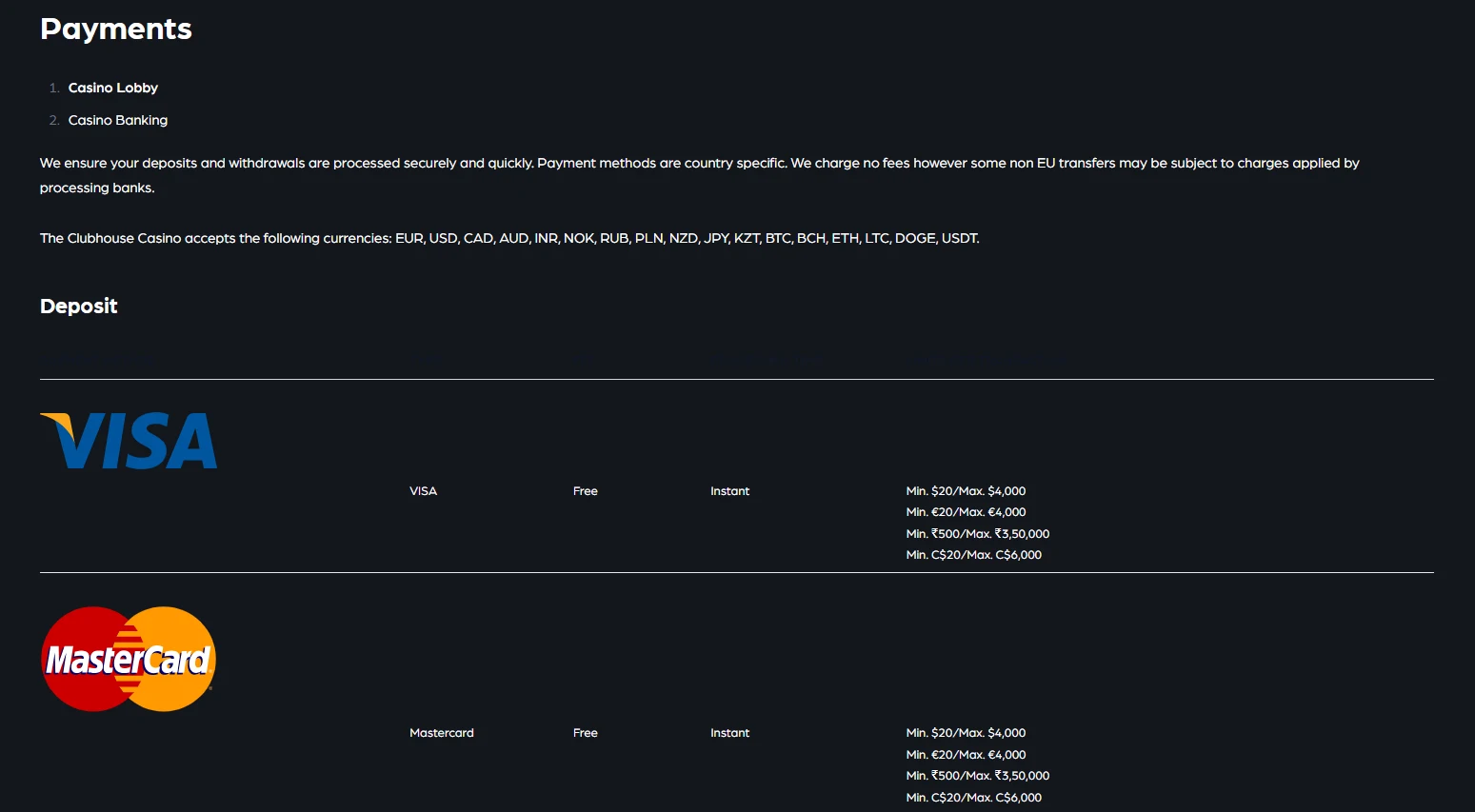
PayID is an alias attached to a bank account, not a separate account or a casino credential. It sits on Australia’s New Payments Platform (NPP), allowing a transfer to be addressed through an email address, mobile number or ABN rather than bank details. The NPP is supported by all major banks and uses end-to-end encryption. Those are properties of the payment infrastructure; they do not certify the business receiving a transfer.

That distinction matters when a site presents PayID as a badge of reliability. I have seen payment logos do a lot of work in casino marketing: they make the deposit step look familiar, then let that familiarity spill over into assumptions about the operator. It should not. PayID support does not establish that an offshore casino is licensed in Australia, that its games are fair, or that its published RTP figures are clear and accurate. A transfer method is not an audit.
For real-money play through a site serving Australians, PayID use depends on linking the alias to a bank account first. The alias makes it easier to identify where a transfer is directed, but the underlying movement is still between bank accounts. That link is a practical requirement, not an assurance about what happens after the money reaches an offshore operator.
There can also be a bank-side obstacle. A specialist review has reported that some Australian banks, including members of the Big Four, sometimes stop PayID transfers to gambling merchants they recognise. This is not a dependable rule that applies to every bank, customer or transaction; it is a possibility that can change as banks update their controls. A failed transfer therefore says little about whether a casino is trustworthy. It may reflect the bank’s policy, not a finding about the particular site.
Likewise, a successful transfer proves only that the payment went through. It does not promise that a later payment will be handled properly. In Australia, offshore casino operators do not sit under a domestic online-casino licensing system, so a familiar bank rail cannot supply the oversight that is absent at the operator level.
A specialist review of its own recommended sites describes PayID as being treated on the same footing as other qualifying deposit methods. That is a statement about the sites covered by that review, not a general rule for the market. Payment eligibility and conditions can differ between operators, and the presence of the same logo does not make their practices equivalent.
I would separate the questions. Is PayID available, and can the linked bank account make the transfer? Those concern payment access. Is the operator accountable, and are its game-return terms transparent? PayID cannot answer those. Nor does it change the limits of BetStop: the service applies to Australian-licensed operators and does not bind offshore sites.
The rail may be familiar. The destination is another matter.
What a “best” casino claim can—and cannot—tell about a pokie
UK casinos listed by payout speed
Choosing an online casino calls for attention to the details that are available, such as licensing information, deposit minimums and payout timing. This list offers a concise reference point for readers considering Australian-facing options in 2026.
Vegaz Casino
- License
- Curacao OGL/2024/1335/0780
- Min. deposit
- EUR 20
Vegaz Casino lists a Curaçao OGL licence (OGL/2024/1335/0780) and a minimum deposit of EUR 20.
LevelUp Casino
- License
- Curacao eGaming OGL/2023/174/0082 (Dama N.V.)
- Min. deposit
- A$15
LevelUp Casino lists a Curaçao eGaming licence, OGL/2023/174/0082, held by Dama N.V., and a minimum deposit of A$15.
WinSpirit Casino
- License
- Curacao eGaming OGL/2024/923/0383 (Antillephone N.V.)
- Min. deposit
- A$30
WinSpirit Casino lists a Curaçao eGaming licence, OGL/2024/923/0383, held by Antillephone N.V., and a minimum deposit of A$30.
MrPacho
- Payout speed
- crypto 30-120 minutes, fiat 24-72 hours
- Min. deposit
- A$30
MrPacho lists crypto payouts at 30–120 minutes and fiat payouts at 24–72 hours. Its minimum deposit is A$30.
Roby Casino
- License
- Curacao eGaming (Roby Games Ltd)
Roby Casino lists a Curaçao eGaming licence held by Roby Games Ltd.
House of Pokies
- License
- international iGaming licence – jurisdiction not named in the source
- Payout speed
- PayID 1-24 hours
- Min. deposit
- A$30 (PayID from A$10)
House of Pokies lists an international iGaming licence, though the jurisdiction is not named in the source. PayID payouts are listed at 1–24 hours, and the minimum deposit is A$30, or A$10 with PayID.
Rollero Casino
- License
- Curacao Gaming Control Board OGL/2023/176/0095 (Hollycorn N.V.)
Rollero Casino lists a Curaçao Gaming Control Board licence, OGL/2023/176/0095, held by Hollycorn N.V.
Wild Tokyo
- License
- Curacao
- Payout speed
- crypto 30-60 minutes, fiat 1-5 days
- Min. deposit
- A$10
Wild Tokyo lists a Curaçao licence and a minimum deposit of A$10. Its listed payout times are 30–60 minutes for crypto and 1–5 days for fiat.
SkyCrown
- License
- Tobique Gaming Commission
- Payout speed
- crypto ~10-15 minutes, fiat 1-5 days
- Min. deposit
- A$30
SkyCrown lists a Tobique Gaming Commission licence and a minimum deposit of A$30. Its listed payout times are approximately 10–15 minutes for crypto and 1–5 days for fiat.
Bizzo Casino
- License
- Curacao Gaming Control Board (TechSolutions Group N.V.)
Bizzo Casino lists a Curaçao Gaming Control Board licence held by TechSolutions Group N.V.
“Best” is a broad label. It can describe a polished website, a large game catalogue or an editorial preference, but it does not tell much about the return setting attached to a particular pokie. I separate those claims. A game’s title and artwork identify what is being played; they do not, by themselves, disclose its RTP.
RTP, or return to player, is a theoretical measure of how much a game returns across play over time. It is not a forecast of an individual session, and it does not promise a particular result. More importantly for comparisons, the same pokie may not have the same RTP everywhere it appears. A specialist casino review reports that some game providers give casinos a choice of several RTP settings for one game. That means a familiar title can be configured differently at different sites.
The commercial wording can obscure that distinction. “Trusted slot” sounds like a verdict on the game, but trust is not a game setting. A pokie can be genuine and still run at a lower return configuration than the same title elsewhere. Equally, a high stated RTP would describe only that particular setting; it would not establish that the wider casino operation is dependable. Different questions require different evidence.

When I assess a claim about a trusted online casino game, I look for the specific game and the RTP setting stated for it, rather than treating a casino-wide reputation as a substitute. The detail needs to be tied to the version actually offered. A general statement about a provider’s games, or a return figure shown without identifying the relevant configuration, leaves room for a mismatch. The distinction is small in presentation and material in meaning.
That is why “best trusted online casino” language has limited value for judging a pokie. An editorial label may summarise a reviewer’s view of a site, but it cannot establish that every game there uses the same return setting, or that a particular title has the setting implied by a general claim. Reviews can help organise information; they do not remove the need to distinguish a site-level assessment from a game-level specification.
I have seen how easily a catalogue listing becomes shorthand for a quality claim. The title is visible, the provider may be named, and the missing setting is less prominent. Yet those details are not interchangeable. Provider identity tells where the game comes from; RTP configuration concerns the version selected for that casino. A trusted online slot is therefore not a meaningful category on its own unless the claim says what is trusted and on what basis.
A careful comparison stays narrow: same game, stated RTP, and a clear connection between the figure and the version available. Without that, broad rankings and confident labels say little about the game’s return. They may still express an opinion about the website, but that is a separate judgement.
Why RTP can vary
A specialist casino review reports that some game providers allow casinos to choose from several RTP settings for a single game, meaning the same pokie title can have different return rates at different sites.
Different settings. Same title.
Bitcoin deposits: what the available evidence does not establish
A casino page can make Bitcoin prominent without showing what the payment arrangement means in practice. The label alone does not establish that a particular site accepts Bitcoin, how a deposit or withdrawal would be handled, or what protections apply if a transaction is disputed. It is a payment claim, not a trust assessment.
I have seen how a payment badge works in sales copy: it can make a service look modern and straightforward while leaving the conditions that matter elsewhere on the page. With Bitcoin, the same distinction applies. A logo or a line in a cashier menu cannot, by itself, demonstrate that funds will be credited correctly, winnings will be paid, or a complaint will receive a fair response.
That is why a “trusted Bitcoin casino” is not a meaningful category on its own. Trust has to attach to verifiable conduct and clear terms, not to the name of a payment method. The same goes for lists of trusted Bitcoin casinos: a list may show that its publisher has grouped sites under that label, but the heading does not prove the sites’ payment arrangements or resolve what happens when something goes wrong. A confident ranking is still a claim.
Bitcoin-related details need to be stated precisely before they can be assessed. A page would need to explain the transaction conditions, including any charges, timing, and relevant protections. Without those details, there is no sound basis for comparing one supposed Bitcoin option with another. I would not infer favourable terms from a polished cashier screen, nor treat a mention of Bitcoin as proof of transparent handling.

The same caution applies to Dogecoin. A search for casinos associated with that currency does not establish that any particular operator accepts it, or that a site has earned trust. Different payment names do not answer the underlying questions about the operator’s conduct. Branding is not evidence.
For an Australian reader, the word “trusted” also cannot be settled by a payment choice. Bitcoin does not create a guarantee about a casino, and it does not turn a claim into independent verification. The payment method and the operator are separate things. Easy to blur. Important to separate.
I would treat Bitcoin wording as a prompt to inspect the actual terms, not as a reason to assume a site is safe or dependable. If those terms do not explain how transactions are handled, the sensible conclusion is limited: the wording alone establishes very little. A casino can call itself the most trusted Bitcoin casino; the phrase still needs evidence behind it.
Real-money play, bonuses and the cost hidden in turnover
“Free” and “bonus” describe the offer, not the amount that can be withdrawn. In real-money play, the operative term is often the wagering requirement: the amount that must be bet before bonus-related winnings become eligible for withdrawal. The multiplier may apply to the bonus alone or to the deposit plus bonus. Those are materially different calculations.
A specialist review uses a $500 bonus with a 40x requirement to illustrate the first method: $500 multiplied by 40 means $20,000 in required bets before a withdrawal can be made from the resulting winnings. That is turnover, not a deposit of $20,000; the same funds may be wagered repeatedly. But repeated betting does not make the condition small. It means the balance remains exposed to play while the requirement is being met.
Bonus Turnover Calculations
- 1
Bonus Only
A $500 bonus with a 40x requirement requires $20,000 in bets ($500 × 40) before winnings can be withdrawn.
- 2
Deposit plus Bonus
A $500 deposit and $500 bonus with a 35x requirement requires $35,000 in bets ($1,000 × 35) before withdrawal is possible.
The second method can raise the threshold further. If a $500 deposit and a $500 bonus are both included at 35x, the calculation is $1,000 multiplied by 35, or $35,000 in bets. An offer that advertises the bonus amount prominently may therefore leave the calculation base in smaller terms. The base matters more than the headline.
A specialist review’s rule of thumb is to treat requirements at 35x or below as a more manageable benchmark and those above 40x as punishing. That is an assessment, not a guarantee that a lower multiple makes an offer worthwhile. Game contribution rules, expiry conditions and cash-out restrictions also affect whether the nominal bonus has practical value. A high multiplier can make an attractive figure mostly a turnover obligation.
Free spins need a separate check. A specialist review notes that such offers may cap the winnings that can be cashed out. In that case, a winning spin does not necessarily translate into an equal withdrawable balance: the cap limits what can leave the account, even if the displayed winnings are higher. The condition is easy to miss when the offer is presented as a number of spins rather than a cash amount.
Deposit thresholds are another term, not a trust signal. A specialist review reports minimum deposits of AU$10 to AU$20 at many operators, with some setting AU$5. These figures describe reported offer conditions; they do not establish oversight, fairness or a dependable payout.
I have seen the headline figure do its job before the arithmetic gets noticed. Read the base, the multiplier and the cap together. Marketing value is not cash value.

Wallets and withdrawals: speed is only part of the transaction
An e-wallet can make the payment leg feel separate from the bank account, but that does not make the withdrawal automatic. Skrill and Neteller are described as popular options for speed and relative anonymity in specialist casino reviews. Those are practical attractions, not proof that a casino is licensed, pays fairly or will release a balance without conditions. In Australia, there is no locally licensed online casino.
I have seen “fast withdrawal” used as if it describes the whole process. It may refer only to the time after a casino approves a cash-out. Before that approval, the operator may need to verify the account, review the transaction and apply its withdrawal rules. A payment method cannot remove those steps. An instant-looking wallet transfer is not the same thing as an instant casino payout.
Identity checks before the first withdrawal are reported as a common operator requirement in specialist reviews. They can involve a photo of identity documentation, proof of address and, in some cases, a selfie holding the identity document. The practical point is simple: have the required identity and address documents ready before requesting that first withdrawal. A mismatch or missing document can interrupt the process, however quick the chosen wallet may be.
The amount available for withdrawal can matter more than the advertised speed. Specialist casino reviews report that some casinos set weekly or monthly withdrawal caps between $5,000 and $10,000. A $50,000 jackpot could therefore be paid in portions over an extended period rather than arriving as one transfer; reviews describe that kind of cap as capable of turning a large win into a multi-year payout plan. The cap is a term of the account, not a feature of Skrill or Neteller.
Do
- Have identity and address documents ready
- Check for weekly or monthly withdrawal caps
Don't
- Assume wallet speed equals instant payout
- Mistake e-wallet use for local licensing
That distinction is easy to miss in a comparison table. A wallet name suggests a familiar route for money, while a payout limit may sit in account terms or withdrawal rules. Both affect the transaction, but neither establishes that the operator is dependable. An offshore site can offer a wallet option and still leave an Australian player without legal recourse if it refuses to pay winnings.
I treat the withdrawal page as part of the payment method. It should state the cap, the verification documents required and the steps between a request and approval. If those details are difficult to find, a claim of speed tells very little. The interface is the easy part.
Crypto casinos: the limits of what can be verified
“Crypto” describes a payment category, not a standard of trust. A casino may present cryptocurrency as central to its identity, but that label does not establish who operates the site, whether its games are fair, or whether its terms are applied consistently. The payment method and the operator are separate parts of the transaction.
I have seen marketing collapse those questions into one reassuring impression: a technical-looking payment process is made to stand in for oversight. It cannot do that. A cryptocurrency option does not show that an operator holds an Australian licence, and there is no Australian-licensed online casino. Under the Interactive Gambling Act 2001, operators cannot provide real-money online casino games to people in Australia. The law’s position does not change because a deposit is described as crypto.

Nor does the word “trusted” become more meaningful when attached to a crypto casino. It is a claim, not evidence. What matters is what can be checked about the operator and its terms, not how modern or specialised the payment language sounds. A polished interface and confident wording may make a service appear established; neither, on its own, proves fair play or reliable treatment of winnings.
That distinction matters particularly in Australia. If an offshore casino refuses to pay, Australian players have no legal recourse in Australia. A payment choice cannot remove that exposure or create local protections that do not exist. The practical risk sits with the relationship between the player and the offshore operator, not with the branding around the deposit route.
The search for the “most trusted” crypto option can therefore point toward the wrong test. Crypto acceptance is not a substitute for checking the operator’s identity, the rules governing play, and the conditions attached to an account. Even then, a collection of reassuring claims should not be mistaken for Australian oversight.
I keep the categories separate: payment method, game information, operator conduct and legal status. Each answers a different question. Combining them under one broad promise of trust makes the promise sound stronger while leaving the underlying questions unanswered.
No shortcut.
Casino apps and mobile access: trust is not a screen feature
A polished mobile interface can make an offshore gambling service feel settled and familiar. In my experience, that impression is easy to mistake for oversight. A quick sign-in, clear menus and a smooth display describe the screen; they do not establish who is responsible for the service, whether its games are fair, or whether a disputed balance will be paid.
That distinction matters in Australia. The Interactive Gambling Act 2001 prohibits operators from supplying real-money online casino games to people in Australia, and no domestic online casino licences have been issued. The law is directed at operators rather than individual players, but that does not give a player an Australian remedy if an offshore operator refuses to release winnings. An app icon changes none of this. Neither does a mobile-friendly website.
The phrase “trusted casino app” therefore needs to be unpacked. It may mean that the software is easy to use. It cannot, by itself, mean that the operator is locally licensed or accountable. I would treat claims about trust as claims to test, not as features delivered by a download or a well-designed screen. Presentation is not protection.
Self-exclusion is another point where a familiar interface can suggest more coverage than it provides. BetStop applies to Australian-licensed operators; it does not bind offshore sites. Since Australia has no licensed online casino, registering with BetStop should not be read as a block on access to offshore casino apps. The boundary is important. A control that works within one part of the gambling system does not automatically follow a user into another.
The same restraint applies to labels such as “top” or “most trusted.” A ranking may describe an editorial assessment, but a position on a list does not create Australian legal recourse or make an offshore service subject to local casino licensing. A screen can present assurances neatly. It cannot make them enforceable.
I have seen how small design decisions can reduce friction and encourage continued use. That is a product choice, not evidence of independent scrutiny. Deposit limits, loss limits, session time limits and self-exclusion are responsible-gambling tools; their presence should be assessed as controls, not treated as proof of an operator’s standing. The distinction is plain. Interface versus accountability.
For anyone under eighteen, online pokies are not an option: the legal gambling age in Australia is eighteen. For adults, the central question remains unchanged across app and browser access: what standing exists if something goes wrong? A mobile format supplies no separate answer.
Pokie outcomes: randomness is not a pattern to read
I have seen a run of losses treated as if it were a signal: surely a win must be due. The same thinking appears after a win, when a player assumes the machine is “hot” and expects the run to continue. Neither conclusion follows from the way a pokie spin is decided.
A Random Number Generator determines the outcome of each spin. The next result is independent of the previous one. A string of losses does not make a win more likely on the next spin, and a recent win does not make another one more likely either. The history can look meaningful to a person watching it; it does not give the next result a memory.

That distinction matters when evaluating claims about trusted pokies or a supposedly reliable site. A site’s wording cannot turn random outcomes into predictable ones. Nor does a payment option such as PayID tell anything about the result of a spin. Trust in a transaction and the chance of a particular game outcome are separate questions.
“Due for a win” is a story imposed on a sequence after it has happened. The sequence may feel persuasive because people naturally look for patterns, especially when money is involved. But a pattern in past results is not a forecast. Keeping a record can show what happened; it cannot reveal what the RNG will produce next.
I would not treat a run of outcomes, a streak, or a sense that a game is about to pay as evidence. The mechanics offer no basis for that inference. Randomness can produce clusters that look deliberate, but an unusual-looking sequence does not establish that a later spin will compensate for it.
That is the practical limit of any “best” or “trusted” label when the question is what a pokie will do. Such language may describe a seller’s opinion, but it does not make outcomes readable. The next spin remains uncertain. No pattern to follow.
Do PayID deposits qualify for bonuses?
Yes, PayID is treated like any other qualifying deposit method for bonuses.
How do I know if an online casino is safe to play at?
An offshore casino is not approved or overseen under an Australian online casino licensing system, and Australian players have no local legal recourse if it withholds winnings. A professional-looking site or a claim of being trusted does not change that.
Are online pokies rigged?
Each spin is an independent random event determined by a Random Number Generator. However, some providers let casinos choose between different RTP settings for the same game.
What is the cost-benefit calculation of casino promotions?
Check the wagering requirement and whether it applies to the bonus alone or to the deposit plus bonus. For example, a $500 bonus with 40x wagering requires $20,000 in bets; at 35x on a $500 deposit plus a $500 bonus, it requires $35,000.
Written by the editors at Clubhouse Casino.